
Container liner pre-shipment inspection prevents costly cargo damage by catching material defects, installation errors, and seal failures before loading, drawn from over fifteen years of thermal packaging manufacturing experience. Every skipped check introduces a risk: a pinhole in a PE liner can allow moisture to contaminate an entire load of titanium dioxide, costing thousands in claims and delays. This guide provides a targeted checklist organized by liner material and installation phase, so logistics teams can verify liner integrity in minutes and ship with confidence.
Why Pre-Shipment Inspection Is a Cargo Protection Necessity
In international bulk transport, cargo rarely gets a second chance if the liner fails. I have seen shipments where a single overlooked tear in a woven container liner resulted in moisture absorption that spoiled a full load of sugar, leading to rejected delivery and a prolonged insurance battle. The cost of performing a structured pre-shipment inspection is negligible compared to the potential loss from cargo damage, demurrage, and lost customer trust.
A proper inspection goes beyond a quick glance. It must account for the liner material (PE film, woven PP/HDPE, thermal insulation composites), the stress points during loading such as spouts and lifting loops, and the specific environmental conditions of the shipping route. The following sections break down the inspection into actionable categories.
Material Integrity Checks: Liner Body Defects to Look For
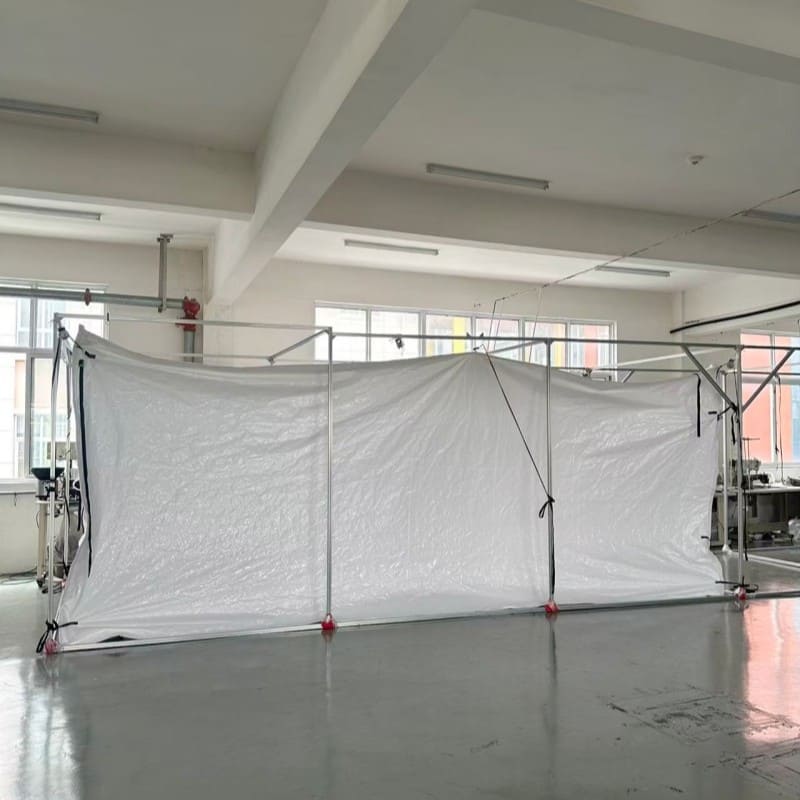
Different liner materials fail in different ways. A woven HDPE bulk liner like the DBL-W01 Dry Bulk Container Liner relies on seam strength and fabric integrity. We manufacture this liner with a warp tensile strength of ≥1,800 N/5cm and weft ≥1,500 N/5cm, but field handling can introduce abrasion or cuts that compromise these values. Inspect every square meter of the fabric for snags, cuts, or loose threads, paying close attention to stitched seams where thread breakage is most common. Run your hand along the seams; any gap larger than a few millimeters is a failure point.
For PE film liners such as the DBL-F01 PE Film Container Liner, pinholes and thickness inconsistencies are the main threats. A 140-micron LDPE liner provides a 100% moisture barrier when intact, but even a small puncture can let moisture migrate through capillary action. Shine a bright light behind the film to detect pinholes invisible to the naked eye. Also check that the film gauge is consistent; thinner spots are more prone to stretching and rupture under load.
Thermal liners like the TL-01 Thermal Container Liner require additional checks. The aluminum foil lamination must be free of scratches, delamination, or creases that would reduce its 95–97% radiant heat reflectivity. The woven PE backing should be intact with no separation from the foil. For the TL-02 EPE Foam liner, confirm the foam core is not compressed or waterlogged, as that would degrade its thermal conductivity below 0.038 W/(m·K). For multi-layer reflective liners such as the TL-03 with MPET and double bubble, verify that the bubble layer has no collapsed bubbles by pressing along the surface; a loss of bubble structure cuts insulation performance significantly.
The table below summarizes key material-specific inspection points.
| Liner Type | Critical Inspection Points | Typical Failure Consequence |
|---|---|---|
| Woven HDPE/PP | Fabric tears, seam gaps, coating integrity | Bulk cargo leakage, contamination |
| PE Film | Pinholes, thickness variation, film clarity | Moisture intrusion, oxidation |
| Thermal Foil (TL-01) | Foil delamination, scratches, fraying edges | Loss of radiant heat reflection |
| Thermal Foam (TL-02) | Foam compression, moisture absorption | Decreased insulation, condensation |
| Thermal Bubble (TL-03) | Bubble collapse, MPET delamination | Reduced thermal resistance |
Installation Quality: Securement, Spouts, and Seals
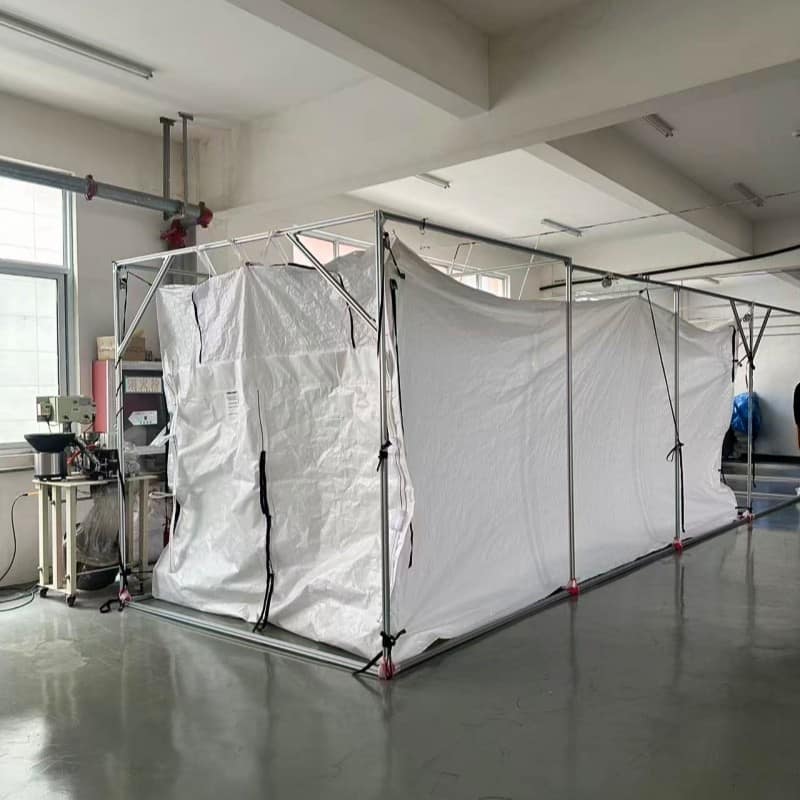
A liner that passes material checks can still fail if installed incorrectly. Begin by verifying that all lifting loops and securing straps are attached to the container lashing rings and tensioned evenly. Our DBL-W01 liner uses four lifting loops each rated for ≥5 tons; if any loop shows abrasion or misalignment, reposition before loading. Loose straps let the liner shift during transit, creating friction hotspots that wear through the fabric.
Check the loading spout and discharge spout. The spout should be centered and free of twists or folds. A kinked filling spout can cause product bridging or pressure buildup during pneumatic loading, potentially rupturing the liner. Confirm the spout closure mechanism (drawstring, clamp, or heat seal) operates smoothly and will hold securely after filling.
The liner’s contact with the container walls is another inspection point. The liner should sit flush without trapped air pockets that could cause flapping or condensation collection. For thermal liners like the TL-04 MPET/PE Composite Film, confirm that the foil side faces the cargo or outward as specified to reflect heat correctly. Improper orientation negates the thermal benefit.
Ventilation: container liners with dedicated vent ports must have those ports unobstructed. Blocked vents can lead to pressure buildup or, in the reverse case, vacuum conditions that collapse the liner and make unloading impossible. I recall a case where a vent was accidentally sealed with tape during cleaning; during discharge, the liner collapsed inward and halted operations for hours.
Cargo Compatibility: Matching Liner to Load and Route
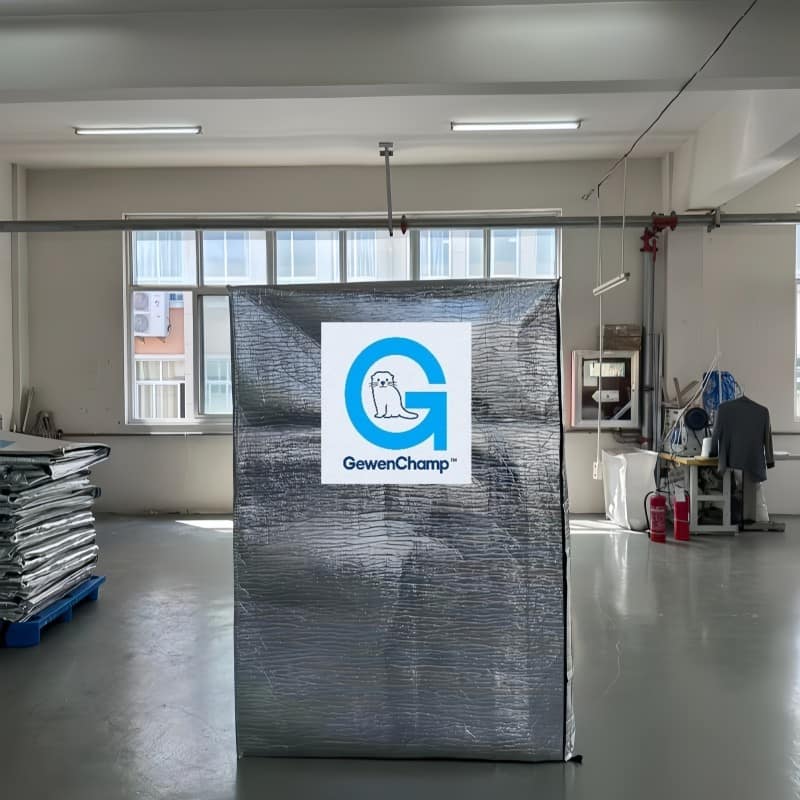
Even a flawless liner will underperform if it is not matched to the cargo characteristics. For food products, verify that the liner carries the appropriate certifications, such as FDA for US-bound shipments or LFGB for the EU. Our food-grade liners, including the DBL-W02 Malt Grade liner with double-sided LDPE lamination, are certified to FDA and EFSA standards, but these certifications are product-specific. Confirm the documentation before loading; an expired or mismatched certification can result in cargo rejection at the destination port.
Cargo that is abrasive, such as kaolin clay or titanium dioxide powder, demands a heavier-duty liner with high-abrasion coating or sift-proof construction. The DBL-W06 Sift-Proof Liner uses PU tape sealed seams to prevent dust leakage from powders of 50-mesh and finer. If an inspection reveals loose tape or seam gaps, that liner is not suitable for fine powders.
Shipping routes also dictate inspection criteria. On high-humidity routes, such as through tropical zones, a liner with a robust moisture barrier is essential. A PE film liner of at least 140 microns is a baseline; for extreme conditions, a composite thermal liner with a moisture vapor transmission rate below 0.033 g/(m²·h·kPa) provides additional protection. Inspect the moisture barrier layers for any delamination that would compromise the low transmission rate.
Additionally, confirm that the liner’s load capacity aligns with the planned cargo weight. Overloading can exceed the tensile strength of the fabric, causing catastrophic rupture during transit. Cross-check the liner’s rated capacity with the shipping documents before signing off.
Documenting the Inspection for Claims and Compliance
A thorough inspection protects against cargo loss only if it is documented. Create a checklist record for each shipment, noting the liner serial or lot number, date, inspector name, and any anomalies found. This record supports insurance claims if damage occurs from liner failure during transit. It is also a requirement for many ISO 9001-certified logistics operations.
Documentation should include photographs of key inspection points: the tag with batch information, close-ups of seams and spouts, and the overall liner installation inside the container. We recommend storing these records for at least the duration of the cargo’s shelf life plus one year, aligning with typical supply chain traceability standards.
Securing Your Shipment Is a Short Step Away
A careful pre-shipment inspection reduces the probability of cargo damage, but no inspection can guarantee a liner’s performance if it is not manufactured to the required specifications in the first place. For twenty years, Giant Flexpack has produced container liners with documented tensile strengths, certified moisture barriers, and field-proven thermal performance. If your next shipment involves temperature-sensitive resins, fine powders, or high-moisture routes, confirm your liner specification before loading. Send your part number and quantity to [email protected] or call +86 523 87683880.
Common Questions About Pre-Shipment Liner Inspection
How long does a thorough pre-shipment liner inspection take?
A complete inspection of a standard 20ft dry bulk liner takes about 15–20 minutes for an experienced inspector, including documentation. Thermal liners with multiple layers may require 5–10 minutes extra to check delamination and bubble integrity.
Can a damaged liner be repaired on site, or should it be replaced?
Small cuts or pinholes in PE film liners can be patched with manufacturer-approved tape if the repair is done correctly and the patch does not reduce the liner’s effective moisture barrier. For woven liners, any tear that reaches the fabric’s load-bearing yarns means the liner should be replaced entirely. Seam failures cannot be reliably repaired in the field.
What is the most overlooked inspection point?
In my experience, spout twist and improper spout alignment are the most common oversights. A misaligned spout forces product flow through a constriction, causing inconsistent loading and potential liner damage from the inside. Checking spout alignment takes seconds and prevents a major headache.
How do I verify moisture barrier integrity without lab equipment?
For PE film and coated woven liners, a simple light transmittance test is effective: hold a bright flashlight behind the liner wall; any pinprick of light indicates a breach. For thermal liners with foil, a visual inspection for scratches combined with a manual check for delamination by pressing along the foil surface is the most practical field method.
If your operation ships bulk commodities regularly, integrating a liner inspection protocol into your loading SOP is a straightforward way to cut damage claims. Share your requirements with our technical team at [email protected] and we will help you build a tailored inspection plan for the liner types you use.
 English
  German
  Spanish