
Container liner failure costs bulk shippers thousands of dollars in damaged cargo, shipment delays, and insurance claims every year. Yet the majority of these failures — tear-outs at loading spouts, moisture ingress, seam ruptures — trace back to preventable decisions made before the liner ever enters the container. As a thermal packaging and logistics specialist with over fifteen years in container liner manufacturing, I’ve seen how mismatched materials, rushed installation, and overlooked discharge specifications turn a reliable transport into a cargo disaster. This article breaks down the most common failure mechanisms in container liners and provides actionable steps to eliminate them from your operations.
What Causes Tearing and Punctures in Container Liners
Physical damage during loading and transit remains the most visible type of container liner failure. Sharp edges inside the container — protruding nails, splinters, or weld scars — can pierce even a robust woven liner if not identified and padded. Cargo itself often drives puncture risk: hard, angular granules like polymer pellets, crumb rubber, or mineral ores concentrate force at contact points and can tear through inadequate film thickness.
The liner material and thickness directly determine puncture resistance. A 140 gsm woven PP dry bulk liner delivers tensile strength of at least 1,800 N/5cm in the warp direction, far exceeding a standard 140-micron LDPE film liner which typically measures around 1,500 N/5cm. However, film liners have no needle holes or seam perforations, so they outperform woven constructions when the threat is fine-particle seepage rather than large-object impact. The table below compares common liner types and their puncture resistance profiles.
| Liner Type | Material & Typical Weight | Puncture Resistance | Best For |
|---|---|---|---|
| Woven PP (standard) | 140 gsm HDPE woven | High — stops sharp granules | Plastic pellets, grains, minerals |
| Woven with PE coating | 140 gsm + double-sided coating | High + seepage-proof | Powders, fine chemicals |
| PE blown film (standard) | 140 micron LDPE | Moderate — resists tearing but sensitive to sharp points | Food powders, chemicals, plastic pellets |
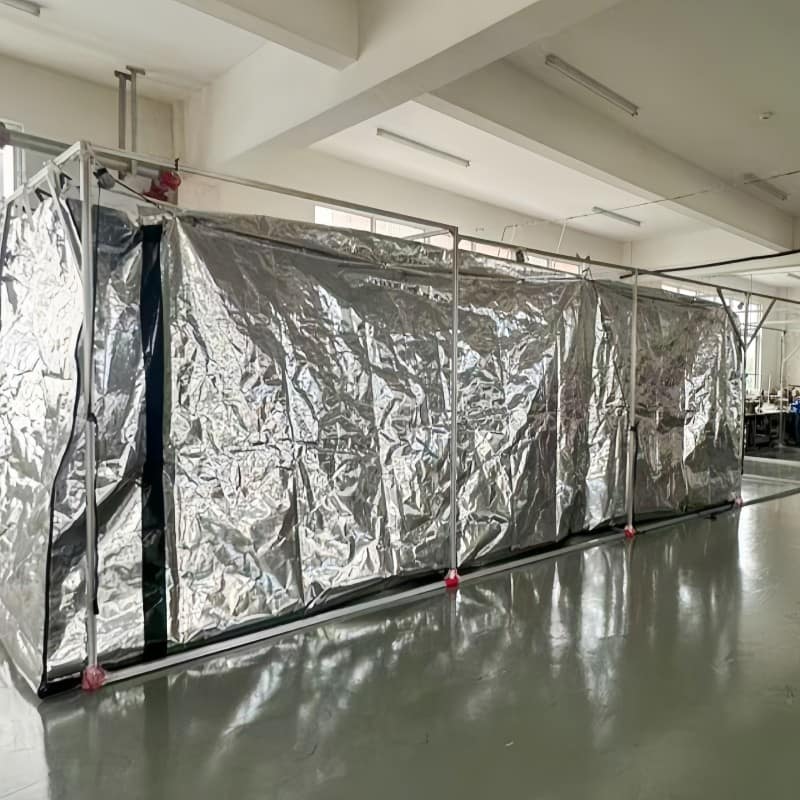
| Woven thermal (fabric) | Woven PE + aluminum foil lamination | Moderate — tear strength from woven layer | Temperature-sensitive cargo |
Loading spout tearing is another common puncture pattern. I’ve seen liners that handled transport pressures flawlessly fail at the spout because the filling nozzle was misaligned, or the spout wasn’t securely heat-sealed to the liner body. For granular cargo loaded at high speed, the spout attachment point absorbs the full impact force. A woven barless liner with a heat-welded seamless body eliminates many spout failure points, but only if the spout diameter matches the filling equipment.
How Moisture and Condensation Contribute to Container Liner Failure
Moisture damage is less visible than tearing but accounts for a large share of cargo losses in bulk container shipping. Two mechanisms dominate: external water ingress through container wall defects, and internal condensation driven by temperature swings. A container traveling from a warm loading port to a cold sea region will cool its interior walls, causing moisture-laden air to condense on the liner surface — the “container rain” effect. If that condensation reaches the cargo, powders cake, granules clump, and food-grade materials mold.
Standard woven liners provide physical containment but are not moisture barriers unless coated. A 140 gsm HDPE woven liner alone may offer moisture resistance above 98% but will still allow vapor transmission through needle holes. For truly moisture-sensitive cargo — food powders, pharmaceutical intermediates, hygroscopic chemicals — the liner must include a sealed moisture barrier. PE film liners achieve 100% moisture and dust barrier performance due to their continuous film structure. Alternatively, a woven liner with double-sided LDPE lamination, like our malt-grade liner, provides the puncture resistance of woven fabric combined with a complete moisture and odor seal.
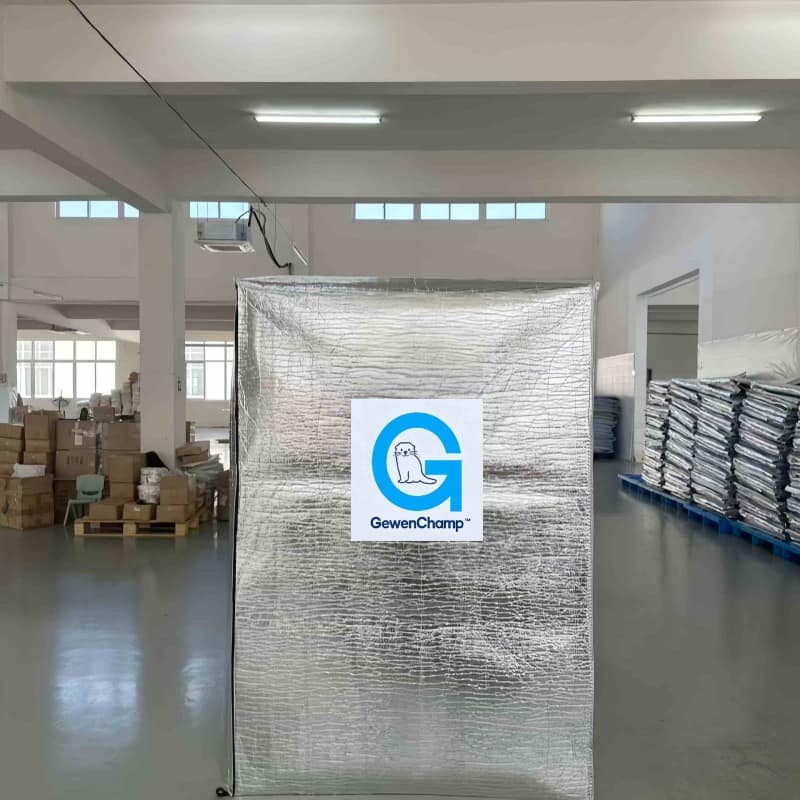
Thermal liners add another layer of condensation protection. The 3mm EPE foam core in our TL-02 thermal container liner delivers a moisture vapor transmission rate below 0.033 g/(m²·h·kPa), effectively isolating the cargo from wall condensation. In multiple shipments we’ve monitored, cargo loaded inside a TL-02 liner into a standard dry container maintained stable relative humidity even when external walls were wet. However, no liner can fully compensate for wet cargo loaded at origin. Pre-loading moisture testing of bulk commodities should be a mandatory step in any failure-prevention protocol.
Material and Seam Failures: A Root Cause of Liner Problems
When a container liner fails at the seams rather than the body, the root cause almost always traces back to the manufacturing method and quality control, not to operational abuse. The seam is the weakest mechanical point in any liner — it concentrates stress from fill pressure, cargo shifting, and discharge operations into a narrow zone. How that seam is constructed determines whether it will hold.
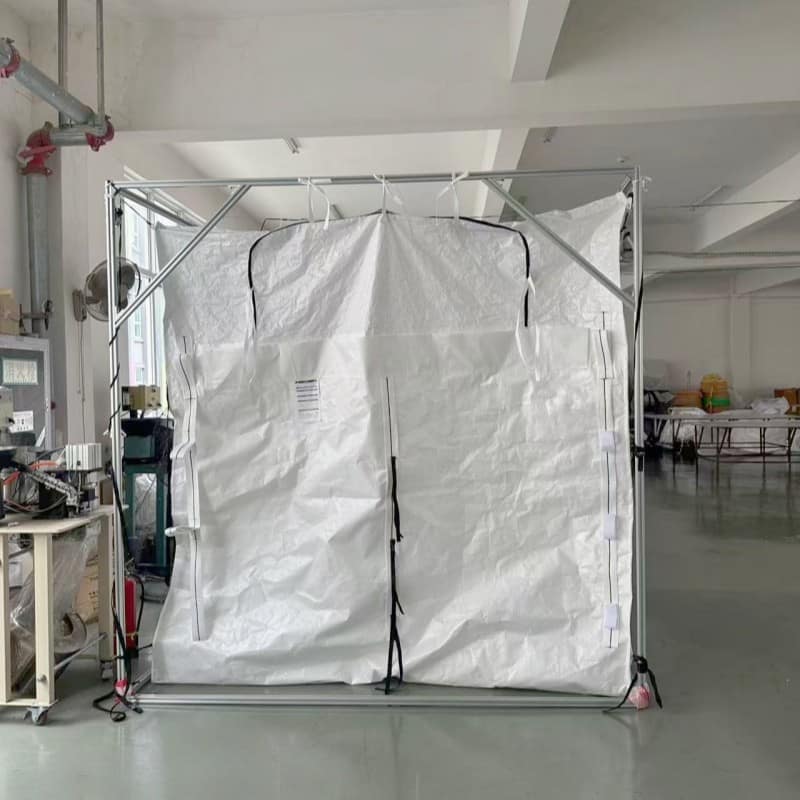
Stitched seams on uncoated woven bulk liners create needle holes that leak powders and allow moisture ingress. For granular cargo, these leaks may be tolerable, but for fine powders like titanium dioxide or kaolin clay, even pinhole losses become a compliance and housekeeping problem. The DBL-W06 sift-proof liner solves this by sealing all stitched seams with high-adhesion PU tape on top of a double-sided PE coating, achieving zero leakage for particles down to 50 mesh. I’ve recommended this liner to several mineral exporters, and the difference in container cleanliness after discharge is immediate.
Heat-welded seams on PE film liners eliminate stitch holes entirely but introduce their own failure modes. If the weld temperature or pressure is inconsistent, the bond can be weaker than the surrounding film, creating a tear propagation point. In a 140-micron LDPE liner, a seam weld that reaches full parent-material strength (1,500 N/5cm tensile) will perform reliably; one that falls short by 15% may survive loading but rupture during discharge when the liner is under maximum stretch. Our quality system verifies weld strength on every production batch, because the margin between a successful shipment and a cargo loss often hides in that 15%.
Material incompatibility between liner and cargo also triggers failures that masquerade as seam problems. Certain chemical residues or hot-loaded liquids can attack PE film, reducing its elongation from 30% to under 10%, at which point normal stress from cargo movement tears the liner. Always verify chemical compatibility if your cargo isn’t a standard dry bulk commodity.
Loading and Discharge Methods That Damage Container Liners
The way cargo enters and exits the liner creates stress patterns that are easy to overlook during specification. A liner that withstands static cargo weight can still fail under the dynamic forces of pneumatic loading, high-speed auger filling, or gravity discharge with sudden flow surges.
Pneumatic loading blows material into the liner at velocity, generating internal pressure spikes. If the liner’s top spout is not correctly sized for the blower nozzle, back-pressure can rupture the spout attachment or balloon the liner body. Our 30FT PE film liner for European plastic pellets includes four top filling spouts heat-sealed into the liner — a configuration that distributes inflow across multiple points and reduces local pressure. This design became standard after we observed repeated spout failures on single-spout liners used with high-capacity European filling stations.
Discharge method choice is equally critical. Gravity discharge through a bottom spout works well for free-flowing granules, but if the cargo has bridged or caked, the sudden weight of a collapsing column can rip the spout or stress the lifting loops beyond their rated load. In our woven dry bulk liner, lifting loops are each rated for at least 5 tons, but only when loaded vertically. If a loop catches on a container corner during discharge, it can be pulled sideways and fail at a fraction of its rated capacity. Proper installation training that covers loop positioning is not optional — it’s part of the liner system.
Mid-article note: If your operation involves fine powders, sticky materials, or high-speed filling equipment, the liner’s seam and spout specifications need to be confirmed against your exact loading parameters. A single mis-match can cause failure even with a correctly selected liner. Send your part numbers and filling system details to [email protected] and we’ll verify compatibility before you order.
Preventing Container Liner Failure: Best Practices from Inspection to Loading
Most container liner failures can be eliminated with five pre-loading steps that cost almost nothing in time but save thousands in cargo claims.
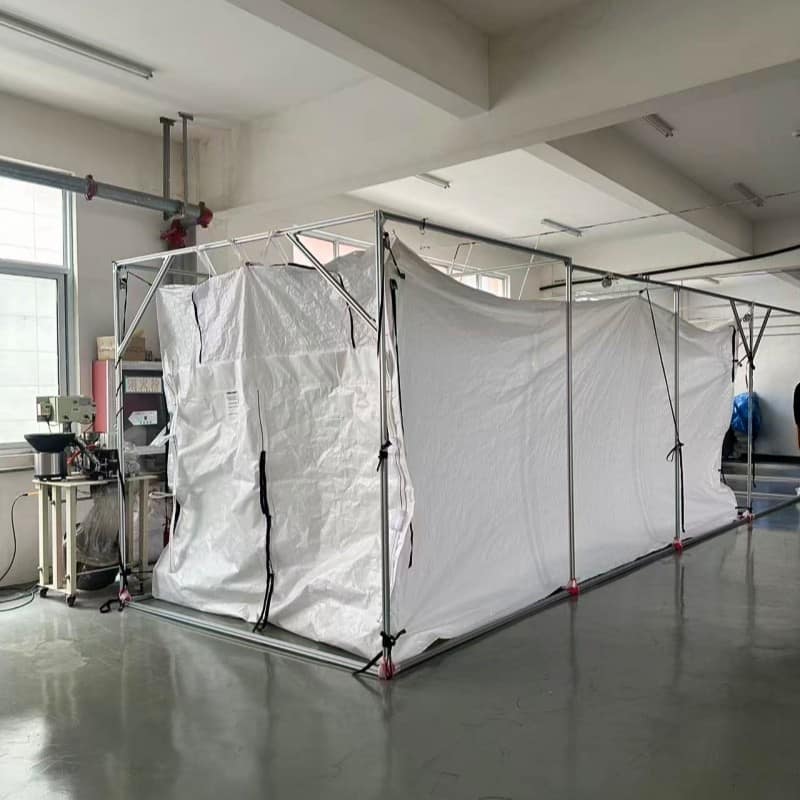
First, inspect the container interior thoroughly. Run a hand along the walls and floor to feel for nail heads, burrs, or sharp weld spatter. I’ve seen liners that were punctured before any cargo went in because the inspection stopped at a visual scan. If the container has been used for steel or machinery, pad problem areas with corrugated board or plywood. Second, verify liner type against cargo and route. A thermal liner isn’t needed for plastic pellets on a temperate route; a standard woven liner won’t suffice for sugar going through equatorial waters. Third, confirm spout and discharge configuration. If your facility uses pneumatic loading, the liner must have appropriately sized spouts with reinforced attachment. If discharging by gravity into a pit, ensure the discharge spout is long enough to reach below the container floor without stretching. Fourth, train loading personnel on proper strap and loop attachment. A liner that shifts during transport can tear at restraint points or block the discharge spout. The installation pattern we recommend in our training materials places straps at 1-meter intervals along the container walls, with lifting loops secured to the top rail, not the floor anchors. Fifth, conduct a final visual check after filling: are all spouts closed and secured, are there any bulges indicating uneven fill, are the lifting loops still properly positioned?
For cargoes with a history of moisture damage, adding a thermal pallet cover over palletized goods inside the liner provides a secondary moisture barrier that has reduced condensation claims by over 70% in several programs we’ve supported. The TP-01 woven thermal pallet cover reflects 95% of radiant heat and adds an extra waterproof layer that costs a fraction of the cargo value it protects.
Questions Bulk Shippers Ask About Container Liner Failure
Can I reuse a container liner that did not fail on a previous shipment?
It depends on the liner type and its condition after discharge. Woven thermal liners with aluminum foil lamination can be reused 3 to 5 times if the foil remains intact and seams show no elongation. EPE foam thermal liners are also reusable 3 to 5 times under normal handling. However, standard PE film liners are typically single-use because film stretching and potential pinholes make failure risk unacceptable on a second journey. Before reusing any liner, inspect every seam, spout attachment, and the full body surface, and run a water-leak test if the cargo is moisture-sensitive.
How do I know if my cargo is compatible with a standard dry bulk container liner?
Compatibility hinges on three factors: particle size and shape, chemical composition, and moisture requirements. Free-flowing granules like plastic pellets, soybeans, or corn work well with a standard woven container liner. Fine powders like titanium dioxide or cement require a sift-proof liner with sealed seams. If your cargo is hygroscopic — sugar, salt, malt — you need a liner with a moisture barrier, such as a laminated woven or PE film liner. For food-grade cargo, verify that the liner carries the required certifications (FDA, LFGB, EU regulations). We publish chemical compatibility data for our PE and PP liners; share your cargo specification with us if you are unsure.
What is the single most common installation mistake that leads to liner failure?
Incorrect strap and loop positioning. When lifting loops meant to be secured at the top rail are anchored to floor points, the liner cannot expand uniformly during filling and creates high-stress zones that tear either at the loop attachment or along the top seam. We’ve seen liners rated for 25 tons fail at 18 tons because of this single error. Our installation training materials show proper strap spacing and loop routing for 20ft and 40ft containers, and we recommend a supervised first installation for any new customer program. The 15 minutes it takes to get loop placement right saves the cost of an entire containerload of lost cargo.
Can condensation still form inside an anti-condensation thermal liner?
An anti-condensation thermal liner with an EPE foam core and aluminum foil layer reduces condensation dramatically, but not absolutely. If the cargo is loaded hot or with high internal moisture, and the external temperature drops sharply, some condensation can still occur on the innermost layer. The foam core’s low thermal conductivity slows temperature change inside the liner, giving condensation less time to develop, but it cannot block moisture that originates from within the liner. The best practice is to load cargo at ambient temperature and confirm cargo moisture content is within specifications. For extremely sensitive cargo, combine the thermal liner with desiccant packs placed inside the liner.
Is it worth paying extra for a sift-proof liner instead of a standard woven liner?
For fine powders and high-value granular products, the extra cost is negligible against the cost of a single leak. A sift-proof woven liner with PU-taped seams costs roughly 15 to 20 percent more than a standard woven liner but eliminates dust losses, container decontamination fees, and the risk of a rejected shipment. In one mineral export program we support, switching to sift-proof liners reduced unloading area cleaning costs by over 90 percent and eliminated two cargo claims in the first year. If your cargo particle size is below 50 mesh, or if you ship into ports with strict environmental discharge rules, the sift-proof option is not a premium — it’s a requirement. Share your cargo type and discharge location with our team at [email protected], and we’ll confirm the right liner specification for your operation.
 English
  German
  Spanish