
Container liner weight distribution is a factor that many logistics planners overlook until a container fails a weighbridge check or a load shifts dangerously during transit. While container liners are well known for moisture and contamination protection, their role in stabilizing bulk cargo and maintaining uniform load distribution is equally critical. Uneven loading inside a 20-foot or 40-foot container can create serious safety hazards, increase cargo damage, and lead to regulatory penalties. Through proper liner selection and loading techniques, shippers can effectively control how bulk material settles, ensuring that weight remains balanced from the point of loading until final discharge.
Uneven Weight Creates Safety Risks in Bulk Cargo Transport
When bulk cargo is loaded into a standard ISO container without adequate containment, the material does not stay where it is placed. Vibration from road transport, vessel movement during sea freight, and even the container being tilted during handling can cause granular or powdered cargo to flow into any available void space. Once a substantial portion of the load migrates to one side or shifts toward the doors, the container’s center of gravity moves outside the envelope assumed by the original load plan.
I have inspected containers arriving after long-haul voyages where this effect was severe enough to bend the container floor cross members. That is not simply a cargo damage event. A container with a deformed structure may be red-flagged at the terminal, delaying the entire shipment and triggering costly repair charges. More immediately, a weight imbalance means the road chassis may exceed individual axle limits even though the gross vehicle weight remains legal. Enforcement agencies in Europe and North America increasingly use weigh-in-motion systems, and a single axle overload can result in a fine, a prohibition order, or both. In short, what starts as a modest cargo shift inside the container becomes a compliance and safety problem that no freight forwarder can afford to ignore.
Container Liners Directly Influence Weight Distribution
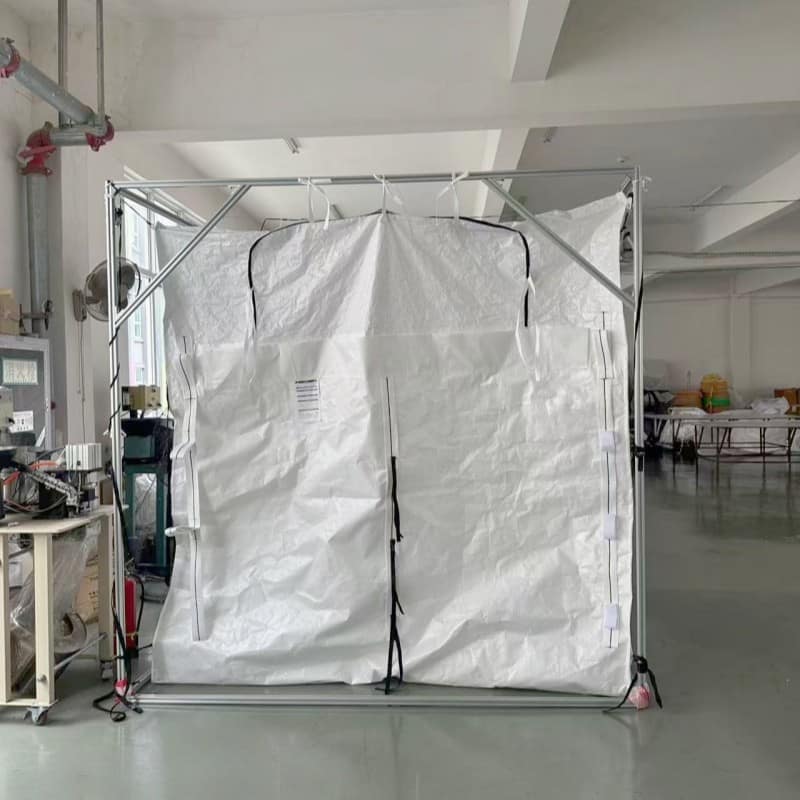
A properly specified container liner is not simply a bag. It is a load management tool. By creating a sealed, high-strength enclosure that is physically attached to the container walls through lashing points and anti-slip bases, a liner restricts the bulk material’s freedom to migrate. The liner’s internal dimensions and the location of filling and discharge spouts directly shape how the cargo column forms during loading, while the fabric’s friction characteristics influence the material’s tendency to slide under vibration.
A practical example is the barless woven design used in some dry bulk liners, such as the barless woven container liner we produce at Giant Flexpack. By eliminating internal reinforcing bars, the internal surface stays smooth and continuous. This prevents granular products like soybeans or plastic pellets from jamming or piling unevenly as they enter the liner, a failure mode we see regularly with older bar-style designs where small granules bridge between the bars, creating hollow pockets that later collapse during transit and shift the load.
How do container liners prevent cargo from migrating during a journey?
The liner acts as a flexible secondary container inside the shipping container. Fixed to the container walls at multiple attachment points and equipped with a non-slip base, it essentially “walls in” the bulk material. Even under sustained vibration, the cargo cannot escape the liner’s volume and flow into the corners or door void. This containment works regardless of transport mode; we have documented cases where cargo loaded with a sealed liner maintained its original weight distribution after rail, road, and sea legs that together lasted over 50 days.
Loading Practices That Achieve Even Container Weight
Even the best-designed liner cannot compensate for poor loading technique. The filling spout must be positioned so that the material enters the liner at the point intended to receive the greatest depth, typically near the center for a single-spout system. Filling too rapidly can introduce air pockets that settle later and leave a depression in the cargo surface, after which the surrounding material collapses into the gap, creating an asymmetric distribution. A steady, controlled fill rate combined with brief vibration cycles after each ton of material loads produces a denser, more uniform column.
Before loading, the container itself must sit level. Even a 1-degree lateral tilt will bias the fill toward the low side, and by the time the operator notices, correcting it requires reopening the liner and manually redistributing several tons, an operation that takes hours. If your program involves materials with a very high angle of repose or a tendency to bridge, it is worth confirming the correct spout configuration and fill sequence with the liner manufacturer. Contact us at [email protected] for a technical review specific to your cargo.
Key Liner Features for Managing Load Distribution
A few design elements have a disproportionately large effect on how bulk cargo settles and stays put.
| Feature | How It Helps Weight Distribution | Example Product |
|---|---|---|
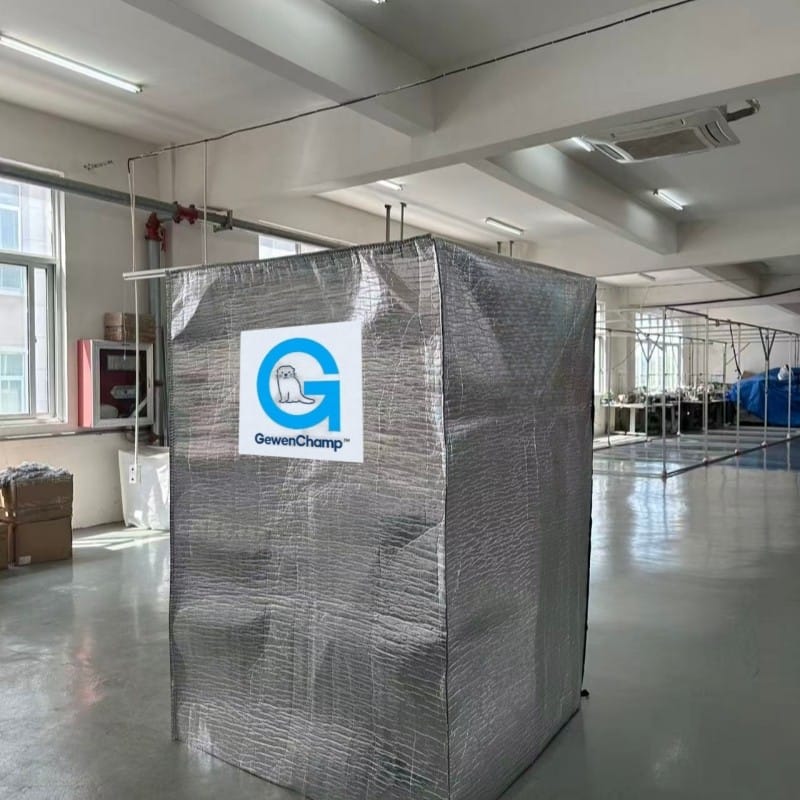
| High tensile strength | Prevents liner rupture or stretching under uneven load, maintaining original shape | TL-01 Thermal Container Liner (≥1,800 N/5cm warp) |
| Barless internal surface | Eliminates granule jamming and pile-up points, allowing a smooth, self-leveling fill | DBL-W05 Barless Container Liner |
| Sift-proof sealed seams | For powders, prevents material loss through stitch holes that would reduce local load mass | DBL-W06 Sift-Proof Container Liner |
| Multi-point lashing system | Anchors the liner to container corner posts, preventing the entire filled liner from sliding | Standard on all Giant Flexpack dry bulk liners |
Tensile strength matters in ways that are easy to miss on a datasheet. When a 25-ton load of cement powder consolidates during transport, the lateral pressure against the liner walls can approach several kilonewtons per square meter. If the fabric stretches or if a seam fails, the load redistributes instantly. The warp tensile strength of 1,800 N/5cm found in our thermal container liner is not a marketing figure, it is the margin that keeps the unit load intact under those real-world pressures.
Matching Your Bulk Cargo to the Right Liner
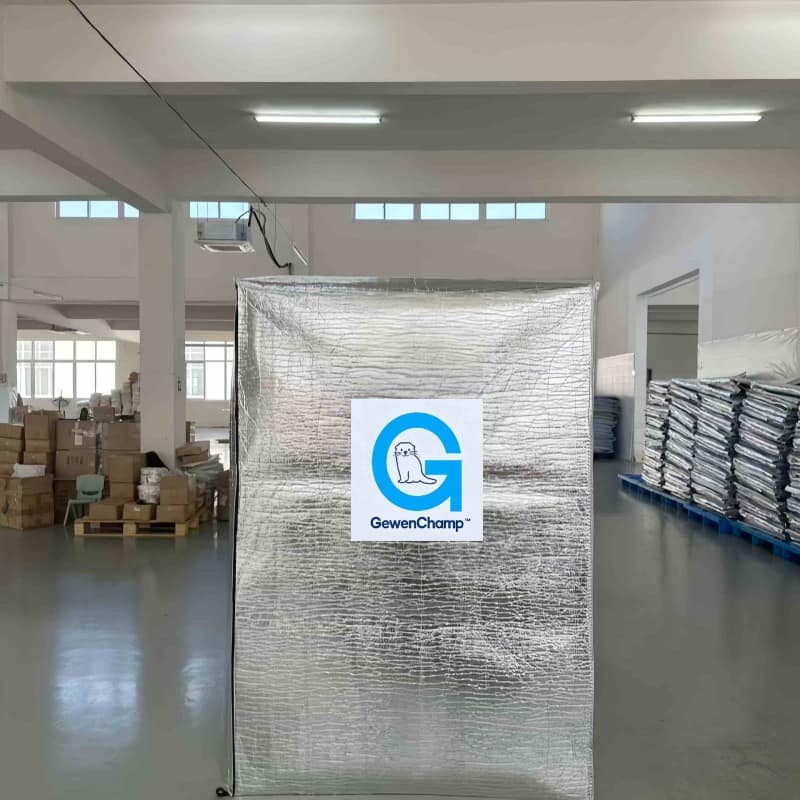
Weight distribution is cargo-specific. A liner that performs perfectly with free-flowing plastic pellets may perform poorly with cohesive titanium dioxide powder, which can form rat-holes and bridges inside an uncoated woven fabric. For powders, a PE film liner with a smooth inner surface offers lower adhesion, but its lower tensile strength compared to woven alternatives means the fill height must be managed more carefully.
For high-density bulk such as cement or soda ash, the liner must also withstand significant static pressure at the base without distorting, so specifications like GSM (grams per square meter) and coating thickness move to the front of the selection criteria. When a shipment involves multimode transport with multiple handling lifts, we specify extra lashing points and a robust anti-slip base. Our engineering team can recommend the correct liner construction once they know your material’s bulk density, particle size distribution, and the complete transport route. Submit your load profile to [email protected] or call +86 523 87683880 for a tailored liner specification.
Common Questions About Container Liner Weight Distribution
How does weight distribution affect over-the-road compliance?
Uneven weight distribution can put a truck out of compliance even when the gross vehicle weight is within legal limits. Individual axle weight limits are absolute, and a concentration of load toward the rear, for example, may overload the rear axles while the steer axle remains underloaded. This results in fines at weigh stations and may force the driver to offload cargo at roadside. Because container liners keep bulk material from shifting en route, the load balance established at loading is preserved through the entire journey, making axle compliance predictable rather than a matter of luck.
Can container liners help with axle weight regulations?
Many shippers assume axle compliance is purely a loading dock calculation. That makes sense until the container hits rough sea conditions and the cargo migrates. A liner that is correctly sized, anchored, and filled prevents that migration, effectively locking the load plan in place. This means the axle weights measured at the origin weighbridge remain accurate at the destination weighbridge, and the truck operator does not receive an unpleasant surprise hundreds of kilometers into the delivery.
What happens if bulk cargo shifts during a long ocean voyage?
The consequences scale with the degree of shift. A minor movement of a few centimeters may only require re-leveling at the destination port, which adds labor cost and risk of contamination. If a substantial portion of the load shifts to one side, the container can list, making it impossible for standard spreaders to pick it up without manual repositioning. In extreme cases, the container structure may be damaged beyond repair. We have seen containers with warped side rails and floor panels because a 20-ton grain load slid into a corner during heavy weather, effectively writing off the unit.
Do different liner materials affect weight distribution?
In our experience with granular cargoes, liner material friction characteristics are often overlooked. A coated woven polypropylene surface offers more resistance to sliding than a smooth LDPE film, which can be beneficial for cargo that tends to fluidize under vibration. However, for sticky or cohesive powders, a smooth film may actually perform better because it releases the material cleanly during unloading, preventing residue that could trap moisture and later cause local weight shifts. The material choice is not trivial and should be part of the specification process.
How can I test if my current liner setup is adequate for my cargo weight profile?
The more useful question is about predictability: can you confidently reproduce the same weight distribution across multiple shipments? A single trial run with a test load may not reveal settlement patterns that develop over repeated cycles. We recommend instrumenting a trial container with cheap load cells or using weigh-in-motion data before and after transport to map the distribution drift. If you would like assistance designing a repeatable load test specific to your product and route, share your cargo type and container sizes with our team at [email protected].
 English
  German
  Spanish