
Sourcing container liners from China can unlock significant cost advantages and expand your supply chain flexibility, but it also introduces variables in consistency, compliance, and production capability. As Daniel Wu, a thermal packaging and industrial logistics solutions specialist with over fifteen years of hands-on experience in container liner manufacturing, I’ve seen first-hand how a disciplined supplier evaluation process separates a reliable strategic partnership from a costly procurement mistake. This checklist is built for importers, procurement managers, and quality assurance professionals who need a structured, technical approach to qualify container liner manufacturers—covering dry bulk liners, PE film liners, and insulated thermal liners.
Before we dive into the checklist, it’s essential to preview the primary liner categories you’ll likely encounter: woven dry bulk container liners, PE film container liners, and thermal insulation container liners. Each serves distinct cargo types and performance requirements. Understanding them upfront helps you ask the right questions when evaluating a factory.
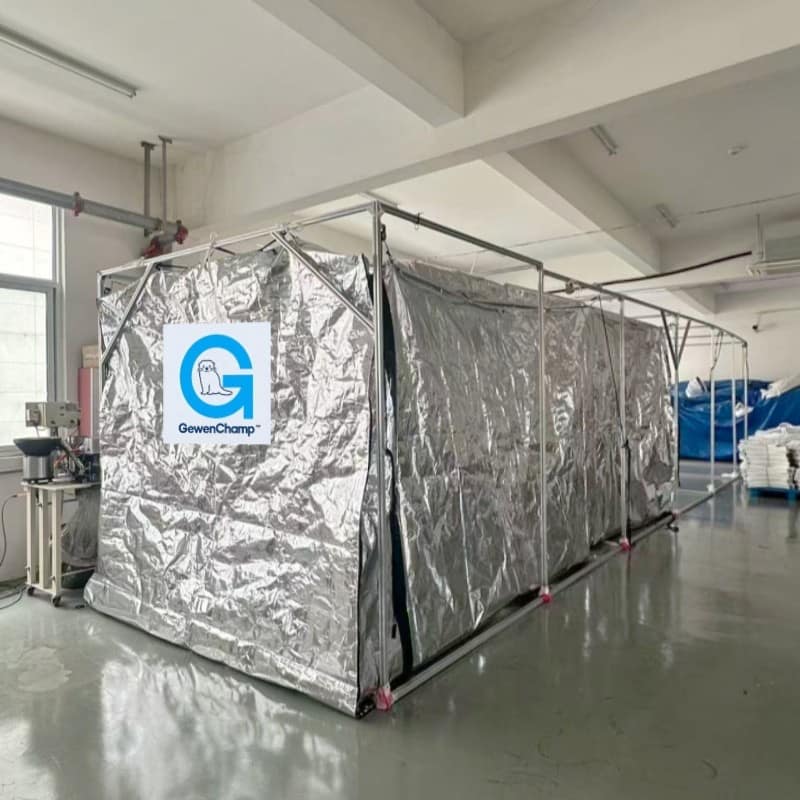
Pre-Sourcing Foundation: Define Your Liner Profile
A universal liner does not exist. Start by documenting your precise operational parameters:
- Cargo type and physical form (powder, granule, lump, liquid-viscosity, food-grade).
- Loading and discharge method (top load, bottom discharge spout, pneumatic, gravity).
- Container size (20ft, 40ft, 40HQ, 30FT European standard).
- Moisture sensitivity and anti-condensation requirements.
- Temperature control needs (ambient, cold chain, passive insulation).
- Regulatory certifications required in your destination market (FDA, LFGB, REACH, RoHS, ISO 9001).
- Expected order volume, MOQ tolerance, and lead time flexibility.
This profile will become your primary filter when evaluating production capability and material suitability. For instance, a factory that specializes in basic PP woven liners for sand and cement may not have the food-grade lamination line required for dbl w02 dry bulk container liner for malt or cocoa beans.
1. Material Composition and Construction Integrity
The physical construction of the liner determines barrier performance, tensile strength, and resistance to tears during violent container movements.
- Woven fabric weight and coating: For dry bulk woven liners, specify the fabric GSM (grams per square meter) and coating type. A standard dbl w01 dry bulk container liner commonly uses 140gsm HDPE with optional PE lamination. For powders, insist on double-sided coating and PU tape-sealed seams, as found in the dbl w06 woven sift proof container liner.
- PE film thickness: For PE film liners, thickness measured in microns (µm) directly correlates with durability. Food-grade dbl f01 pe film container liner options typically range from 120 to 160µm. European plastic pellet transport may require a bespoke 30FT configuration like the dbl f02 30ft pe film container liner, with multiple top filling spouts.
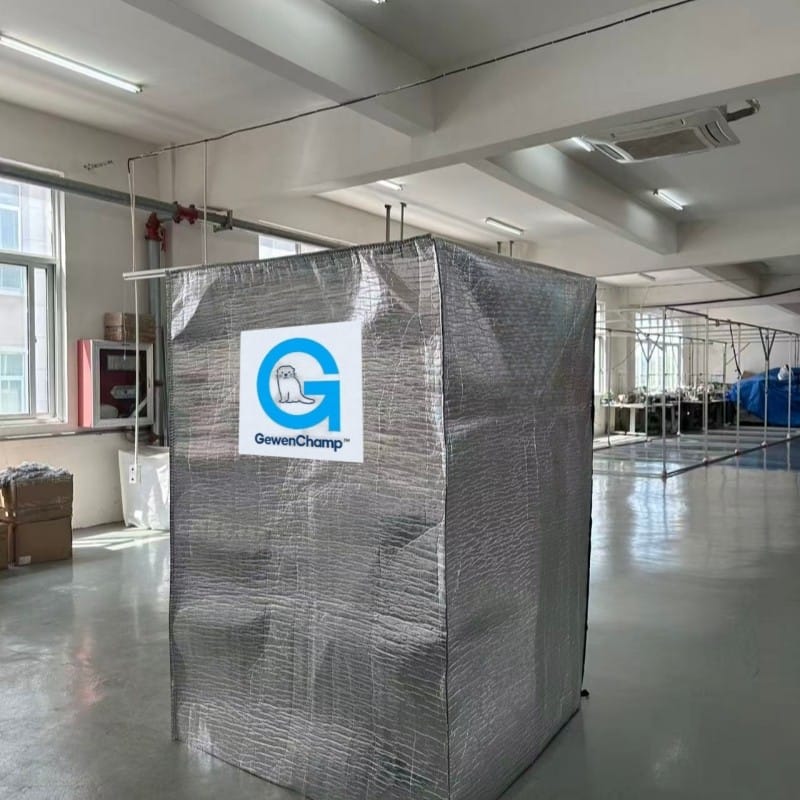
- Thermal liner composite layers: Insulation performance depends on the reflective film, core material, and lamination quality. Our GewenChamp™ tl-01 thermal container liner uses woven PE with double-sided aluminum foil lamination, reflecting 95–97% radiant heat. For more demanding routes, a four-layer structure like the tl-02 thermal container liner adds an EPE foam core, reducing thermal conductivity below 0.038 W/(m·K).
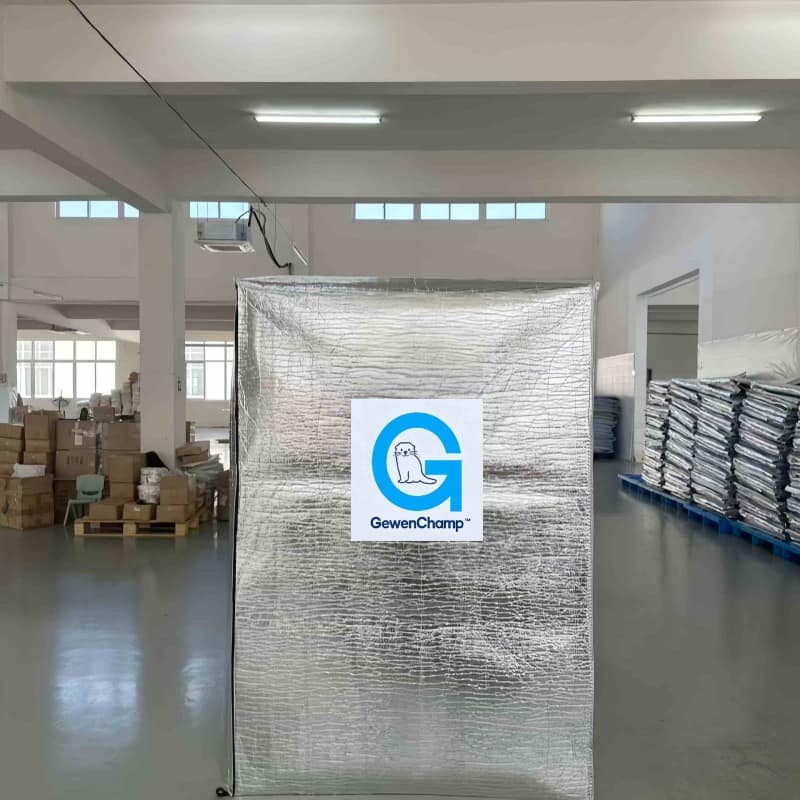
Ask potential suppliers for material datasheets, not just marketing descriptions. Check tensile strength values (warp/weft, N/5cm or N/15mm), elongation at break, and moisture vapor transmission rate. Falsifying these is common; cross-reference with third-party test reports.
2. Manufacturing Process and Quality Systems
An ISO 9001 certificate is a starting point, not a guarantee. During factory evaluation, probe deeper:
- Seaming technology: Heat-welded seams are essential for moisture-proof and sift-proof liners. Ask if they use hot-air welding, radio-frequency welding, or simple stitching. Heat-welded liners eliminate pinhole leaks, which is mandatory for powdered chemicals and alumina, as used in our dbl-04w wagon liner for railway transport.
- Cleanliness protocols: For food-grade liners, verify segregation of production lines, dust extraction systems, and employee hygiene procedures. Contamination with non-food-grade material can trigger a full FDA audit.
- In-line testing: Does the factory perform continuous web inspection, pinhole detection, and seam burst testing during production, or only final sample inspection?
- Traceability: Ask to see batch traceability records. Each liner roll should be traceable to raw material lot numbers, production dates, and shift records. This protects you in case of a recall.
3. Compliance and Certification Verification
Certifications are the language of trust in international trade, but many factories present expired, irrelevant, or falsified documents. Your checklist must include:
- FDA 21 CFR: For any food-contact container liner, request a valid FDA compliance certificate from an accredited third-party lab, covering migration testing specific to your cargo (fatty food, aqueous, alcoholic).
- LFGB and EU Regulations: If shipping to Europe, LFGB certification is mandatory. Confirm that test methods follow EU 10/2011 and include specific migration limits for your product category.
- REACH and RoHS: For industrial liners, these demonstrate chemical substance control. A factory that cannot provide recent REACH compliance for their raw resins and additives is a risk.
- Third-party testing credibility: Authorized partners like SGS, TÜV, or Bureau Veritas should issue reports in the supplier’s name. Watch for reports that only list a trading company or a different factory name—that indicates the supplier is not the actual manufacturer.
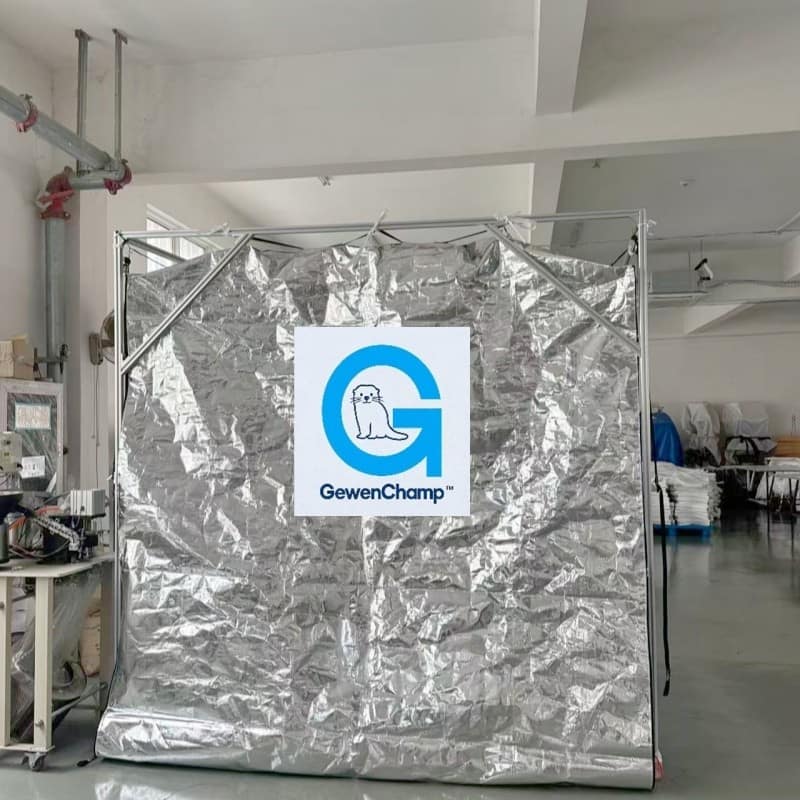
A credible manufacturer will proactively share their certification library. For example, all our GewenChamp™ liners and tp-01 thermal pallet cover series are covered by current FDA, LFGB, ISO9001, and SGS reports, and we provide customers with the actual test reports before order confirmation.
4. Thermal and Insulation Performance Validation
When your cargo is temperature-sensitive, the checklist must shift from static material specs to dynamic performance data.
- R-value and thermal conductivity: Request the test report method. For the tl-03 thermal container liner mpet double bubble mpet, the double bubble cushion creates a static air barrier that measurably outperforms single-bubble designs.
- Temperature variance testing: How stable is the internal temperature over a 72-hour simulation? Our tl-04 thermal container liner mpet pe composite film maintains cargo between -10°C and 30°C for 24-48 hours at ambient 25°C.
- Condensation prevention: The real threat is not just temperature, but container rain. A liner’s anti-sweat capability should be documented with moisture vapor transmission rate data. The EPE foam in the tp-02 thermal pallet cover achieves ≤0.033 g/(m²·h·kPa), effectively eliminating condensation inside the pallet wrap.
Ask for performance data from your own cargo type, not generic test conditions. A liner that works for wine bulk export may fail for heat-sensitive pharmaceuticals.
5. Production Capacity and Lead Time Realism
Many buyers have faced the “capacity overpromise.” Validate with these checks:
- Extrusion and loom capacity: For woven liners, the number of circular looms and lamination lines defines real daily output. A factory with five looms claiming 50 containers per day is lying.
- Warehouse and consolidation: Suppliers should show you their finished goods quarantine area. This reveals whether they can hold your order before pre-shipment inspection without rushing it into a container.
- Historical order data: Ask for references for orders of similar size and destination. A serious manufacturer will provide anonymized order volume proof with customer permission.
Lead time components to clarify:
– Raw material procurement lead time (PE resins often imported, adding 2–4 weeks).
– Production slot allocation.
– Mandatory quarantine period for food-grade orders (often 24–48 hours after production for migration testing).
– Document preparation and container loading.
6. Packaging, Logistics, and On-Site Support
A liner is useless if it arrives torn or without proper installation guidance.
- Packing density: How many liners per pallet? Over-packed units can crush inner layers, creating hidden crease weak points. Our tp-03 thermal pallet cover design balances protection with compact shipping.
- Labeling and marking: Each liner should be individually labeled with batch number, production date, and size. This is particularly critical for food-grade and military-adjacent shipments.
- Container loading supervision: Will the factory provide remote or on-site installation support? For first-time buyers, video call supervision during first loading prevents catastrophic failures. Our tp-04 thermal pallet cover aluminum foil woven pe aluminum foil comes with clear visual markings and installation guides, but human support during the initial setup is essential.
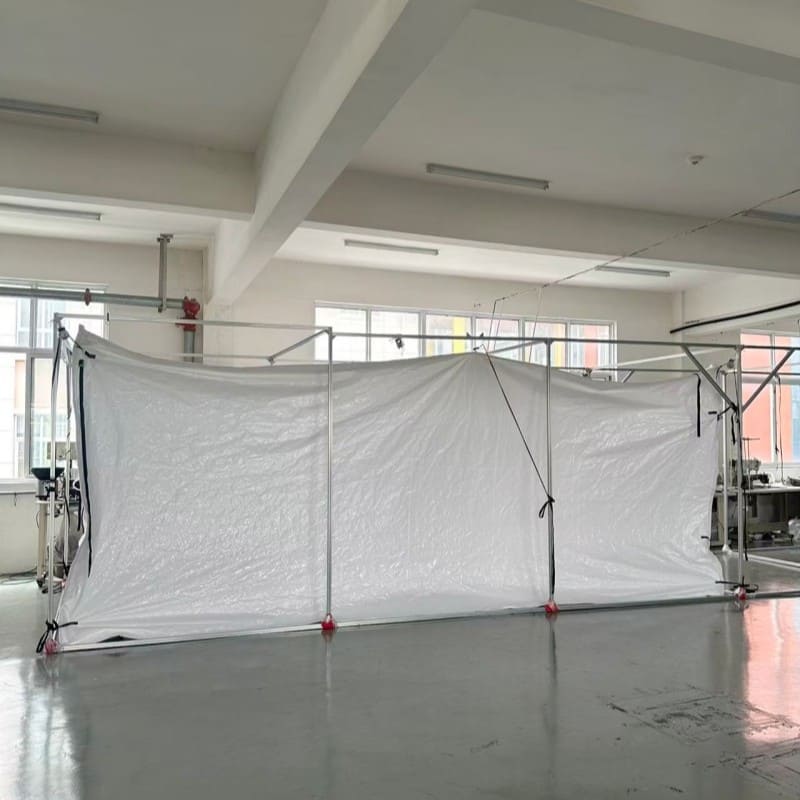
7. After-Sales Technical Support and Warranty Terms
Post-delivery support separates transactional suppliers from strategic partners. Your quality agreement should define:
- Claims procedure: How quickly must a defect be reported and evidence submitted? A responsible manufacturer offers a clear, fair policy.
- Root cause analysis commitment: If a liner fails in transit, will the factory participate in a joint failure investigation, or merely offer a product replacement?
- Continuous improvement feedback loop: Does the supplier accept cargo-specific modifications after the first order? For example, adjusting spout diameter or adding anti-static treatment for chemical powders based on field feedback.
The checklist above reflects the integrated approach we apply to every buyer inquiry at Giant Flexpack. With our thermal packaging technology expertise and global logistics solution consultancy, we don’t just ship liners; we help you secure cargo integrity across multi-modal international transport.
How to Use This Checklist When Evaluating Suppliers
- Pre-qualify via documentation: First, request a full certification pack, material datasheets, and production capacity statement. Eliminate suppliers who cannot provide these within 48 hours.
- Technical call: Conduct a structured call using the checklist topics, asking for specific test methods, not just yes/no answers.
- Sample evaluation: Always request pre-production samples of your exact spec and subject them to an independent lab test for contamination, thickness, and tensile strength. Compare against the datasheet values.
- Factory audit: For large-volume contracts, an on-site or third-party audit of the production line and batch records is non-negotiable.
- Pilot order with field test: Start with a small commercial order on a shipping route you know well, and monitor liner performance during loading, transit, and discharge. Document any anomalies with photos and timestamps.
By systematically applying this quality checklist, you transform supplier evaluation from a gamble into a predictable process. Whether you need standard dry bulk liners, a specialized thermal insulation container liner for cold chain food export, or a custom woven dry bulk container liner for dusty mineral cargo, the principles remain the same: verify before you trust, and partner with manufacturers whose processes match their promises.
If your next shipment demands a liner supplier that offers not only competitive factory-direct pricing but also the engineering depth to diagnose and prevent cargo damage, I’m ready to support your technical evaluation. Protect your cargo. Perfect your transport.
Frequently Asked Questions
Q: What is the single most overlooked factor when sourcing container liners from China?
A: Batch traceability. Many buyers focus on the liner’s tensile strength but ignore whether the supplier can link every liner to its raw material lot. In a contamination incident, this gap makes it impossible to define the scope of the recall.
Q: How can I verify that a thermal liner will perform as claimed?
A: Demand a test protocol that matches your real-world route conditions—external temperature, humidity, transit duration. Generic lab tests at 25°C don’t predict performance on a summer Red Sea shipping lane where container walls can reach 70°C. Ask for simulation reports that include your cargo mass and packing method.
Q: Is a thicker liner always better?
A: Not necessarily. Thickness adds puncture resistance, but it also increases weight and reduces flexibility, which can cause fatigue cracking at fold points. For PE film liners, 140–160µm is adequate for most dry bulk applications. The key is balanced mechanical properties, not just micron count.
Q: What MOQ should I expect for custom OEM liners?
A: For customized dry bulk woven liners, MOQ often starts around 500–1,000 units. For thermal liners, it can be lower—around 100–300 units—because the production process is more modular. Always negotiate a smaller pilot order before committing to high-volume production.
Q: How do I ensure food-grade compliance across the entire supply chain?
A: Require the manufacturer to provide migration test reports for every layer of the liner (the food-contact layer, and any adhesive or coating). Also, verify that they use dedicated food-grade production areas and not merely a cleaning protocol between industrial and food orders. Third-party auditing of segregation is critical.
If you are ready to move beyond a generic RFQ and need a technical dialogue about your specific cargo protection requirements, reach out to our team at [email protected] or call +86 523 87683880. Let’s build a liner solution that matches your transport reality.
 English
  German
  Spanish