
Moisture is one of the most underestimated causes of electronics damage in international container shipping. While logistics teams often focus on impact, vibration, and temperature extremes, condensation and humidity frequently cause corrosion, short circuits, and functional failure that only appear weeks or months after delivery. For electronics exporters, a single moisture-compromised container can lead to rejected shipments, warranty claims, production line stoppages at the customer site, and lasting reputational damage. This article explains why moisture enters containers, how it damages electronics, and the layered protection strategies — including anti-condensation thermal container liners — that reduce these risks in sea freight.
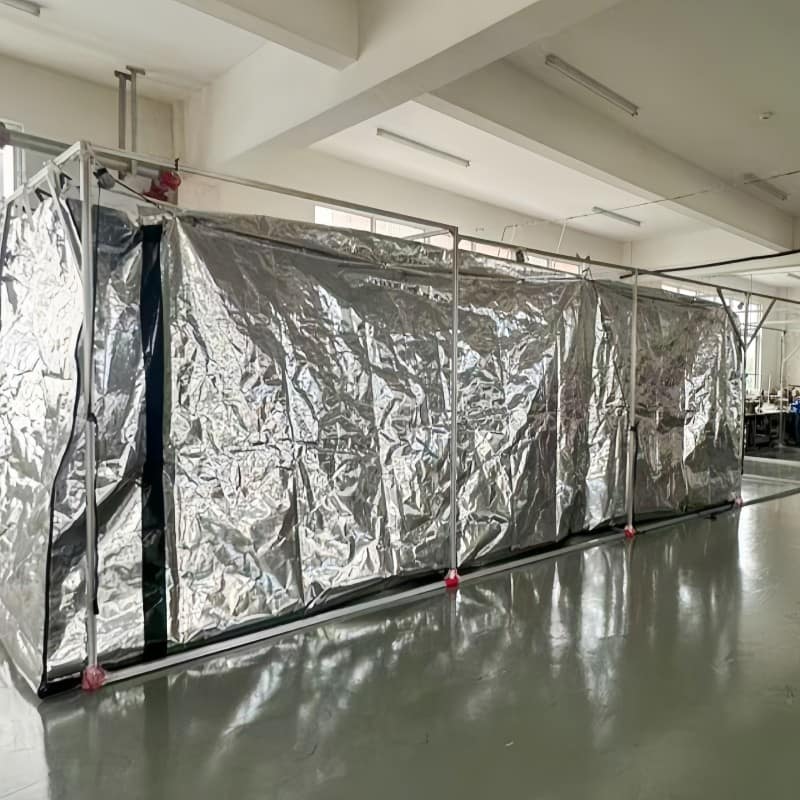
Why Moisture Is a Serious Threat to Electronics in Containers
Electronics are far more sensitive to moisture than most industrial cargo. Even small amounts of condensation can cause irreversible damage.
Common failure modes include:
- PCB corrosion — moisture forms an electrolyte layer on printed circuit boards, accelerating oxidation of copper traces and solder joints.
- Connector and contact oxidation — increased contact resistance causes intermittent failures, signal degradation, and complete device malfunction.
- LCD and display degradation — moisture ingress leads to delamination, clouding, and pixel failure.
- Battery degradation — lithium and nickel-based cells can short-circuit or lose capacity when exposed to high humidity.
- ESD risk — very dry air can increase electrostatic discharge, but repeated condensation-evaporation cycles can also stress sensitive components through micro-corrosion.
- Mold and packaging damage — humid conditions weaken cardboard, labels, and anti-static bags, making products unsellable even if the electronics themselves survive.
Unlike obvious physical damage, moisture damage often appears after the goods have cleared inspection. A customer may accept a shipment, only to discover latent failures during assembly or end use. That delay makes root cause analysis harder and disputes more expensive.
How Moisture Enters a Shipping Container
To protect cargo, it helps to understand where the moisture comes from.
1. Ambient air and container breathing
A container is not hermetically sealed. Warm, humid air at origin enters through door seals, cable ports, and drainage vents. As the ship crosses cooler latitudes or night falls, the air inside cools and its relative humidity rises. When the temperature drops below the dew point, water vapor condenses on the coolest surfaces — usually the container roof and walls. This is the so-called container rain effect.
2. Wooden floors, pallets, and dunnage
Wood container floors can hold significant moisture. New or pressure-treated wood, wet pallets, and unseasoned dunnage release water vapor into the container throughout the voyage. Even dry-looking pallets can contain 10–20% moisture by weight, which translates into kilograms of releasable water vapor in a closed 40ft container.
3. Packaging materials
Cardboard boxes, paper labels, and corrugated separators absorb humidity before loading and slowly release it during transit. If the container then cools, that released moisture condenses on the goods.
4. Cargo itself
Electronics assemblies with plastic housings, rubber components, or foam inserts can trap humidity from manufacturing or warehouse storage. Once sealed inside export packaging, that moisture has nowhere to escape.
5. Temperature cycling
Day-night cycles, hot ports, and cold ocean crossings create repeated condensation-evaporation cycles. Each cycle moves moisture from the air onto cargo and back again, accelerating corrosion and material degradation.
The Real Business Impact of Moisture Damage on Electronics Shipments
Moisture-related failures create costs that go far beyond the value of the damaged units.
A shipment of industrial control boards, telecom equipment, or consumer electronics can lose 5–15% of units to moisture-related defects depending on route, packaging, and container conditions. For high-value precision electronics, the rejection rate can be much higher. The downstream effects include:
- Emergency rework or replacement at destination
- Production line downtime for the customer
- Insurance claims with long processing times
- Contract penalties or loss of future orders
- Reputational damage in markets where reliability is a purchase criterion
In our work with electronics shippers, the most common trigger we see is not a dramatic water leak, but slow condensation accumulation over a 20–40 day sea voyage. By the time the container is opened, the subtle damage is already done.
Practical Moisture Protection Methods for Electronics Container Shipping
No single measure is sufficient. Effective moisture control uses multiple complementary layers.
1. Container-level anti-condensation liners
A high-performance thermal container liner reduces the temperature fluctuation that drives condensation. Materials such as EPE foam, MPET film, and aluminum foil reflect radiant heat and slow conductive heat transfer, keeping the internal temperature more stable. A stable temperature means the air temperature stays above the dew point for longer, reducing the frequency and severity of condensation events.
Our TL-02 Thermal Container Liner uses a four-layer structure — PET aluminum foil, woven PE, 3mm EPE foam, and PET aluminum foil — to achieve a moisture vapor transmission rate of ≤0.033 g/(m²·h·kPa). That barrier quality directly prevents external humidity ingress and suppresses container rain.
2. Desiccants
Silica gel, clay, or molecular sieve desiccants absorb residual moisture inside the sealed space. They are most effective when the container is as tight as possible, because desiccants cannot keep up with continuous humid air exchange. Typical usage for a 40ft container depends on cargo volume, packaging, route humidity, and expected transit time. A qualified packaging engineer can calculate the correct quantity based on moisture load and absorption capacity. Without a container liner, desiccants alone may become saturated within one to two weeks on humid routes.
3. Barrier packaging at carton and pallet level
Moisture-barrier bags, foil pouches, and vacuum sealing create a micro-environment around individual units or pallets. For electronics, this is a critical second line of defense. However, it does not eliminate the need for container-level protection, because condensation can soak outer cartons, cause label loss, and create handling problems even if the device inside the bag survives.
4. VCI packaging
Volatile corrosion inhibitors release molecules that form a protective layer on metal surfaces. VCI bags and emitters are useful for bare PCBs, connectors, and components with exposed metal. They work best in combination with moisture barriers, not as a replacement.
5. Humidity indicators and data loggers
Humidity indicator cards placed inside packaging show whether a critical humidity threshold was exceeded. Data loggers record temperature and relative humidity throughout the journey. These tools support insurance claims and help identify exactly where the moisture problem occurred.
6. Proper container ventilation decisions
On high-humidity sea routes, leaving container vents open can do more harm than good. Open vents allow warm, moisture-laden air to enter and then condense. For moisture-sensitive electronics, the container should be closed and sealed as quickly as possible after loading, with vents closed unless active climate control is used.
The Role of Thermal Container Liners in Moisture Protection
Thermal liners are often marketed for temperature control, but their moisture-control effect is equally important — and for electronics, it is often the deciding factor.
The physics is straightforward: condensation occurs when air temperature drops below its dew point. Any material that reduces the rate and magnitude of temperature change also reduces condensation risk. Reflective foil layers reflect radiant heat, while foam and bubble structures insulate against conductive and convective heat transfer. The result is a slower, shallower temperature swing inside the container, which keeps relative humidity more stable.
Beyond insulation, the best thermal liners are engineered as physical moisture barriers. They cover all six internal surfaces of the container, blocking humid air from the steel walls and wooden floor from reaching the cargo space. This directly prevents container rain — the dripping condensation from the ceiling that most often damages electronics.
Choosing the Right Container Liner for Electronics Cargo
The right liner depends on the value and sensitivity of the electronics, route climate, transit time, and whether the shipment is FCL or LCL.
| Liner | Material structure | Moisture protection characteristics | Best use case for electronics |
|---|---|---|---|
| TL-01 Thermal Container Liner | Woven PE + double-sided PE aluminum foil laminate | Blocks condensation; aluminum foil reflects 95–97% of radiant heat | Standard electronics and assemblies where moderate temperature stability is sufficient |
| TL-02 Thermal Container Liner | PET aluminum foil / woven PE / 3mm EPE foam / PET aluminum foil | Moisture vapor transmission ≤0.033 g/(m²·h·kPa); operating range -50°C to 80°C | High-value precision electronics, PCBs, semiconductors, long sea freight |
| TL-03 Thermal Container Liner | MPET / double bubble cushion / MPET | Reflects up to 98% of radiant heat; bubble layer adds insulation and shock absorption | Electronics sensitive to both moisture and impact/vibration |
| TL-04 Thermal Container Liner | Metallized PET film + polyethylene composite | Waterproof IPX6; light moisture barrier for moderate conditions | Cost-effective protection for consumer electronics and lower-sensitivity cargo |
For mixed or LCL shipments where a full container liner is not practical, thermal pallet covers such as the TP-02 EPE foam pallet cover provide pallet-level moisture and thermal shielding. They are particularly useful when electronics share container space with other cargo types.
Combining Liners with Desiccants and Other Measures
A robust electronics shipping protocol typically includes:
- Container-level thermal liner to stabilize temperature and block wall condensation
- Calculated desiccant placement to absorb residual moisture from cargo, packaging, and floor
- VCI protection for exposed metal components
- Carton-level barrier bags for high-value or bare-board items
- Data logger and humidity indicator cards for verification and claims support
When these layers are used together, moisture damage rates drop significantly — often below a fraction of a percent for properly prepared electronics, even on multi-week sea voyages.
One common mistake is using only desiccants while the container walls sweat. Desiccant alone cannot stop the condensation cycle; it can only absorb a portion of the released water. The liner breaks the cycle, and the desiccant handles the rest.
Pre-Shipment Checklist for Electronics Container Loading
Use this checklist before sealing a moisture-sensitive electronics container:
- Inspect the container floor and walls for moisture, staining, or musty odor. Reject containers with standing water or damp floors.
- Check that any previous cargo residue or dust is cleaned out.
- Use heat-treated, dry pallets and dunnage that meet ISPM 15. Avoid pallets that feel cool or damp to the touch.
- Install the thermal container liner according to the manufacturer’s instructions. Ensure the liner edges are secured and do not obstruct door sealing.
- Load electronics in dry conditions. Avoid loading during rain or heavy fog when possible.
- Place desiccants near the center and above the cargo, following the calculated dosage.
- Insert humidity indicator cards in multiple locations inside cartons and around the container.
- Install a data logger to record temperature and relative humidity for the entire voyage.
- Close and seal the container doors promptly. Keep vents closed unless the route and cargo plan explicitly require ventilation.
Common Mistakes to Avoid
- Relying only on desiccants — they saturate quickly on humid routes without a moisture barrier.
- Leaving vents open — open vents admit humid sea air and increase condensation, not reduce it.
- Using wet or unseasoned wooden pallets — these can release kilograms of water vapor over several weeks.
- Skipping the container wall barrier — the biggest source of condensation is the steel roof and walls.
- Ignoring packaging-level moisture — some moisture is trapped inside cartons and cannot be removed by container-level measures alone.
- Not monitoring — without data loggers, you lose the evidence needed to diagnose the problem or file a claim.
When Passive Protection Is Enough — and When It Is Not
For most electronics — consumer devices, telecommunications equipment, industrial controls, automotive electronics — a thermal container liner combined with desiccants and barrier packaging is sufficient. This passive approach is widely used on standard sea routes in 20ft and 40ft containers without refrigeration.
There are exceptions. Ultra-high-value bare semiconductor wafers, certain medical electronics, or shipments with very strict temperature and humidity tolerances may still require active temperature-controlled containers or specialised packaging. A passive liner reduces risk substantially but does not create a hermetically sealed, climate-controlled environment. The decision should be based on the product’s moisture sensitivity level, route duration, and customer acceptance criteria.
FAQ: Moisture Protection for Electronics in Container Shipping
How much moisture can damage electronics?
Even a few days at relative humidity above 60% can start corrosion on bare metal surfaces. Direct condensation on PCBs or connectors can cause immediate short circuits or latent failures. The damage threshold depends on the specific components and packaging, but the goal should be to keep relative humidity below 50–55% throughout transit.
Should I use desiccants or a container liner?
Use both. The liner blocks external humidity ingress and reduces the condensation cycle, while desiccants absorb residual moisture from the cargo, wooden floor, and packaging. A liner without desiccants may still allow gradual humidity buildup; desiccants without a liner become saturated too quickly.
Can a thermal container liner prevent container rain?
Yes. A properly installed liner with a low moisture vapor transmission rate blocks condensation from the container ceiling and walls. Our TL-02 liner has a moisture vapor transmission rate of ≤0.033 g/(m²·h·kPa), which directly suppresses the container rain mechanism.
What type of liner is best for high-value electronics?
For precision electronics, PCBs, and semiconductor-related cargo, the TL-02 Thermal Container Liner is our most common recommendation. Its EPE foam core provides strong insulation, and its four-layer structure delivers both thermal stability and a high-performance moisture barrier.
How many desiccant bags should I put in a 40ft container?
There is no universal answer. Correct dosage depends on cargo volume, packaging material, route humidity, voyage duration, and whether a moisture barrier liner is used. A common starting point for medium-risk electronics is 1–1.5 kg of desiccant per cubic metre of container volume, but this must be confirmed for your specific cargo and packaging.
Can I use a thermal pallet cover instead of a full container liner?
Yes, for LCL shipments or mixed cargo. A thermal pallet cover such as the TP-02 Thermal Pallet Cover protects individual pallets from moisture and temperature swings. For full-container electronics loads, a complete six-wall container liner is usually more effective because it covers the entire container interior.
Are thermal container liners reusable?
Many thermal liners can be reused 3–5 times if they are not punctured or heavily soiled. Our TL-01, TL-02, and TL-03 liners are designed for multiple use cycles. Inspect for tears, delamination, and accumulated moisture before reuse, and dry thoroughly if exposed to condensation.
Do I need a reefer container for electronics?
Usually not. Most electronics can be safely shipped in a standard dry container with a thermal liner, desiccants, and barrier packaging. Reefer containers are reserved for cargo with strict temperature requirements, ultra-high-value components, or routes with extreme ambient conditions.
Conclusion and Next Steps
Moisture protection for electronics in container shipping is not a single product but a system. A thermal container liner addresses the root cause of condensation by stabilising temperature and blocking moisture ingress. Desiccants, VCI packaging, and barrier bags handle residual sources, while data loggers and humidity indicators verify the outcome.
For electronics exporters and logistics providers, the goal is clear: reduce moisture-related failures, protect customer relationships, and avoid avoidable claims. A well-engineered container liner is the first and most important layer in that system.
If you are preparing an electronics shipment and want to evaluate the right liner for your route, container size, and cargo sensitivity, contact Giant Flexpack. Our team supports global electronics shippers with thermal container liners and pallet covers engineered for condensation control, stable temperature performance, and reliable sea freight protection.
Email: [email protected]
Phone: +86 523 87683880
 English
  German
  Spanish