
When beverage ingredients move in bulk inside ISO containers, they face failure modes that bagged or palletized cargo rarely does: condensation forming on container walls, temperature swings over weeks of ocean transit, fine powder sifting through seams, and cross-contamination risk from previous cargo. For milk powder, whey powder, malt, sugar, juice powder, cocoa, coffee, tea and similar dry ingredients, the container liner is not a shipping accessory. It is the primary food-contact surface and the main barrier between cargo and container.
A correctly specified liner protects ingredient purity, prevents caking and mold, reduces product loss, and keeps the shipment compliant with food safety regulations in the destination market.
Why Beverage Ingredients Need More Than a Standard Container Liner
Standard containers are not hygienic environments for direct food contact. Even cleaned boxes may carry residues from previous cargo, paint coatings, rust, treated wood floors, and door-seal gaps that admit moisture and pests. For bulk beverage ingredients, three dominant failure modes cause the vast majority of cargo claims:
- Moisture migration and condensation. Container walls heat and cool faster than bulk solids. When warm, humid air meets colder steel, condensation forms and drips onto the cargo. This “container rain” is a leading cause of caking in sugar, lumping in milk powder, and mold growth in malt or starch-based ingredients.
- Powder sifting and product loss. Fine powders such as whey powder, flavor carriers, and instant beverage bases escape through pinholes or poorly sealed seams. The result is measurable yield loss and contamination inside the container.
- Odor and taint pickup. Porous ingredients absorb smells from container floor coatings, previous cargo, and packaging adhesives. Coffee, tea, cocoa, and dairy-based powders are especially sensitive.
A dedicated food-grade container liner is the practical answer to all three risks, provided the liner is matched to the ingredient rather than chosen by price alone.
Choose the Liner Based on Ingredient Form, Not Only Cost
Beverage ingredients fall into two broad categories for liner selection:
- Free-flowing granular or bean-form ingredients: malt, coffee beans, cocoa beans, whole leaf tea, and coarse sugar.
- Fine powders and hygroscopic powders: milk powder, whey powder, juice powder, glucose, instant beverage mixes, flavor powders, and anti-caking agent blends.
Granular ingredients that are already dried to a stable moisture content may tolerate a breathable woven liner that allows limited vapor exchange and prevents condensation build-up inside the liner. Fine powders almost always require a non-breathable, smooth-surface PE film liner with a full moisture barrier to stop caking, sifting, and off-flavor pickup.
| Ingredient Type | Preferred Liner Type | Main Reason |
|---|---|---|
| Malt / barley malt | Laminated woven liner with food-grade interior | High-volume loading, moisture and odor barrier, replaces bagged handling |
| Milk powder, whey powder | Food-grade LDPE film liner, 140-micron typical | Full moisture and dust barrier, smooth non-stick surface |
| Sugar and sweeteners | Food-grade PE film liner or coated woven liner | Prevents caking, contamination, and leakage |
| Coffee beans / cocoa beans | Breathable woven barless liner | Allows vapor exchange to prevent mold; smooth interior prevents bean damage |
| Fine drink mixes, flavors | Food-grade PE film liner with sealed seams | Sift-proof performance, no off-flavor migration |
Malt illustrates how liner selection changes operating economics. A 40-foot high cube container carrying bulk malt in a laminated woven liner can move 20–26 metric tons per shipment, replacing roughly 1,000–1,500 × 25 kg malt bags in a single load. This reduces manual handling and packaging waste while the LDPE lamination keeps moisture and foreign odors away from the malt. For this application, a dedicated dry bulk container liner for malt is the most direct upgrade from bagged handling.
For high-value powders, a food-grade PE film container liner is the standard choice. LDPE film liners create smooth, non-stick walls that discharge nearly all product without scraping, and the sealed construction keeps fine powder loss close to zero.
Moisture Management Is the First Line of Quality Control
Moisture is the primary route damage mechanism for beverage ingredients. Even cargo loaded at correct moisture content can gain water in transit because a container is not vapor-tight. Relative humidity inside a container can swing from below 40% to above 90% as external temperature and solar load change.
A food-grade liner acts as a physical barrier, but barrier alone is not always enough. On high-humidity routes, pair the liner with desiccant blankets placed near the top of the cargo or behind the liner. This combination controls both vapor entry and the residual air trapped during loading, without requiring active ventilation that could reintroduce humid external air.
For milk powder, whey powder, glucose, and similar hygroscopic powders, specify a liner with a smooth inner surface. Rough or fibrous surfaces hold product residues, increase cleaning time at discharge, and create microbial risk if moisture levels rise.
Thermal Protection for Heat-Sensitive Beverage Ingredients
Not all beverage ingredients require active temperature control, but several lose quality under prolonged heat: chocolate powder, fat-filled milk powder, certain flavor oils, and cocoa ingredients with higher butter content. On routes through the Middle East, West Africa, or Southeast Asia in summer, container interiors can exceed 50°C for days.
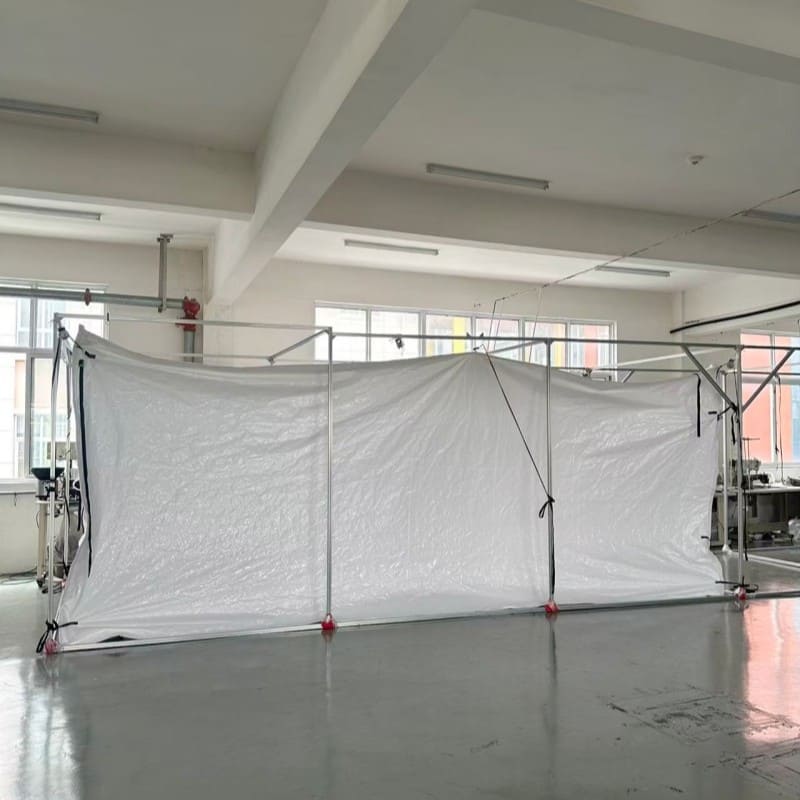
A passive thermal container liner using reflective aluminum foil and insulating layers reduces radiant heat entry and slows temperature change. Advanced four-layer constructions can include EPE foam cores or double-bubble air cushions, helping maintain temperature variance within tight limits while also reducing condensation.
Passive thermal liners make the most sense when:
- The route has high solar load but short to mid transit times.
- The product has an upper temperature limit above roughly 30–35°C and only needs mild temperature damping.
- Condensation prevention matters as much as absolute temperature control.
If the ingredient requires consistent sub-ambient temperature for the entire journey, a reefer container remains the safer choice. Thermal liners do not actively cool cargo. They slow heat gain, stabilize surface temperature, and reduce condensation risk.
Food Safety Compliance: Certifications That Matter
In EU, US, and Middle Eastern beverage markets, the liner itself is a food-contact material. Buyers should request documentation for the specific liner construction, not just for the raw resin.
Minimum documentation should include:
- FDA 21 CFR compliance for US-bound ingredients
- LFGB and EU framework regulation 1935/2004/EC food-contact status
- Declaration of Compliance with relevant migration test data
- ISO 9001 certification for manufacturing process control
- REACH and RoHS compliance for restricted substances
Do not accept a verbal “food grade” claim. Ask for food-contact certificates, resin specifications, and migration test reports. For high-acid powders, flavored bases, or ingredients with organic certification, confirm that testing was performed with the appropriate food simulant and that the liner materials do not conflict with organic requirements.
Loading, Discharge, and On-Site Inspection
The best liner fails if it is loaded or discharged incorrectly. Before loading, inspect the container interior for sharp edges, protruding screws, and residual contaminants. A torn liner leaks moisture and powder from day one.
Typical bulk liner loading for beverage ingredients uses a top filling spout connected to a pneumatic or auger filling system. The liner is suspended, the spout is fixed to the container door opening, and product flows in. After filling, the spout is sealed and the discharge port is secured behind the rear door.
At destination:
- Gravity discharge through a bottom spout works well for free-flowing granules.
- Pneumatic discharge is preferred for fine powders like milk powder or whey, reducing dust and oxygen exposure.
- Manual discharge should be limited to low-volume or specialized deliveries.
Common mistakes to avoid:
- Overfilling beyond the liner’s rated volume, which increases seam stress and reduces internal slack.
- Leaving the discharge spout unsecured during road movement.
- Opening liner material with metal hooks or knives, which introduces foreign-body risk.
A pre-shipment inspection checklist should cover liner integrity, spout sealing, strapping, and confirmation that the container floor is dry and free of residual odors.
What to Ask a Container Liner Supplier for Beverage Ingredients
When evaluating manufacturers or trading suppliers, use a short qualification list:
- Can they provide full FDA and LFGB certificates for the specific liner construction, not only for the base resin?
- Do they manufacture in an ISO 9001-controlled facility?
- Can they produce a sample with the exact film thickness, gusset dimensions, and spout configuration before bulk order?
- What is the minimum order quantity and lead time for custom sizes?
- Do they offer third-party inspection reports or support pre-shipment inspection?
- What technical support do they provide for installation, loading, and discharge?
Giant Flexpack (Taixing) Co., Ltd. manufactures food-grade PE film liners, woven dry bulk liners, and thermal container liners with documented FDA, LFGB, ISO9001, REACH, and RoHS compliance. For buyers moving beverage ingredients from China or sourcing liners for global routes, technical support includes liner specification against actual cargo density, moisture sensitivity, particle size, and transit route.
FAQ
Can a container liner be reused for food-grade beverage ingredients?
Single-use PE film liners are the norm for direct food contact powders. Reuse creates cross-contamination and food safety risk. Thermal liners used as an outer insulating layer without direct food contact may be reused after inspection, but the food-contact liner itself should remain single-use.
What liner thickness should I use for milk powder or whey powder?
A 140-micron food-grade LDPE film liner is a reliable general specification. For abrasive or highly hygroscopic powders, consider 150–160 micron or heavy-duty variants. Confirm tensile strength, elongation, and seam construction with the supplier before ordering.
Do I need a thermal liner for dry beverage ingredients?
Only if the route or ingredient is heat-sensitive. For standard milk powder or sugar on temperate routes, a moisture-barrier PE film liner is usually sufficient. For chocolate powder, fat-filled milk powder, or routes with extreme solar exposure, a reflective thermal liner reduces peak container temperatures and condensation risk.
What is the difference between a PE film liner and a woven liner for beverage ingredients?
PE film liners provide a smooth, fully sealed moisture barrier and are ideal for fine powders. Woven liners offer higher mechanical strength for heavy granular loads but must have a food-grade laminate or coating to be suitable for beverage ingredients.
Can one liner carry both beans and powders?
No. Bean-form cargo needs different handling, slide angles, and spout sizing than powder. Mixing ingredient forms in a single liner increases discharge blockages, residue, and quality risk.
When a Liner Is the Right Choice
For dry, free-flowing beverage ingredients, a correctly specified container liner is the most direct way to protect product purity, prevent moisture damage and caking, maximize payload per container, and meet destination food safety rules.
The specification should follow the ingredient, not the other way around. Start with the product’s moisture sensitivity, particle size, fat content, and thermal limits, then select liner construction, material, thickness, and loading method accordingly.
For certified food-grade liner solutions engineered for beverage ingredient exports, contact Giant Flexpack at [email protected] or +86 523 87683880 to discuss material options, samples, and route-specific recommendations.
 English
  German
  Spanish