
Food exporters face a compliance wall that standard industrial packaging never has to address. A container liner for flour, sugar, malt, cocoa beans, milk powder, grains, salt, or starch is a food-contact material — it touches the cargo directly for weeks or months inside an ISO container. That single fact changes the entire supplier evaluation process. It shifts the conversation from price per unit and lead time to migration limits, food-contact certifications, seam integrity, and the ability to document exactly which resin grade went into the liner you will load with 20 metric tons of edible product.
This article is written for food industry buyers, QA managers, and logistics teams who need to select a liner that will not fail at customs, will not leach chemicals into cargo, and will not turn a moisture-sensitive commodity into a rejected shipment. It covers the standards that matter, how to read certification documents, how liner materials differ in practice, and the selection questions that separate a compliant high-performance liner from a cheap import that creates risk.
What “food grade” actually means for a container liner
There is no single global “food-grade” approval authority. FDA does not approve liners; it lists materials that may be used in contact with food. The European Union sets migration limits. Germany enforces LFGB with supplementary BfR recommendations. Many importers also require ISO 22000 food safety management at the liner factory, even though ISO 22000 is a system standard rather than a material certificate.
When a manufacturer says a liner is food grade, you should expect:
- A material that complies with FDA 21 CFR 177.1520 (olefin polymers) or the relevant EU 10/2011 requirement;
- An overall migration test report showing the liner does not exceed the EU limit of 10 mg/dm² under expected use conditions;
- Documentation that the resin lot used in your liner was not blended with post-consumer recycled material;
- Absence of substances of very high concern under REACH;
- Clean production separation between food-grade and industrial-grade lines.
The difference matters. A 140 gsm woven HDPE liner can look identical whether it is produced for cement or for malt. The physical appearance is not where the risk lives — it lives in the resin grade, the lamination layer, the additives, and the traceability of the batch.
The certification stack: what to ask for and why
The table below summarizes the certifications most commonly requested for food container liners, what each one actually verifies, and where it applies.
| Standard / Regulation | What it governs | Food relevance |
|---|---|---|
| FDA 21 CFR 177.1520 | Olefin polymers for food contact | US-bound food shipments |
| EU 10/2011 | Plastic materials in food contact; overall migration limit 10 mg/dm² | EU-bound shipments |
| EU 1935/2004 | Framework regulation for all food-contact materials | All EU food-contact packaging |
| LFGB (German Food and Feed Code) | Food safety; Sections 30/31 plus BfR recommendations | German and EU market preference |
| ISO 22000 | Food safety management systems at manufacturer | Supplier qualification |
| ISO 9001 | Quality management system | Process consistency |
| REACH | Chemical substance restrictions; SVHC declaration | EU chemical compliance |
| RoHS | Restricted hazardous substances | Commonly requested material declaration |
| BPA-free declaration | Absence of bisphenol A | Buyer requirement for food contact |
| Migration testing (OML/SML) | Chemical transfer from liner to food simulants | Objective safety evidence |
One practical point that often gets overlooked: a certification listed on a supplier’s website is not the same as a batch-specific certificate for your liner. Before ordering, request the current certificate with the resin grade visible, not a generic compliance statement. For EU shipments, ask for a Declaration of Compliance (DoC) under EU 10/2011; for US shipments, confirm the material falls under the relevant 21 CFR section for the specific resin.
Third-party testing from SGS, TÜV, or Intertek adds independent weight. A credible manufacturer will share the actual test report — not only a self-declaration — for overall migration and specific migration where the food type requires it.
Material choice: matching the liner to the food cargo
Food commodities are not one category. The liner that protects malt will be wrong for crystallized sugar, and the barrier layer required for milk powder differs from what a barless design provides for soybeans. The selection turns on four properties: moisture barrier, odor and taint protection, surface release, and structural strength for the loading method.
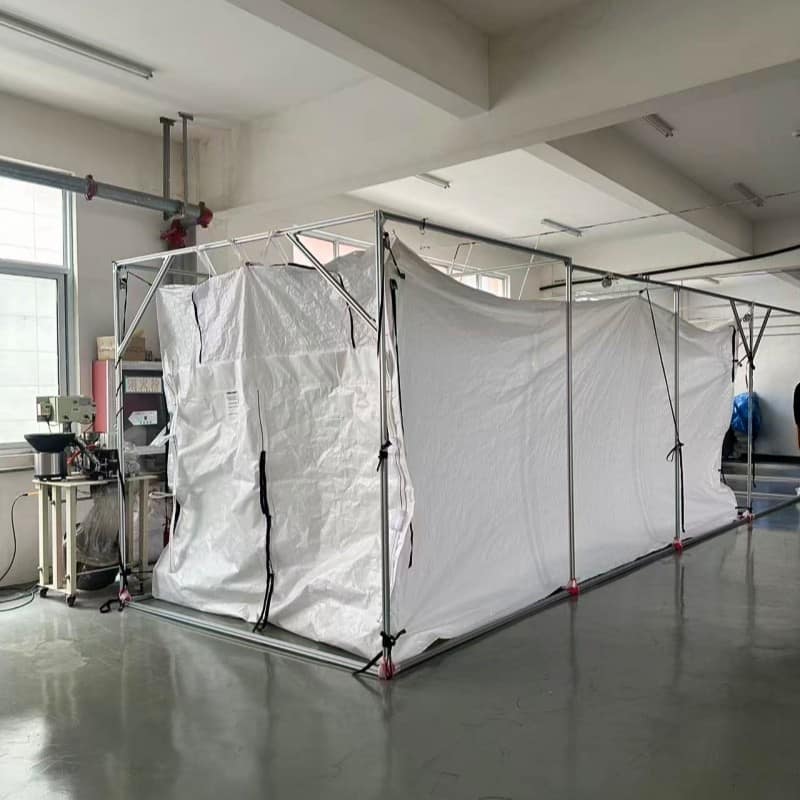
Flour, starch, sugar, salt, and milk powder (powders). These fine, free-flowing powders load pneumatically or through top spouts and unload through bottom discharge. A smooth PE film prevents adhesion and residue, and a fully sealed construction is essential to stop sifting. The PE film container liner — standard 140-micron LDPE with food-grade resin — delivers a 100% moisture and dust barrier and clean emptying. For powders that tend to sift through stitching, a sift-proof woven option with sealed seams, such as the DBL-W06 woven sift-proof container liner, is a better structural fit.
Barley malt, wheat malt, and other odor-sensitive grains. Malt is hygroscopic and easily taints. A dual-sided LDPE lamination over woven HDPE creates both a moisture barrier and an odor barrier, replaces up to 1,500 × 25 kg bags per 40HQ load, and cuts loading labor by 60–70% compared with bag handling. The DBL-W02 dry bulk container liner for malt was engineered specifically for this application and is certified to ISO 22000 and FDA, with materials suitable for EU food contact.
Soybeans, corn, coffee beans, and other granular agricultural products. Small granules jam in liner folds and can sustain mechanical damage during discharge. A barless woven agricultural liner in the woven dry bulk container liner range removes internal reinforcing bars to create a smooth interior, while uncoated breathable fabric allows controlled airflow to prevent mold and caking.
General dry bulk food commodities (flour, sugar, grains). When cargo requires balanced strength and moisture resistance, the DBL-W01 standard woven dry bulk container liner — 140 gsm HDPE woven with FDA and REACH certification — is the universal baseline for agricultural and food-ingredient shipments.
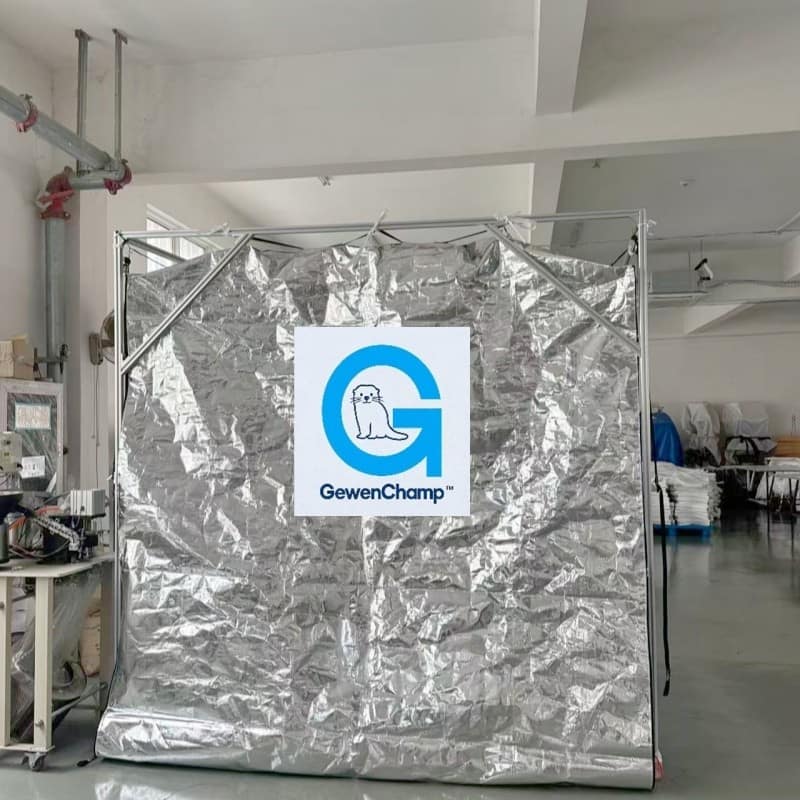
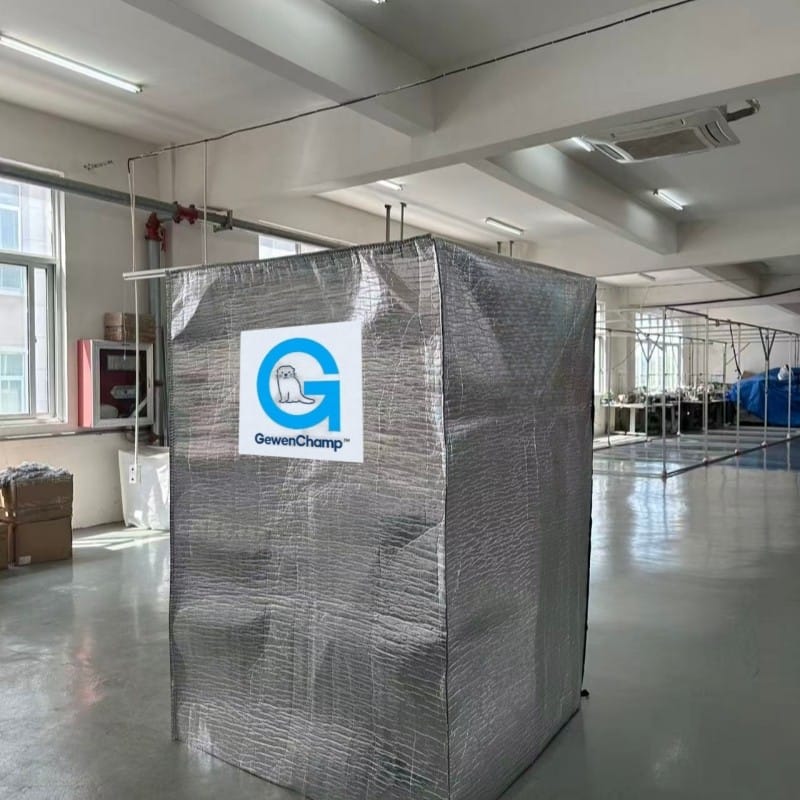
Temperature-sensitive foods (chocolate, wine, dairy, fresh produce, frozen goods). A standard dry bulk liner does nothing for temperature control. When cargo tolerances are tight, a thermal insulation container liner reflects radiant heat and slows heat transfer. The TL-01 thermal container liner (woven PE with double-sided aluminum foil lamination) maintains internal conditions within ±5°C across an operating range of -20°C to 60°C and is FDA and LFGB certified. For more demanding temperature management, the TL-02 EPE foam liner adds a 3 mm foam core that reduces conductive and convective heat transfer and controls condensation, a common cause of damage for food exports on long sea routes.
Selection framework: seven questions before you approve a liner
Rather than starting from a product catalog, start from the cargo. Seven data points define the right specification:
- Cargo form and particle size. Is it powder, granule, flake, or pellet? Particle size determines whether you need sift-proof sealed seams or whether breathability is acceptable.
- Moisture sensitivity. Hygroscopic cargo (malt, milk powder, starch) requires a laminated moisture barrier. Low-moisture cargo may tolerate uncoated woven fabric.
- Destination regulations. US, EU, Gulf, Kosher, Halal, and organic programs impose different documentation. Confirm the manufacturer’s certificates match the destination, not just the origin.
- Loading and discharge method. Pneumatic, auger, top-load, bottom discharge — all place different stress on seams and spouts.
- Odor and taint risk. Cocoa beans, malt, coffee, and dairy powders absorb foreign odors. Lamination and dedicated food-grade lines matter.
- Temperature exposure. If the route crosses equatorial heat or northern cold, thermal protection may be non-negotiable.
- Reuse expectation. Some food exporters prefer a single-use liner for sanitary and traceability reasons; others specify a reusable thermal liner for protected commodities. Sanitization and cross-contact policy change the calculus.
Common food liner mistakes that cause rejected shipments
Assuming all PE or woven liners are food grade. Most industrial liners are produced from the same base polymers but with different additive packages and less clean production control. A cement-grade woven liner run on the same machine as a malt liner is not food safe by proximity.
Ignoring migration test conditions. A test report is only meaningful if the food simulant, temperature, and duration match the actual cargo and route. Ask which simulant was used and whether the test reflects your commodity.
Skipping the seam check. For fine powders, stitched seams leak and contaminate cargo compartments. Verify that food powder liners use heat welding or taped sealed seams, not standard stitching alone.
Not confirming lot traceability. Food safety recalls depend on batch-level traceability from resin supplier to liner production date. A supplier that cannot trace your liner to its resin lot and production run adds material risk.
Selecting on unit price alone. The true cost of a liner is not the invoice price. It is the value of the cargo inside, plus customs rejection exposure, plus the cost of rework if a flap ruptures during discharge. A liner that fails on a 26-ton malt shipment costs far more than the savings from a cheaper unverified product.
How to evaluate a liner sample and documentation
Evaluate samples at two levels.
First, documentation. Request:
- Current FDA compliance statement with resin grade;
- EU 10/2011 Declaration of Compliance or LFGB certificate as applicable;
- Overall migration test report from a recognized lab (SGS, TÜV, Intertek);
- ISO 22000 or food safety management evidence at the factory;
- REACH SVHC declaration and any BPA-free statement;
- Production batch traceability policy.
Second, physical sample. Check seam construction, spout placement and diameter, film or fabric weight, lamination integrity, and whether the inner surface releases the test powder cleanly. Load a small trial quantity and observe discharge angle and residue.
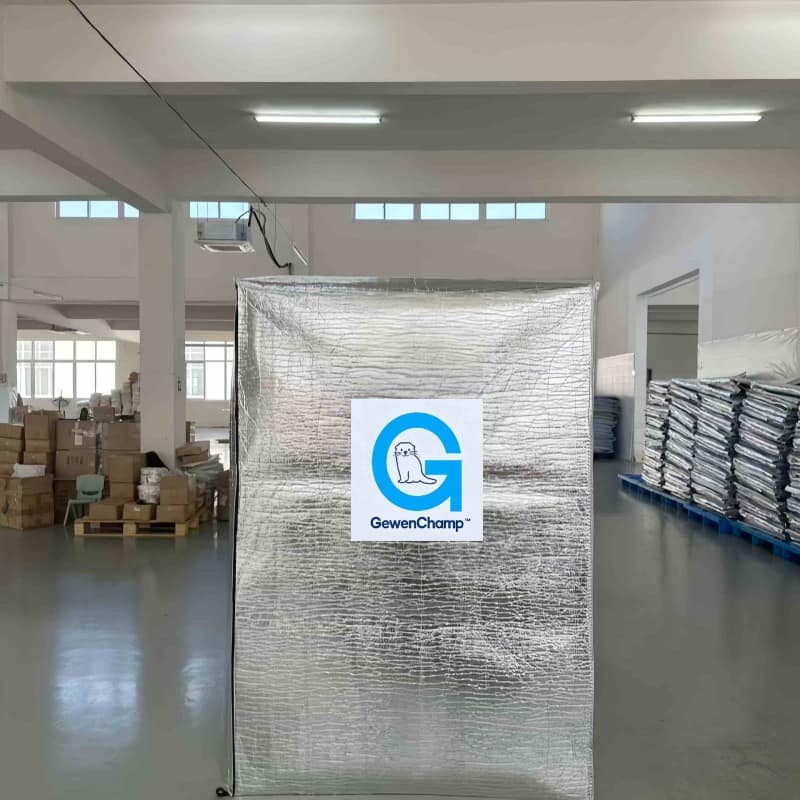
At Giant Flexpack, the food-grade product range — from PE film container liners to woven dry bulk container liners and thermal insulation pallet covers — is produced under ISO 9001 quality management with FDA, LFGB, REACH, and RoHS certifications, which gives food exporters a single point of accountability for both liner performance and compliance documentation.
When thermal protection becomes a food safety issue
Temperature is a food safety variable even for dry bulk cargo. Cocoa beans exposed to temperature swings develop bloom and spoilage. Wine heated above 20°C over weeks risks oxidation. Dairy powders and infant formula ingredients degrade in heat. Fresh produce and frozen food obviously require thermal control, but so do many ambient-labeled commodities on tropical routes.
A thermal container liner addresses this passively, without reefer power. The GewenChamp™ TL-02 series with EPE foam core handles an operating range of -50°C to 80°C and keeps moisture vapor transmission below 0.033 g/(m²·h·kPa), preventing the container rain effect that spoils food bulk during long sea voyages. The lighter TL-04 MPET/PE composite film liner offers a cost-efficient alternative for fresh produce and room-temperature food exports where ultra-low temperature control is not required.
For palletized food exports, the TP-01 thermal pallet cover extends the same passive thermal protection to individual pallets, which is useful for mixed loads or high-value food SKUs shipped on standard pallets.
Frequently asked questions
Is a container liner FDA approved?
FDA does not issue product-level approvals for food packaging. Instead, the liner material must comply with FDA 21 CFR 177.1520 for polyolefin contact. A supplier should provide a written compliance statement identifying the resin grade and section.
What is the difference between FDA and LFGB for food liners?
FDA 21 CFR sets material composition rules for the US market. LFGB (Germany) plus BfR recommendations is a stricter, EU-aligned standard often required for German and premium EU importers. A liner can be both FDA- and LFGB-certified.
Can food container liners be reused?
It depends on the design. General dry bulk liners are typically single-use for food sanitation and traceability. Thermal container liners may be reusable 3–5 times when the commodity, cleaning protocol, and cross-contamination risk allow. Confirm with the manufacturer whether sanitization between loads is documented.
What documentation should I require from a food liner supplier?
At minimum: FDA compliance statement, EU 10/2011 DoC or LFGB, overall migration test report, ISO 22000 or equivalent food safety management evidence, REACH SVHC declaration, and lot traceability policy.
Which liner is best for flour, sugar, and milk powder?
Smooth PE film liners are generally preferred for fine food powders because they provide a full moisture and dust barrier, clean release, and no sifting through seams. For powders susceptible to leaking through stitching, a sift-proof woven liner with sealed seams is the safer choice.
Do I need a thermal liner for chocolate or dairy powder?
If the route carries the cargo through sustained high temperatures or wide day-night swings, yes. Passive thermal liners slow heat gain and reduce condensation without reefer power, protecting sensory and functional properties where ordinary liners do nothing.
Selecting the right partner
The food-grade liner decision is ultimately a supplier qualification decision. The right manufacturer will answer certification questions without hesitation, provide batch-specific test reports, support a trial load, and document exactly how food-grade and industrial production are separated. If a supplier cannot explain which resin grade goes into your liner — or offers a price that seems too good for certified food-contact material — treat that as a red flag regardless of the product sheet.
Giant Flexpack — a Sino-American joint venture manufacturing high-performance container liners since 2004 — supplies food-grade thermal container liners and dry bulk food liners with FDA, LFGB, ISO 9001, REACH, and RoHS documentation. For specification support, sample requests, or a compliance document package for your food export routes, contact the specialist team at [email protected] or call +86 523 87683880.
 English
  German
  Spanish