
Container liners control humidity by establishing a multi-layer barrier that stabilizes the internal climate, preventing the dew point from triggering condensation on cargo surfaces. Over fifteen years of supporting bulk shipments across tropical and temperate routes, I have watched moisture destroy entire containers—caked powders, moldy grain, corroded metal parts. The root issue is not the ambient humidity; it is the temperature swings that drive container rain. A liner that actively insulates and blocks vapor changes the physics inside the container, and the difference between a basic PE liner and an engineered thermal liner can be the margin that avoids a five-figure cargo claim.
The Physics of Container Humidity and Cargo Condensation
Moisture damage inside a shipping container follows a predictable sequence, yet it catches unprepared shippers every year. During the day, solar radiation heats the container walls to well above ambient air temperature; the contained air expands and absorbs water vapor from the cargo or any external leakage. At night, the walls cool rapidly, often dropping below the dew point of the trapped humid air. Condensation forms on the inner ceiling and side walls and then drips onto the cargo—what we call container rain.
Cargo that arrives wet is rarely the result of a single event. It is the cumulative effect of repeated temperature cycles over a weeks-long voyage. Even a small amount of air infiltration through door seals can introduce enough moisture to saturate the container atmosphere once temperatures fall. Desiccants placed inside can only absorb a finite amount of water; they are overwhelmed if moisture ingress is continuous. A liner that wraps the cargo in a defined micro-environment, and that insulates against rapid temperature swings, interrupts the cycle before condensation can nucleate.
How Container Liners Block Moisture Layer by Layer
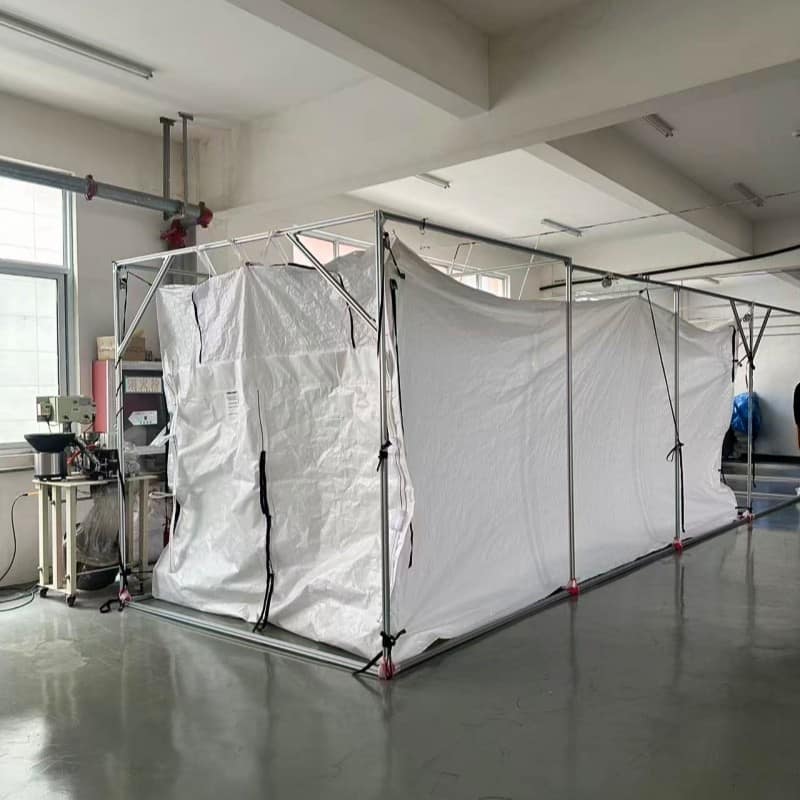
A thermal container liner works through two interdependent mechanisms: vapor barrier and thermal buffering. The innermost layer of a high-performance liner is typically a polyethylene film or a metallized PET (MPET) film with a moisture vapor transmission rate (MVTR) low enough to effectively block water vapor movement. In our GewenChamp TL-02 liner, the MVTR is ≤0.033 g/(m²·h·kPa). That figure matters because it represents the extremely slow rate at which water vapor can migrate across the barrier under a partial-pressure differential. In practice, during a 30-day crossing, the quantity of moisture that actually passes through this layer remains below the threshold that would shift the internal dew point enough to produce condensation on the cargo surface.
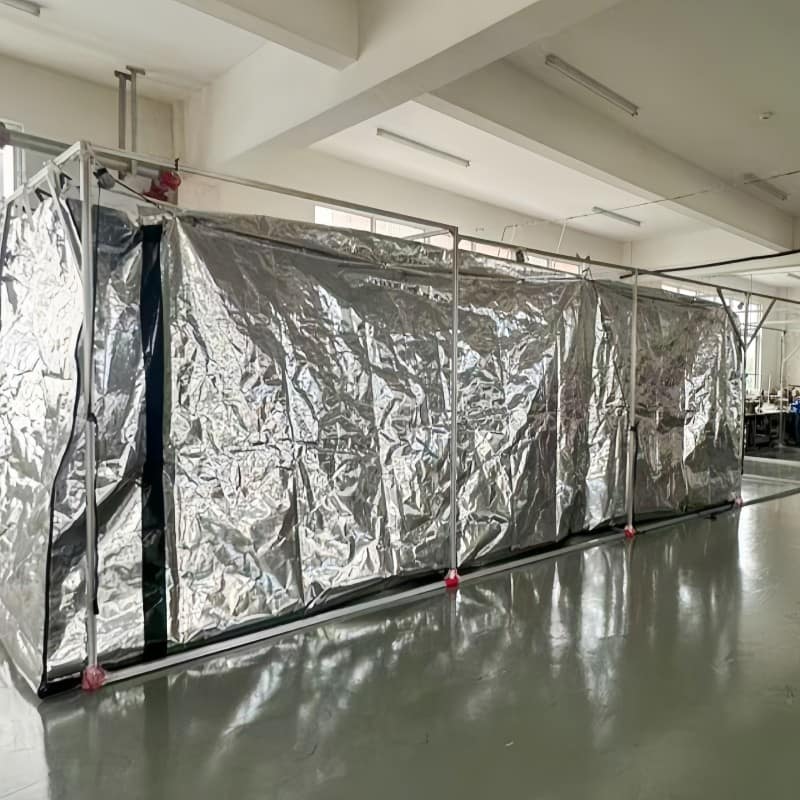
The second mechanism is thermal insulation. Temperature stability inside the lined container keeps the air mass from cooling to the dew point in the first place. Materials such as 3mm closed-cell EPE foam (TL-02) or double-bubble air cushion (TL-03) reduce conductive and convective heat transfer, damping the diurnal temperature swings by several degrees. When the liner also includes a reflective aluminum foil or MPET outer layer that returns 95–97% of radiant heat, the effective temperature range the cargo experiences narrows substantially. The result is that the liner does not just block moisture—it reduces the conditions that cause condensation.
Material Science Behind Humidity Control: Comparing PE, Woven, and Foil Liners
Not every liner provides the same level of humidity protection, and the material composition dictates where each performs well and where it falls short. The table below compares four thermal liner constructions from the GewenChamp series on the parameters most relevant to humidity control.
| Liner Model | Core Material | MVTR (g/m²·h·kPa) | Radiant Heat Refl. | Temp. Buffer | Best Suited For |
|---|---|---|---|---|---|
| TL-01 Thermal Container Liner | Woven PE + double-sided PE aluminum foil lamination | Standard PE-level barrier | 95–97% | Moderate | Food & beverage, chemicals where thermal gain is the primary concern |
| TL-02 Thermal Container Liner | 4-layer: PET Alu foil / Woven PE / 3mm EPE foam / PET Alu foil | ≤0.033 | 95–98% | Strong | High-humidity routes, hygroscopic cargo, cocoa, pharmaceuticals |
| TL-03 Thermal Container Liner | MPET / Double Bubble / MPET | Low (bubble barrier) | 98% | Moderate | Electronics, vaccines, goods needing shock absorption plus moisture barrier |
| TL-04 Thermal Container Liner | MPET / PE composite film | Standard film barrier | ≥92% | Light | Short-haul fresh produce, standard pharmaceuticals |
A single-ply standard PE liner (such as DBL-F01) can be adequate for dry-flowable commodities shipped on relatively short, temperate routes. However, when the route crosses equatorial waters or when the cargo is hygroscopic—cocoa beans, sugar, starches—a multi-layer thermal liner with a quantified low MVTR becomes the difference between arrival quality and a rejected load.
If your program involves sensitive food-grade cargo on a route where container rain has occurred before, it is worth confirming the liner’s MVTR specification directly with the manufacturer. Reach out at [email protected] to discuss your requirements.
Installation Factors That Impact Humidity Reduction
The best liner material underperforms if the installation leaves gaps, unsealed edges, or flapping surfaces that allow untreated container air to circulate behind the liner. In our quality audits, the single most common failure we see is an air pocket between the liner and the container wall. Warm, moisture-laden air trapped in that pocket condenses as the wall cools, and if the liner is not tightly sealed against the container, that condensation seeps into the cargo space.
Proper six-wall coverage requires that the liner be anchored along the top rails and at the door end with no open pleats. The liner must be taut enough to maintain contact with the container walls; a loose liner acts as a billowing sail that creates pressure differentials and encourages air exchange. When strapping is used, the tension should be applied after the liner is fully unfolded, not before. For liners with a dedicated venting port, the vent should only be opened if the cargo requires gas exchange and the external humidity is reliably low. In most sea-freight scenarios, the container should remain sealed.
Loading temperature also matters. If cargo is filled at 35 °C and 80% relative humidity, the liner encapsulates that air mass, which will then condense when the container cools to 20 °C at sea. Where practical, we recommend loading in the cooler hours of the day or dry-purging the container with dehumidified air after loading.
Container Liners vs. Desiccants: Which Approach Delivers Reliable Humidity Control
Desiccants absorb moisture; liners prevent moisture from entering the controlled environment in the first place. In a basic physics sense, the two strategies work at opposite ends of the problem. A desiccant is a passive absorber placed inside the container to capture water vapor that is already present in the air or that leaks in during the journey. Its effectiveness depends on its absorbent capacity and the rate of moisture ingress. On a 30-day crossing through the tropics, a desiccant can become saturated well before the destination, leaving the cargo unprotected for the remainder of the voyage.
A properly specified container liner, by contrast, isolates the cargo from the container walls and from the external air. Because it is essentially a closed bag within the container, it prevents moisture-laden air from reaching the cargo. This means the liner is a proactive solution, while desiccants are reactive. For many dry bulk cargoes—resin pellets, minerals, grains—a low-MVTR liner eliminates the need for desiccants entirely. For extremely sensitive goods, such as pharmaceutical intermediates or certain food ingredients, we sometimes recommend a combined approach: a thermal liner to isolate the cargo, plus a small quantity of desiccant as an additional safety margin inside the liner. The weight and placement of the desiccant must be calculated against the residual moisture expected from the cargo itself, not from the external environment.
Selecting the Right Liner for Your Cargo Type and Route
The choice of liner should be driven by three variables: cargo sensitivity to moisture, route climate, and voyage duration. A polyethylene pellet shipment from Shanghai to Rotterdam in October may need nothing more than a standard PE film liner. The same product shipped from Ho Chi Minh City to Mombasa in July demands a thermal liner with a demonstrable low MVTR.
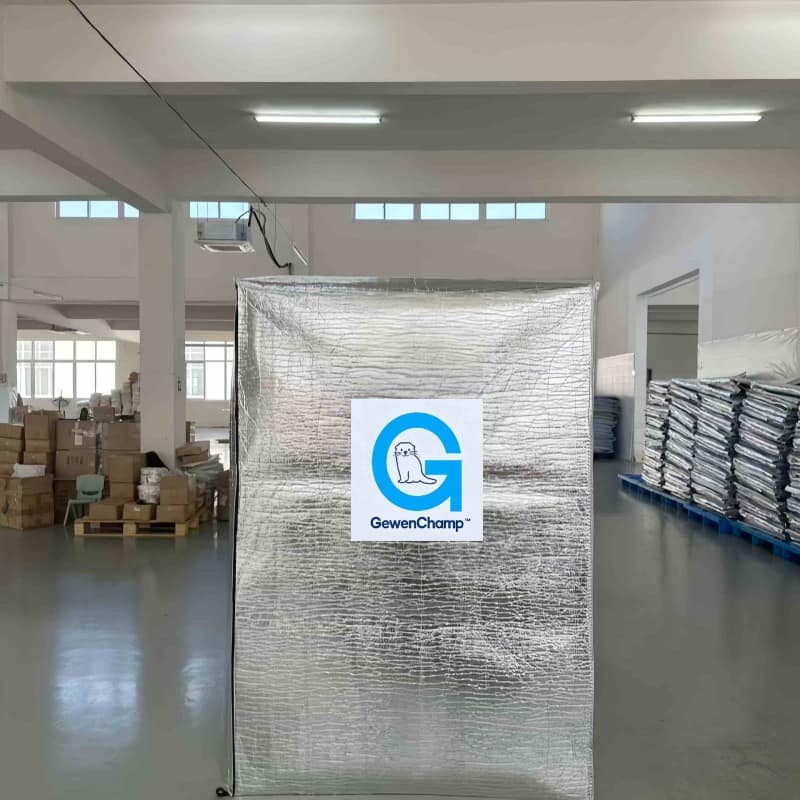
For hygroscopic commodities like cocoa beans or sugar, we default to the TL-02 or TL-03 constructions because these materials can hold the internal dew point below the cargo temperature even when the container walls are 15 °C colder than ambient. For electronic components or precision instruments, the shock absorption of the TL-03’s bubble core adds a second protection layer. Bulk chemical powders sensitive to caking often benefit from a woven thermal liner like TL-01, which combines strength with radiant heat reflection. If your cargo is already bagged and palletized, a thermal pallet cover can provide targeted humidity and temperature protection without lining the entire container.
How to Start Reducing Your Cargo Humidity Risk
Moisture damage is one of the few shipping risks that can be almost entirely engineered out of a supply chain. The variables that matter—liner material, MVTR, installation technique—are measurable, specifiable, and repeatable. At Giant Flexpack, we manufacture GewenChamp™ thermal liners to documented material standards, with independent lab verification of MVTR, thermal conductivity, and tensile strength. Whether you are moving a single container of specialty grain or a year-round program of bulk resins, the right liner configuration starts with the right specification.
Share your cargo type, origin and destination ports, typical voyage duration, and any target humidity requirements with our engineering team at [email protected] or call +86 523 87683880. We will return a liner recommendation backed by performance data, not marketing language.
Common Questions About Container Liner Humidity Control
How much humidity reduction can I realistically expect from a high-performance liner?
It is more accurate to think in terms of condensation prevention than a percentage humidity reduction. A liner with an MVTR of ≤0.033 g/(m²·h·kPa) prevents enough water vapor from entering the cargo space that the internal dew point remains below the lowest temperature the cargo will experience during the voyage. In practice, this eliminates visible container rain and keeps the local relative humidity near the cargo surface below the threshold for mold growth or caking. In programs we have supported on Southeast Asia–Europe routes, the conversion from standard PE liners to TL-02 eliminated moisture claims entirely over a 12-month period.
Will a container liner eliminate the need for desiccants?
In most dry bulk applications, a properly installed thermal liner makes desiccants unnecessary because it stops moisture ingress at the source. Desiccants remain useful in two scenarios: when a small quantity of moisture is inherent in the cargo itself (for example, high-moisture-content grain), or when company quality protocols require an additional safety layer. We have observed that when a low-MVTR liner is combined with desiccant bags inside the liner, the desiccant rarely shows significant weight gain by the destination, confirming that the liner is doing the heavy lifting.
Is a standard PE liner sufficient for humid tropical routes?
It depends on the cargo and the voyage length. For a short haul of two to three days, a standard PE liner often performs adequately because there is not enough time for significant moisture accumulation. For any shipment exceeding one week, and especially for hygroscopic cargo, a standard liner becomes a gamble. We have seen standard PE fail on a 28-day tropical crossing, where enough water vapor migrated through to cause caking in bulk starch. The liner did not tear; it simply permitted too much moisture transmission.
How does installation affect the liner’s actual humidity performance?
Installation is as important as the material. A liner that is not taut and sealed effectively creates a chimney effect where warm, moist air circulates between the liner and the container wall, then condenses and drips into the cargo space. We train client warehouse teams to check for air gaps, to tension after full deployment, and to verify door-end seals. For first-time users, we recommend a pre-shipment trial with a humidity data logger placed inside the liner; the log provides immediate feedback on whether the installation achieved the expected moisture barrier.
Can a reusable thermal liner maintain its moisture barrier over multiple trips?
Yes, if it is cleaned, dried, and inspected between uses. Our TL-01 and TL-02 liners are rated for three to five reuse cycles. The factor that degrades performance is not wear on the fabric alone but microscopic pinhole damage from sharp cargo edges or rough handling during removal. We recommend a post-trip visual inspection under strong light and, for critical applications, a spot MVTR check. If your operation involves repeat shipments on the same route, a reuse program may reduce your per-container cost below that of single-use solutions. Share your annual volume and route details, and we will work out the return-on-reuse calculation with you.
 English
  German
  Spanish