
Choosing the right container liner manufacturer is one of the most consequential decisions a bulk logistics professional makes. A liner that fails mid-voyage—leaking moisture, tearing under load, or failing to stabilize temperature—doesn’t just damage cargo; it unravels supply chain timelines, triggers insurance claims, and erodes hard-won customer trust. Comparing brands and manufacturers demands a structured evaluation that goes far beyond surface-level pricing.
We’ve spent over twenty years engineering container liners at Giant Flexpack, and what we’ve learned from thousands of shipments across climate zones is this: the difference between a reliable liner and a liability almost always comes down to how manufacturers control material quality, testing rigor, and application engineering. This article lays out the evaluation framework we recommend to our own procurement partners—criteria you can use to benchmark any container liner supplier, whether for dry bulk protection, thermal insulation, or moisture control.
Start with Manufacturing Expertise, Not Just Sales Pitches
A manufacturer’s longevity and specialization tell you more than a polished brochure. Look for a track record measured in decades, not years, and for direct experience with your cargo category. If you ship PE resin, does the manufacturer understand how that material behaves under compression and humidity? If your route passes through equatorial heat, have they designed liners tested under those exact conditions?
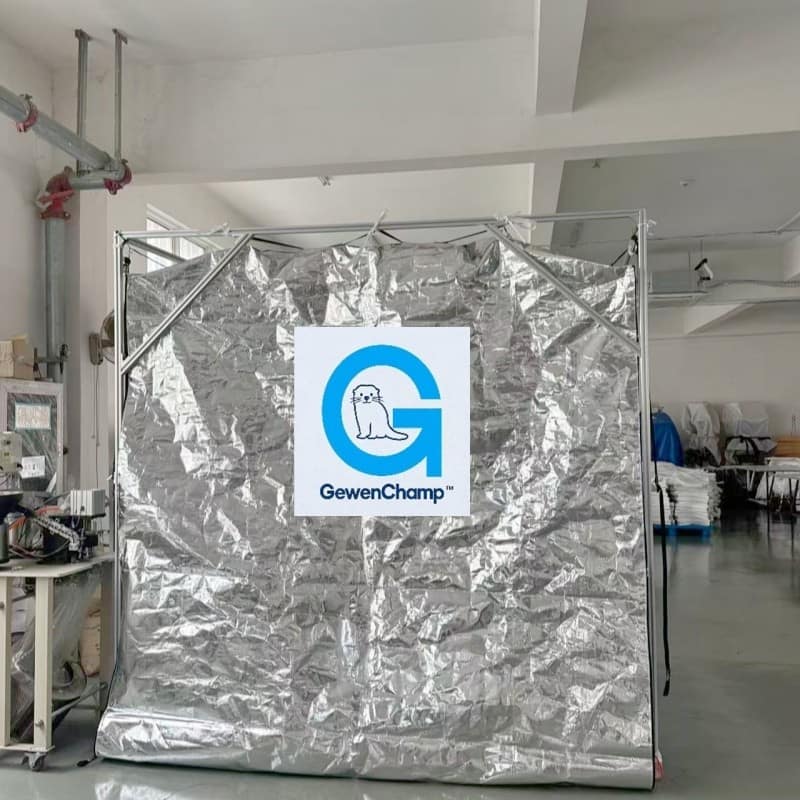
Giant Flexpack is a Sino-American joint venture founded in 2004, and our engineering team has encountered practically every failure mode a container liner can experience—from micro-pinhole leaks in woven fabrics to condensation buildup inside refrigerated holds. That accumulated know-how feeds directly into product design, including our GewenChamp™ thermal liner series and our sift-proof woven liners. When you compare manufacturers, ask them to walk you through failure data, not just warranty numbers. A supplier who openly discusses past challenges and design corrections is one who takes quality seriously.
Material Certifications Are Non-Negotiable
Regulatory compliance in food, pharmaceutical, and chemical transport isn’t a checkbox—it’s a wall between your cargo and a rejected shipment at customs. Any container liner you evaluate must come with verifiable, third-party certification relevant to your destination market.
For food-grade shipments, look for FDA 21 CFR compliance and LFGB certification. For European Union exports, REACH and RoHS compliance are mandatory. ISO 9001 certification demonstrates a systematic approach to quality management. At Giant Flexpack, our entire thermal insulation container liner range and dry bulk liners hold FDA, LFGB, ISO 9001, REACH, and RoHS certifications—verified by SGS and other accredited labs. When comparing suppliers, ask to see the actual test reports, not just the logos on a catalog. Reputable manufacturers will provide batch-specific data for tensile strength, heavy metal migration, and moisture vapor transmission.
Understand Thermal Performance Through Measurable Metrics
If your cargo is temperature-sensitive, you cannot rely on vague terms like “insulated” or “keeps cold out.” You need hard numbers: R-value, thermal conductivity (W/m·K), radiant heat reflectivity percentage, and temperature stability windows. Different thermal liner materials perform vastly differently.
Our TL-01 Thermal Container Liner uses a woven PE fabric laminated with double-sided aluminum foil. That structure reflects 95–97% of radiant heat and keeps internal temperature variance within ±5 °C across a -20 °C to +60 °C range. For frigid or scorching environments, we often specify the TL-02, which adds a 3mm EPE foam core with a thermal conductivity ≤0.038 W/(m·K). That’s the kind of detail you should demand from any manufacturer. Compare R-values per millimeter of thickness, and ask how performance degrades after flexing and folding—good liners maintain their reflective barrier through multiple reuse cycles.
For moderate cooling needs with a lighter footprint, our TL-04 MPET/PE composite film liner provides ≥92% heat reflectance and maintains -10 °C to 30 °C for 24–48 hours. Each layer serves a purpose; a manufacturer who can explain the physics behind their material stack is one you can trust.
Scrutinize Mechanical Strength and Sift-Proofing for Dry Bulk
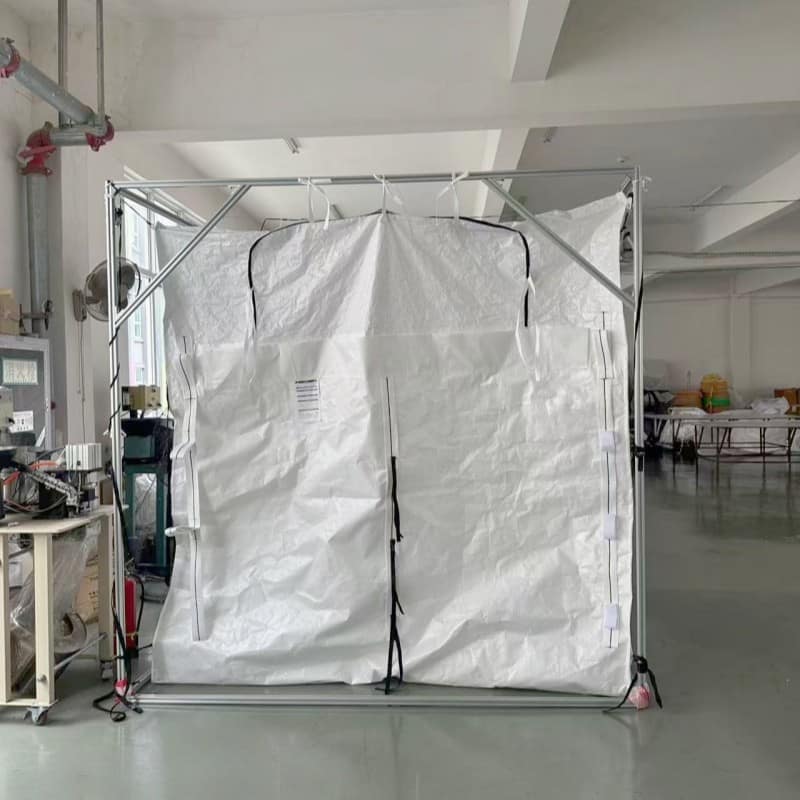
For dry granular or powdered cargo, the primary failure points are seam rupture, pinhole leakage, and sifting. Woven liners vary enormously in fabric weight, coating type, and seam sealing. Ask for tensile strength in both warp and weft directions. Our standard dry bulk liner (DBL-W01) uses 140 gsm HDPE woven fabric with warp tensile strength ≥1,800 N/5cm and weft ≥1,500 N/5cm—benchmarks we consider fundamental for 20–30 ton loads.
For fine powders like titanium dioxide or cement, only heat-welded or PU-taped sealed seams guarantee zero dust leakage. The DBL-W06 Sift-Proof Woven Container Liner we manufacture uses double-sided PE coating plus PU tape over every stitch line, achieving 100% containment for particle sizes ≥50 mesh. Compare seam construction carefully; a liner with ordinary sewn-only seams will bleed product and contaminate container interiors.
Evaluate PE Film Liners by Thickness and Barrier Integrity
Polyethylene film liners serve a different purpose—creating a 100% moisture and dust barrier for cargoes like sugar, flour, or plastic pellets. The most critical metric here is film gauge (microns or mils). Our standard PE Film Container Liner (DBL-F01) uses 140-micron LDPE film with tensile strength ≥1,500 N/5cm. For European plastic pellet transport, we engineered the DBL-F02 30FT PE Film Liner with four European-standard filling spouts to match local loading equipment.
When comparing PE liner brands, physically stretch a sample. A quality LDPE film will elongate significantly before breaking, while inferior blends tear abruptly. Also, ask about anti-static and anti-UV additives if your cargo or route demands them.
Don’t Overlook Pallet-Level Protection
For LCL shipments or temperature-sensitive palletized goods, thermal pallet covers can replace reefers at a fraction of the cost. The same comparison criteria apply. Our TP-01 Thermal Pallet Cover uses a five-layer composite with woven PE for strength (tensile ≥25 N/15mm) and dual MPET layers for ≥95% radiant heat reflection. You can reuse it 5–8 times. By contrast, simpler covers sacrifice durability for upfront price. Ask about cycles, not just unit cost.
Test Samples the Right Way
A free sample is meaningless unless you stress-test it. Ask for A4-sized swatches or small-scale covers and perform:
– A simple stretch test to gauge tear resistance.
– A water column test (for PE liners) to verify waterproof claims.
– A simulated heat exposure test using an incubator or hot plate for thermal liners.
– For woven liners, check seam adhesion by pulling perpendicular to the stitch line.
Manufacturers confident in their products will also provide independent lab reports for these parameters. We routinely share SGS test results with prospective buyers, so no one has to rely on marketing language alone.
Factor in Supply Chain Reliability and Lead Times
A technically brilliant liner is useless if it arrives a week after your vessel departs. Compare lead time consistency, not just quoted minimums. Ask: Does the manufacturer integrate with forwarders for container stuffing coordination? Do they provide export documentation support? Our plant in Jiangsu, China, ships to over 40 countries with full compliance paperwork, and we work directly with freight forwarders to synchronize liner delivery with container availability. A manufacturer who treats liner supply as an afterthought to production will inevitably disrupt your logistics rhythm.
Support That Continues After the Bill of Lading
The best container liner partners offer post-sale technical support: installation guidance (even on-site if volume justifies it), troubleshooting for condensation or discharge issues, and clear claim procedures. We maintain a library of woven dry bulk container liner and PE film container liner installation resources, and our technical team routinely advises on how to strap liners, position discharge spouts, and manage ventilation for specific cargo moisture profiles.
When you compare brands, ask for a recent case where the manufacturer helped a customer solve an on-the-ground loading problem. If they can’t provide a concrete example, their support is probably theoretical.
Bring It All Together: Your Comparison Checklist
Use this checklist when vetting any container liner supplier:
- [ ] 20+ years of specialized container liner manufacturing
- [ ] Direct experience with your specific cargo and shipping route
- [ ] Full suite of relevant certifications (FDA, LFGB, REACH, RoHS, ISO 9001)
- [ ] Documented tensile strength and thermal performance data (not just product names)
- [ ] Seam technology appropriate for powder, granule, or sift-prone cargo
- [ ] Customization capability—sizes, spout positions, printing
- [ ] Verifiable sample-test protocols and willingness to share third-party reports
- [ ] Transparent lead times and export logistics capability
- [ ] Structured after-sales technical support
Comparing container liner brands is a technical exercise, not a shopping trip. The manufacturer that can discuss the physics of moisture vapor transmission, the reflectivity of aluminum foil vs. MPET, and the elongation at break of LDPE film is the one that will safeguard your cargo across oceans. At Giant Flexpack, we live in those details, and we believe they should be the foundation of every liner purchase decision.
To discuss your bulk shipping challenges or request technical specifications and samples, reach out to our engineering team. We’ll help you match the right liner—and the right material science—to your cargo, route, and compliance requirements.
 English
  German
  Spanish