
When a container liner factory lists “ISO 9001 certified” on its website, many buyers see a badge that signals basic quality. But ISO 9001 container liner manufacturing is far more than a marketing claim—it is a structured quality management system that governs raw material inspection, production process control, final product testing, and traceability for every shipment. For procurement managers and logistics engineers sourcing bulk packaging, understanding how that system actually works inside the factory can mean the difference between reliable, contamination-free deliveries and expensive cargo rejections. In this article, I explain what ISO 9001 certification really requires of a container liner manufacturer, how that process translates to product consistency, and what you should look for when auditing a supplier.
Understanding ISO 9001 in Container Liner Manufacturing
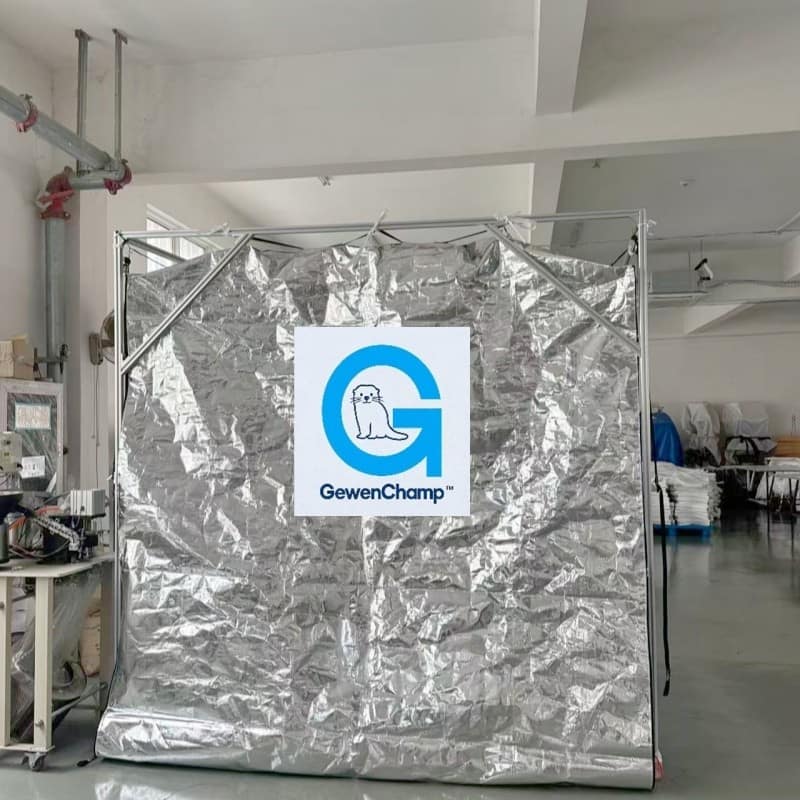
ISO 9001:2015 is the internationally recognized standard for quality management systems, but its application in container liner production goes far beyond generic meeting minutes and a certificate on the wall. The standard requires a manufacturer to identify every process that affects product quality, define the controls for each, and then prove—through audited records—that those controls work. For a factory producing thermal container liners, woven dry bulk container liners, and PE film container liners, that means documented procedures for material receiving, extrusion and weaving parameters, lamination bonding strength, seam integrity, and final load testing.
At Giant Flexpack, our ISO 9001 system shapes how we run every production line. Before a TL-01 thermal container liner enters the cutting table, the incoming woven PE and aluminum foil laminates have already passed thickness, tensile, and visual inspection against documented acceptance criteria. Operators follow work instructions that specify machine settings, stitch density, and in-process measurement frequencies. This isn’t optional—it’s a mandatory part of the quality plan, and every deviation is logged and investigated. The result is a production environment where variation is reduced before it becomes a defect, which is precisely the outcome a buyer needs when container liners protect cargo worth tens of thousands of dollars.
Ensuring Material Traceability and Contamination Prevention Under ISO 9001
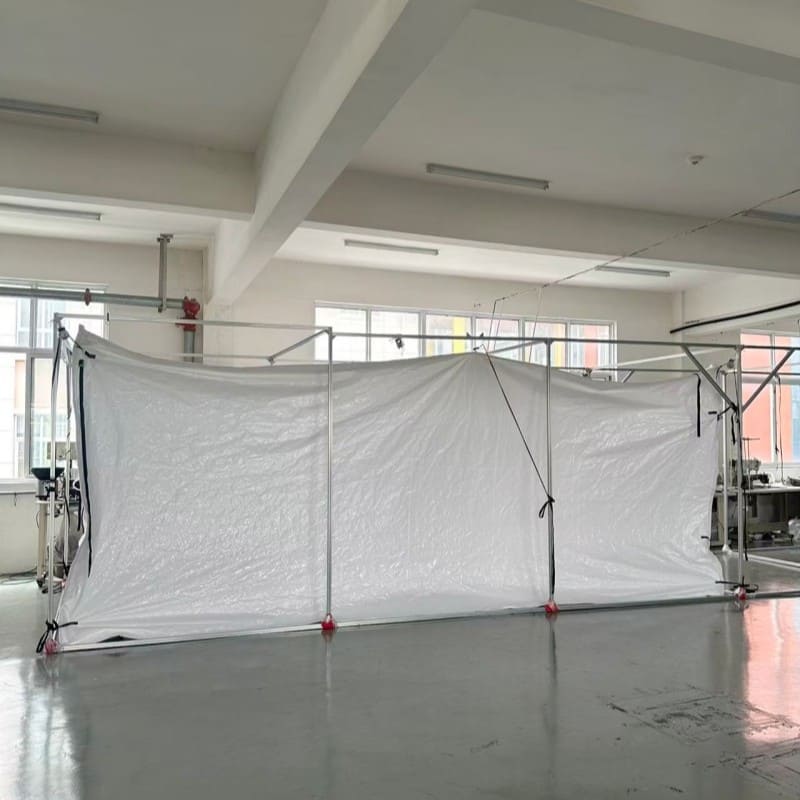
Container liner buyers in the food, pharmaceutical, and chemical sectors ask two hard questions about every shipment: “Where did the materials come from?” and “Was there any chance of cross-contamination?” An ISO 9001 system answers both by enforcing traceability from raw material lot number to finished liner serial number, combined with documented segregation procedures.
Every roll of PE film, every woven fabric bolt, and every aluminum foil laminate that enters our facility is assigned a unique incoming lot identifier. That identifier follows the material through cutting, assembly, lamination, and final packaging, so if a nonconformance is detected at any stage—say a welding parameter drifts outside tolerance on a TL-03 MPET double bubble thermal liner—we can immediately identify the affected batch and the specific raw material lot. For buyers, this means that a contamination issue never becomes a mystery; it gets contained quickly and supported by a full material genealogy.
Contamination prevention is equally systematic. Food-grade liners, including our TL-04 MPET/PE composite film liners and DBL-W02 malt-grade dry bulk liners, are produced on dedicated lines with color-coded tools and documented changeover cleaning that is verified by the quality team before a new production run starts. We maintain separate storage for food-contact and industrial materials, and the ISO 9001 audit checks that segregation annually. These controls also support compliance with FDA, LFGB, REACH, and RoHS standards—not as separate, disconnected certifications, but as integrated requirements within the quality system.
Documenting Container Liner Production: The ISO 9001 Paper Trail
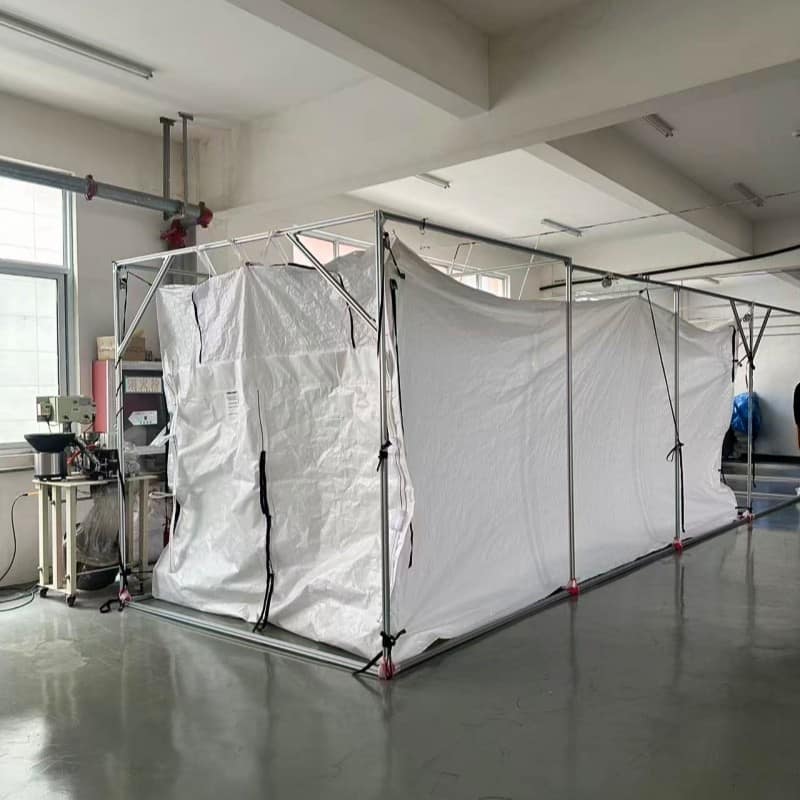
A factory can claim any level of quality, but the paper trail is what separates a functioning ISO 9001 system from a paper-only certificate. The standard requires maintained documented information that includes work instructions, inspection records, calibration certificates, training logs, and management review outputs. For a buyer, access to the right documents turns an unverifiable claim into a supplier with measurable accountability.
When we ship a TL-02 EPE foam thermal container liner, the documentation package assembled from our quality management system enables us to trace the origin and test results of every layer—PET aluminum foil reflectivity, EPE foam density and thermal conductivity, and lamination bond strength. Below is a simplified view of the typical quality records maintained for each production batch under our ISO 9001 system.
| Production Stage | Control Activity | Record Generated | Purpose for Buyer |
|---|---|---|---|
| Incoming material | Visual, dimensional, COA verification | Material Inspection Log | Proves raw material meets spec before use |
| Cutting & assembly | In-process dimensional checks, seam alignment | In-Process QC Report | Confirms liner dimensions and assembly accuracy |
| Lamination / bonding | Peel test, visual inspection for bubbles | Process Monitoring Chart | Validates multi-layer integrity under load |
| Final inspection | Full visual, sampling for load test | Final Inspection & Release | Assures finished liner passes lot-acceptance criteria |
| Equipment | Calibration of tension meters, thickness gauges | Calibration Certificate | Supports measurement accuracy across all checks |
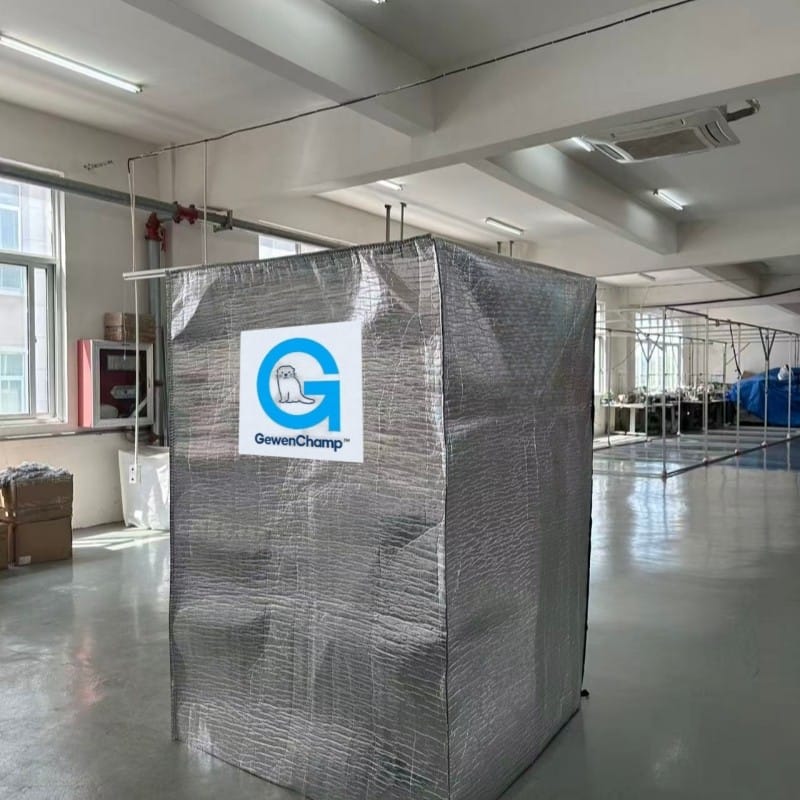
Buyers who request batch-specific quality data before shipment acceptance receive exactly these records. It’s a practical way to confirm that the liner you ordered was not only produced on an ISO 9001 certified line, but actually controlled and verified at each step. For specialty products such as DBL-W06 sift-proof woven liners for powdered chemicals, the documented seam-tape integrity checks and dust-penetration test results become critical evidence that the liner will perform as intended.
Verifying a Factory’s ISO 9001 Claims Before Purchasing
I’ve seen too many procurement checklists that accept an “ISO 9001 certified” statement at face value. The difference between a factory with a living quality culture and one that renews a certificate for marketing purposes often becomes visible only after you ask a few targeted questions. Here is the approach I recommend to buyers sourcing container liners from any region.
First, request a copy of the ISO 9001 certificate and check the scope statement. The scope should explicitly mention container liner manufacturing or bulk packaging—not a vague “manufacturing activities.” Verify the certification body is accredited by an IAF-recognized entity. Second, ask for a summary of the most recent surveillance audit findings. A factory that can share nonconformance counts and corrective action timelines has nothing to hide. Third, during a factory visit, ask to walk the production line with a process flowchart in hand: operators should be able to explain what they check and where they record results. If the quality manager cannot show you live batch records or calibration tags, the system may exist only in a binder.
If your program involves food-contact or hazardous material compliance, confirming the manufacturer’s ISO 9001 scope alignment with FDA, LFGB, REACH, or RoHS requirements before finalizing your bill of materials is worth the extra step—reach out at [email protected] and we can walk you through the specific documentation you should expect for your cargo category.
Securing Your Supply Chain with an ISO 9001 Certified Partner
Reliable container liners depend on more than material specifications; they depend on a quality system that catches problems before your cargo leaves the factory. When a liner fails due to a missed seam or contamination, the cost isn’t just the liner—it’s the rejected shipment, the lost product, and the damage to your customer relationship. An ISO 9001 certified manufacturer with an active, audited quality management system reduces that risk by controlling every variable from raw material acceptance to final release.
If you are sourcing thermal pallet covers, dry bulk liners, or custom container liner solutions and need a partner who treats quality as a documented process rather than a slogan, send your part numbers and quantity to [email protected] or call +86 523 87683880. We’ll provide the certification details and production records that matter for your specific commodity, from DBL-F02 30ft PE liners for European plastic pellet logistics to DBL-04W wagon liners for alumina powder.
Answering Common Questions About ISO 9001 Container Liner Quality
Does ISO 9001 guarantee perfect container liners?
No quality management standard can guarantee zero defects. What ISO 9001 does is create a system that makes defects visible, traceable, and systematic to correct. In a properly certified factory, every nonconformance triggers a documented corrective action that addresses root cause, not just the symptom. Over time, this continuous improvement loop drives the defect rate down. However, perfection is not the promise; predictability and accountability are.
It sounds like ISO 9001 is just paperwork—how does it actually stop a bad liner from shipping?
The misconception that ISO 9001 is only paperwork usually comes from factories that implement the standard superficially. When done right, the documented procedures are living controls. For example, if an in-process seam strength test on a TP-01 thermal pallet cover falls below the acceptance limit, the production line is stopped, the cause is investigated, and the affected units are quarantined. The paperwork is what closes the loop—it’s the evidence that the stop happened, not the activity itself.
In programs we’ve supported, the real value of ISO 9001 emerges during supplier transitions and cargo claims. I’ve seen buyers recover faster from a quality incident because the factory’s batch records could pinpoint the exact scope and cause, reducing negotiation time from weeks to days. That operational speed is often the difference between a managed exception and a broken supply relationship.
How often does a container liner factory get audited for ISO 9001?
A certified factory undergoes an annual surveillance audit and a full recertification audit every three years. In addition, a functioning internal audit program requires regular self-audits—typically quarterly or based on process risk. At Giant Flexpack, our internal audit schedule covers every production line at least twice a year, and findings are reviewed during management review meetings where quality objectives and resource needs are updated.
Can a factory lose its ISO 9001 certification?
Yes. If a surveillance audit reveals a major nonconformance—such as a systemic failure to follow documented procedures, use of uncalibrated inspection equipment, or repeated customer complaints without corrective action—the certification body can suspend or withdraw the certificate. Buyers can verify current certification status directly through the certification body’s public database, which is worth checking before entering a long-term supply agreement for products like TP-02 EPE foam pallet covers or DBL-W05 barless woven liners.
Is ISO 9001 enough for food-contact container liners?
It’s a strong foundation, but not a replacement for food-specific certifications like FDA, LFGB, and EU food-contact material regulations. A well-designed ISO 9001 system integrates those standards into the production controls and documentation, so the food-safety requirements are embedded in the day-to-day quality processes. When evaluating a container liner for bulk beverage or food ingredient transport, I recommend asking for evidence of both ISO 9001 and the relevant food-contact compliance—if a manufacturer has both, the quality system likely supports them correctly. Share your product type and target market at [email protected] and we can confirm which certifications and documentation package apply.
 English
  German
  Spanish