Packaging Insights
Container Liner Solutions for 3PL and Logistics Providers
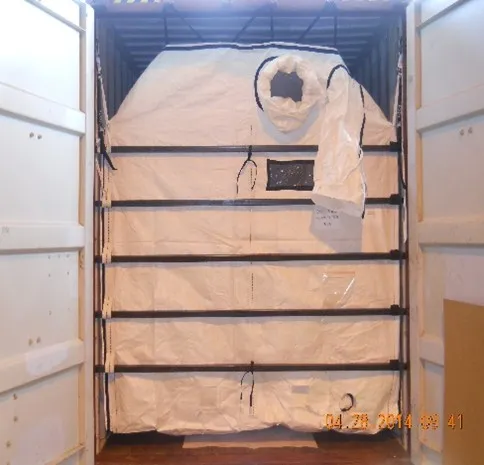
For third-party logistics providers, the same standard 20ft or 40ft container must frequently handle very different cargoes: dry bulk resins, food-grade powders, temperature-sensitive pharmaceuticals, moisture-sensitive minerals, and palletized high-value goods. A container liner is one of the most practical tools for converting a general-purpose ISO container into a cleaner, safer, moisture-controlled, or thermally stable loading environment. Choosing the right liner reduces cargo claims, simplifies cross-contamination control, and allows 3PLs to offer higher-value services without owning specialized equipment.
This guide walks through the liner categories, selection factors, compliance checks, and operational planning points logistics providers should evaluate before adding container liners to their service portfolio.
Why Container Liners Are a Strategic Fit for 3PLs
A well-specified container liner program gives 3PLs several operational advantages:
- Faster turnaround – Dry bulk liners allow pneumatic or auger loading in 30–60 minutes, replacing hours of manual bag handling.
- Reduced contamination risk – A sealed liner isolates cargo from container walls and previous-load residues.
- Better cargo protection – Moisture barriers and thermal insulation reduce condensation, temperature excursions, and spoilage.
- Broader service range – The same client may need dry bulk, food-grade, and temperature-sensitive solutions. A flexible liner program covers all three.
For logistics providers, container liners are not just packaging. They are a service capability that can be standardized across clients while remaining customizable for individual cargo requirements.
Cargo-to-Liner Matching for Multi-Client Operations
One of the most common mistakes in 3PL liner sourcing is trying to use a single liner type for every commodity. The correct match depends on whether the cargo is dry bulk, liquid bulk, temperature-sensitive, food-grade, or a high-value palletized load.
| Cargo Type | Recommended Liner Category | Typical Product Families |
|---|---|---|
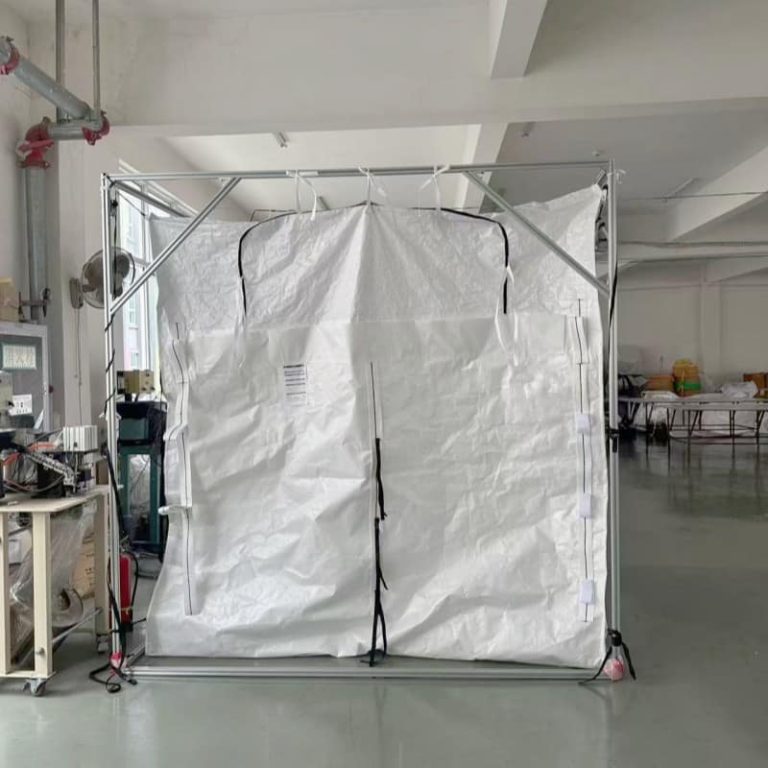
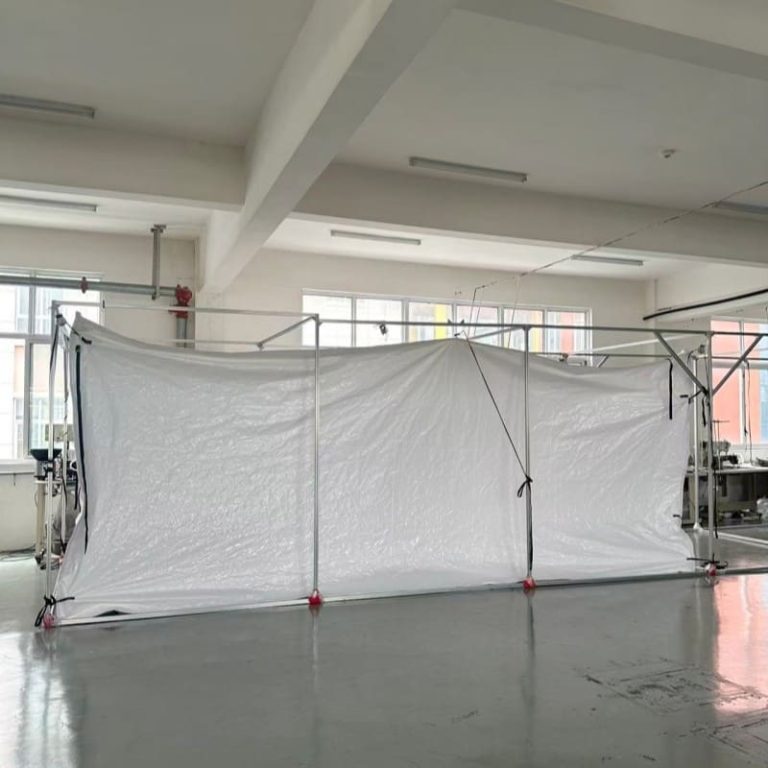
| Dry flowable bulk: PE resin, grains, polymer pellets, minerals | Woven dry bulk liner or PE film liner | DBL-W01 Dry Bulk Container Liner, DBL-F01 PE Film Container Liner |
| Fine powders needing zero leakage: cement, talc, pigments, plastic powders | Sift-proof woven liner with sealed seams | DBL-W06 Woven Sift-Proof Container Liner |
| Malt, flour, sugar, milk powder and food-grade powders | Food-grade laminated woven liner | DBL-W02 Dry Bulk Container Liner for Malt |
| Temperature-sensitive bulk or packaged goods | Thermal container liner | TL-01, TL-02, TL-03, TL-04 |
| Palletized temperature-sensitive freight | Thermal pallet cover | TP-01, TP-02, TP-03, TP-04 |
| European 30ft plastic pellet distribution | 30ft PE film liner | DBL-F02 30FT PE Film Container Liner |
| Bulk powder rail transport | Wagon liner with heat-welded seams | DBL-04W Wagon Liner |
For 3PLs managing multiple shippers, this table should be treated as a decision matrix. It helps standardize liner selection without forcing every client into the same packaging spec.
Dry Bulk Liner Options: Woven vs PE Film
Most 3PL dry bulk work falls into two categories: woven polypropylene/HDPE liners and blown polyethylene film liners. The choice affects load strength, moisture protection, unloading speed, and cargo residue control.
| Attribute | Woven Dry Bulk Liner | PE Film Container Liner |
|---|---|---|
| Tensile strength | Warp ≥1,800 N/5cm, weft ≥1,500 N/5cm | Warp ≥1,500 N/5cm, weft ≥1,300 N/5cm |
| Moisture resistance | ≥98% | 100% moisture and dust barrier |
| Load capacity | 10–30 tons typical | 15–35 tons typical |
| Best for | Granular, abrasive, heavy dry bulk cargo | Food ingredients, chemical pellets, smooth unloading |
| Seam leakage risk | Low with heat-welded or sealed seams | Very low; smooth film surface prevents adhesion |
| Reuse potential | Mostly single trip | Mostly single trip, but clean unloading reduces residue |
Leading product references include:
- DBL-W01 Dry Bulk Container Liner – universal 140 gsm HDPE woven liner for grains, fertilizers, plastic pellets, cement, sand, and soda ash.
- DBL-W06 Woven Sift-Proof Container Liner – sealed PU tape seams and double-sided PE coating for powders ≥50 mesh, ensuring zero dust emission.
- DBL-F01 PE Film Container Liner – 140-micron LDPE film for agricultural products, food ingredients, and chemical pellets.
- DBL-F02 30FT PE Film Container Liner – designed for European plastic pellet filling equipment and 30ft containers.
For general dry bulk work, a woven liner is usually stronger and better suited to abrasive cargo. For food ingredients, powders, and sticky materials, a PE film liner provides cleaner unloading and a 100% moisture barrier.
Thermal Container Liners for Temperature-Sensitive 3PL Cargo
When a 3PL takes on temperature-sensitive cargo, the default option is often a reefer container. But reefers are expensive, require power supply, and are not always justified for all temperature ranges. Thermal container liners offer a passive alternative that reduces temperature swings and condensation without energy consumption.
Giant Flexpack’s thermal insulation container liner family is built around four models, each designed for a different balance of performance, weight, and cost.
| Model | Structure | Key Performance | Typical Applications |
|---|---|---|---|
| TL-01 Thermal Container Liner | Woven PE + double-sided PE aluminum foil lamination | Reflects 95–97% radiant heat; maintains -20°C to 60°C; temperature variance within ±5°C; reusable 3–5 times | Food and beverage, pharmaceutical, chemical, electronics |
| TL-02 Thermal Container Liner | PET aluminum foil / woven PE / 3mm EPE foam / PET aluminum foil | Thermal conductivity ≤0.038 W/(m·K); MVTR ≤0.033 g/(m²·h·kPa); operating range -50°C to 80°C; reusable 3–5 times | International sea freight, long-haul transport |
| TL-03 Thermal Container Liner | MPET / double bubble / MPET | Reflects up to 98% radiant heat; double bubble layer adds shock absorption and secondary air barrier | Frozen and fresh food, vaccines, biologics, electronics |
| TL-04 Thermal Container Liner | MPET / PE composite film | Lightest and most cost-efficient; maintains -10°C to 30°C for 24–48 hours, extendable to 72 hours with ice packs | Fresh produce, standard pharmaceuticals, cosmetics, electronics |
For 3PLs, the key point is that thermal liners do not replace active cold chain in every case. They are best deployed when the shipment falls within a moderate temperature range, the route is less than a few days, or the client wants to avoid reefer costs. The liners install in 10–15 minutes without tools and cover all six interior container walls.
Pallet Covers for LTL, Warehouse Staging, and Last-Mile Thermal Protection
Not all temperature-sensitive cargo travels as bulk. Palletized goods moving through LTL networks, cross-dock operations, or temporary warehouse staging often need protection from heat, cold, condensation, and dust. Thermal insulation pallet covers are a lightweight, reusable solution for these situations.
Giant Flexpack offers four pallet cover configurations:
- TP-01 Thermal Pallet Cover – five-layer woven thermal fabric with tensile strength ≥25 N/15mm, reusable 5–8 times or more.
- TP-02 Thermal Pallet Cover – EPE foam core for thermal insulation, shock absorption, and moisture resistance.
- TP-03 Thermal Pallet Cover – lightest and most cost-effective bubble wrap design for 24–48 hour protection.
- TP-04 Thermal Pallet Cover – genuine aluminum foil surface for ≥95% heat reflection and 100% waterproofing.
Pallet covers are especially useful when 3PLs must protect cargo across multiple handling points where reefer containers are impractical or too costly.
Compliance: What 3PLs Must Verify Before Accepting Cargo
A 3PL serving international clients must treat compliance as an operational requirement, not a supplier marketing claim. The liner you choose may need to meet different standards depending on the cargo and destination market.
| Certification / Standard | What It Covers | Relevant 3PL Scenario |
|---|---|---|
| FDA | US food contact safety | Food, beverage, and pharmaceutical exports to or through the US |
| LFGB | EU food contact safety | Food-grade cargo entering Germany and the EU |
| ISO 9001 | Quality management system | Baseline supplier quality control |
| REACH | EU chemical substance safety | Chemical powders, polymers, and industrial raw materials |
| RoHS | Restriction of hazardous substances | Electronics and electronic component cargoes |
| ISO 22000 | Food safety management | Malt-grade and food-grade dry bulk liners |
When sourcing container liners for regulated cargoes, request current certificates and full test reports. For food-contact work, migration testing and third-party validation should be part of the supplier file. A reliable manufacturer will provide these documents without hesitation.
Operational Planning: Installation, Loading, and Discharge
The best liner specification will fail if the loading team does not know how to install or use it correctly. 3PLs should build simple standard operating procedures for each liner type they adopt.
Dry bulk liners are usually supplied with a top loading spout, bottom discharge spout, and securing ropes or lifting loops. Pneumatic or auger loading can reduce loading time from 8–12 hours for bagged cargo to 30–60 minutes for bulk liner loading. The DBL-W02 Malt Grade liner, for example, replaces roughly 1,000–1,500 25kg bags per 40HQ load.
Thermal container liners install in 10–15 minutes without tools. The liner covers the floor, walls, and ceiling of 20GP, 40GP, or 40HQ containers. Before installation, teams should check for container wall protrusions, sharp edges, and residual moisture.
Pallet covers are pulled over pallets and secured with drawstrings, Velcro side fastenings, or zippers depending on model. For extreme conditions, ice packs can be placed inside the cover.
Before accepting any liner program, confirm that the supplier provides installation guides, loading diagrams, and after-sales technical support. This reduces handling errors, cargo damage, and insurance claims.
Common Mistakes When Sourcing Container Liners for 3PL Clients
- Using an industrial liner for food cargo – A liner without FDA or LFGB certification can contaminate food and cause regulatory rejection.
- Ignoring seam strength – For fine powders, standard sewn seams leak unless sealed with PU tape or heat welding. Choose sift-proof liners for materials below 50 mesh.
- Mismatching liner thickness to cargo weight – A light film liner may fail under 30 tons of dense mineral cargo. Match GSM and tensile strength to the load.
- Overlooking condensation risk – Moisture damage is one of the largest hidden costs in container shipping. Thermal liners with low moisture vapor transmission rates help prevent container rain.
- Choosing only on price – A lower-cost liner can create higher cargo claims, longer cleaning times, and client dissatisfaction.
- Failing to train loading teams – Even a high-quality liner fails when installed incorrectly or overloaded beyond its rated capacity.
Supplier Evaluation Checklist for 3PLs
When evaluating container liner manufacturers, request and verify the following:
- ISO 9001 quality management certification
- FDA, LFGB, REACH, RoHS certificates as applicable
- Third-party test reports for thermal performance and moisture vapor transmission
- Product samples and sample evaluation protocol
- OEM/ODM capability for custom dimensions, colors, anti-static or food-grade variants
- Factory production capacity and lead time confirmation
- Installation guides, technical drawings, and after-sales support contact
- Transparent loading, discharge, and reuse instructions
Giant Flexpack (Taixing) Co., Ltd. is a Sino-American joint venture with more than 20 years of expertise in bulk packaging and thermal protection. It manufactures the GewenChamp™ series thermal container liners, thermal pallet covers, and woven / PE film dry bulk container liners. The company holds FDA, LFGB, ISO9001, REACH, and RoHS certifications, and supports OEM/ODM projects for logistics providers worldwide.
FAQ
Do thermal container liners eliminate the need for reefer containers?
Not in all cases. Thermal liners reduce temperature swings, radiant heat absorption, and condensation, but they are a passive solution. For cargo requiring strict frozen temperatures below -20°C or very long transit times, an active reefer may still be necessary. For many food, pharmaceutical, and chemical shipments in moderate temperature ranges, a thermal liner is sufficient and far lower cost.
Can one container liner be used for multiple cargo types?
It is possible for compatible non-food cargoes, but it is not always recommended. Cross-contamination is a serious concern, especially for food, pharmaceutical, and high-purity chemical shipments. A 3PL should separate liner categories by cargo class and never use an industrial liner for food contact unless it carries the correct food-grade certification.
What load capacity should a 3PL plan for?
Most dry bulk container liners support between 10 and 35 tons, depending on design and material. The DBL-W01 Dry Bulk Container Liner supports 10–30 tons, while the DBL-W06 Sift-Proof liner supports 20–40 tons. Always match the liner to the actual billed cargo weight, not the maximum container payload.
Are these liners reusable?
Thermal container liners in the TL series are designed for 3–5 reuses. Thermal pallet covers can last 3–12 times depending on the model and handling. Dry bulk liners are usually single-trip because they are cut or discharged aggressively, but PE film liners with smooth surfaces can sometimes be reused for the same commodity after inspection. 3PLs should confirm reuse policy with the supplier.
What documents should a 3PL request before ordering?
At minimum, request ISO 9001 certification, relevant food-contact certificates (FDA, LFGB), third-party test reports, a material safety data sheet where applicable, and installation instructions. For food and pharmaceutical cargo, request migration test results and certificate validity dates.
Work With a Container Liner Specialist
A container liner program is easier to build when the supplier understands 3PL multi-client operations. Giant Flexpack supports specification reviews, sample evaluation, OEM/ODM production, and after-sales technical guidance for logistics providers.
Contact Giant Flexpack at [email protected] or +86 523 87683880 to discuss your cargo mix and liner requirements.
From insight to product selection
Related products
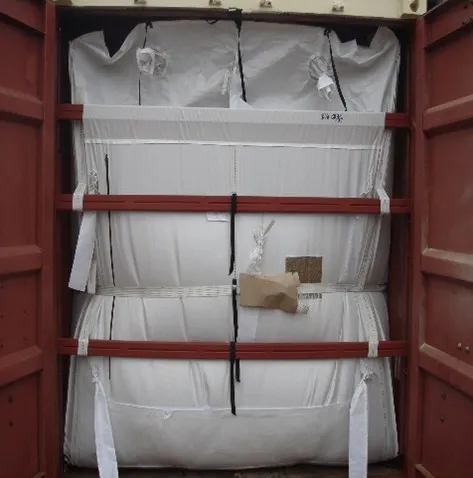
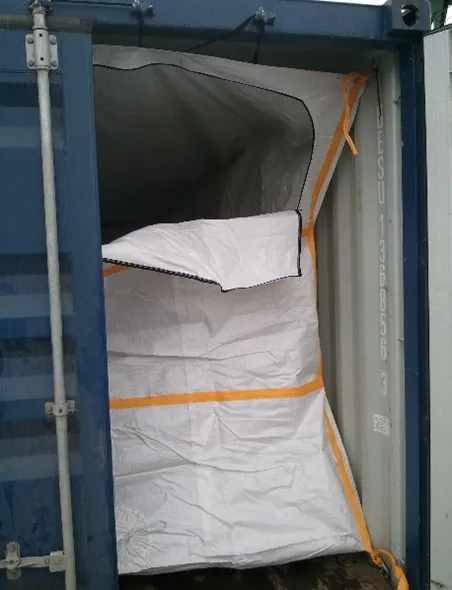
Explore these packaging options, then confirm suitability for your cargo, dimensions and shipping conditions.
Tell us about your shipment
Discuss your packaging requirements
Tell us what you ship and how you ship it. Add the container or pallet size, route and any moisture or temperature concerns so we can discuss an appropriate packaging option.