
Packaging Insights
How to Prevent Moisture Contamination When Shipping PE Resin
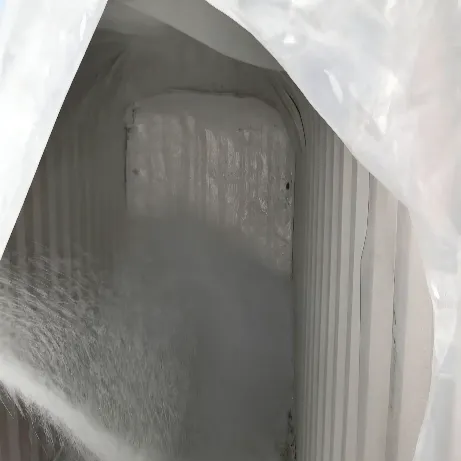
Moisture is one of the most underrated threats to polyethylene resin during international container transport. A single condensation event inside a 40ft container can turn free-flowing pellets into a caked, contaminated load that customers reject on arrival. While PE resin itself is not highly hygroscopic, surface moisture and trapped condensation create serious processing problems — from extruder screw slippage and melt voids to downgraded optical and mechanical properties in finished plastic parts. Preventing moisture contamination is not a single fix; it requires the right liner, disciplined loading, and a container environment that controls the dew point ceiling throughout the voyage.
Why Moisture Contamination Threatens PE Resin Quality
Polyethylene pellets may look dry, but their surface can hold enough condensed water to cause measurable quality loss. During downstream processing, moisture on pellet surfaces flashes to steam inside the extruder or injection molder. The result can be:
- Surface defects, bubbles, and silver streaking in finished parts
- Reduced tensile and impact strength in molded products
- Poor pigment dispersion and inconsistent color
- Clogging or bridging in hoppers and pneumatic conveying lines
- Downgraded food-contact compliance when wet resin sits against non–food-grade packaging
Resin producers, compounders, and converters therefore specify tight moisture limits. Many PE grades are supplied with a maximum moisture content below 0.1% by weight, with the expectation that the resin arrives in the same condition it left the silo. A container liner that eliminates moisture ingress and condensation is the primary safeguard between the production line and the customer’s receiving hopper.
Where Does Moisture Come From During Container Shipping?
Understanding the moisture source is the first step in designing an effective prevention strategy. In bulk PE resin shipments, the main risks are:
1. Container Rain and Condensation
A standard ISO container is not climate controlled. Warm, humid air inside the container cools when the box passes through cooler night temperatures or high-latitude sea routes. Once the air temperature falls below the dew point, water vapor condenses on the roof, walls, and doors. This condensed water drips onto the cargo — a phenomenon often called “container rain.” In tropical-to-temperate routes, temperature swings of 20°C or more are common, producing significant quantities of free water.
2. Residual Moisture from Previous Cargo or Cleaning
Containers may arrive with wet floors, condensation inside door channels, or moisture trapped in wooden flooring. A visual check is not enough; wooden container floors can release moisture gradually over a multi-week voyage. Without a sealed liner, that moisture migrates directly into the PE resin stream.
3. Loading During Rain or High Humidity
Opening container doors during monsoon or coastal rainfall introduces humid air and water droplets. Filling spouts left open during loading expose the resin stream to ambient moisture before the liner is closed. In port environments where relative humidity exceeds 80%, even short exposure can be significant.
4. Door Seal Leaks and Micro-Holes
Worn door gaskets, corroded door sills, or pinholes in a cheap liner allow humid outside air to enter during transit. Once inside the liner, that air eventually releases water through condensation when temperatures drop.
5. Moisture Migration from Dunnage or Mixed Cargo
If bagged goods, cardboard, or wooden dunnage are shipped in the same container without isolation, they can introduce absorbed moisture that moves into the resin load.
Preventive Strategy 1: Use a Dedicated Dry Bulk PE Film Container Liner
The most effective barrier against moisture ingress and contamination is a properly fitted PE film container liner. Unlike open bulk loading or woven sacks, a film liner creates a continuous barrier between the cargo and the container environment.
A PE film container liner made from 140-micron LDPE provides:
- 100% moisture and dust barrier performance
- Smooth surface that prevents pellet adhesion for fast, clean discharge
- Food-grade LDPE option for resin intended for food-contact applications
- Tensile strength that withstands loading, transport vibration, and discharge
- Customizable colors, thickness, and spout configurations
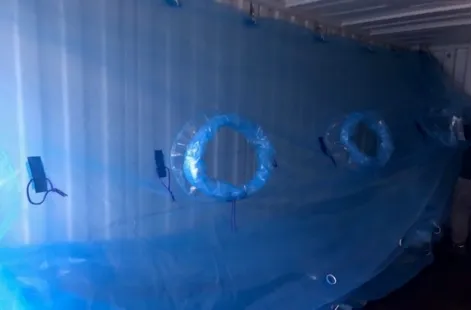
For plastic pellet shipments moving in European 30FT containers, the DBL-F02 30FT PE Film Container Liner is specifically engineered with four top filling spouts in European standard diameters. These spouts are heat-sealed into the liner top and fully compatible with European plastic pellet filling equipment, reducing loading time and preventing exposure during filling.
A key point: film liners block moisture better than uncoated woven liners because they have no stitched seam gaps. For PE resin, a woven dry bulk container liner with a PE coating can work when handling systems require greater tensile strength, but a fully sealed PE film liner is generally the cleaner choice for pelletized resin. The right decision depends on your loading system, discharge method, and route.
Preventive Strategy 2: Control Condensation at the Container Level
The liner handles the cargo side; the container itself must reduce the dew point challenge.
Inspect before loading. Check the roof, walls, and floor for rust, holes, and water stains. Press firmly on wooden flooring near the door end; if moisture beads or the wood feels damp, reject or dry the container first.
Verify door seals. Close the doors from inside or run a flashlight along the seal to detect gaps. Known problem areas are bottom corners and the junction between door gaskets and the sill.
Use desiccants strategically. A sealed liner significantly reduces moisture load, but adding desiccant or moisture-absorbing sachets inside the liner before final closure can capture residual headspace humidity. This is especially useful on routes with large temperature swings or voyages exceeding 30 days.
Avoid opening doors mid-journey. Every door opening admits humid outside air. If customs inspection is required, reseal the liner spout and container doors as quickly as possible and replace desiccant if access allows.
Load dry resin only. Condensed or free water already present in the resin before loading will not disappear inside a sealed liner. Confirm moisture content at the silo or loading point before filling begins.
Preventive Strategy 3: Match Liner Type to Your PE Resin Handling System
Moisture prevention starts at the filling point. The longer resin is exposed to ambient air during loading, the greater the risk of moisture pickup and contamination.
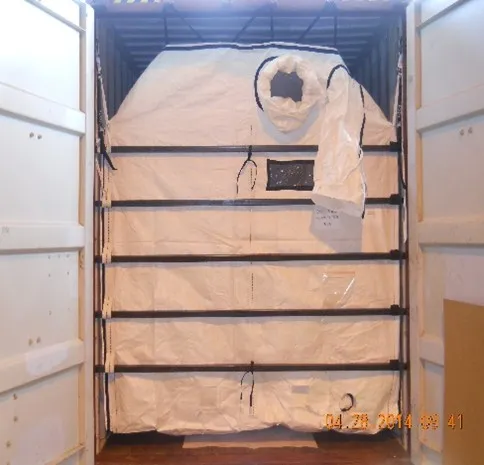
Top loading with sealed filling spouts. A liner with dedicated top filling spouts keeps the resin enclosed from the silo discharge to the liner interior. The spouts connect directly to loading pipes, minimizing open exposure. For European pellet systems, the four-spout configuration of the DBL-F02 liner enables fast, contamination-free filling and balanced loading.
Bottom discharge options. A liner with a bottom discharge spout allows clean, gravity-fed unloading without manual cutting or prolonged exposure at the destination. This reduces the chance of rain or humidity entering during discharge and keeps the work area clean.
Proper strapping and spout closure. After filling, all spouts should be folded, rolled, and tied or heat-sealed to form a closed system. Loose or partially closed spouts are direct entry points for moisture and dust.
Load capacity discipline. Overloading a liner beyond its rated capacity can cause seam stress and micro-tears, creating hidden moisture paths. PE resin loads typically range from 15 to 35 tons per container depending on container size and liner specification. Confirm the liner’s load rating before use.
Preventive Strategy 4: Verify Liner Integrity Before Filling
Even the best liner fails if it arrives with handling damage or manufacturing defects. A pre-loading inspection prevents moisture contamination at the root.
Key inspection points:
| Check | What to Look For | Why It Matters |
|---|---|---|
| Seams and welds | Continuous, uniform welds without pinholes or peel-back | Heat-welded seams give PE film liners their leak and moisture barrier |
| Filling spouts | No tears, secure attachment points, correct diameter | Spouts are high-stress areas during pneumatic or auger loading |
| Body film | No scratches, punctures, or thin spots | A single puncture can allow humid air entry |
| Contamination | No dust, oil, or foreign material inside the liner | Cleanliness is critical for food-grade and compound PE resin |
| Certifications | FDA, REACH, RoHS, ISO9001 as required | Ensures the liner itself does not contaminate the resin |
For resin destined for food-contact packaging, the liner must meet the same hygiene logic as the product it protects. Using a food-grade PE film liner eliminates the risk of non-compliant additives migrating into the resin during a long, hot voyage. Ask the manufacturer for documentation before shipment, not after a problem occurs.
Preventive Strategy 5: Certifications and Food-Grade Requirements
PE resin is often the starting material for food packaging, medical devices, and pharmaceutical closures. A moisture-prevention strategy is also a contamination-prevention strategy, and certification compliance is part of that system.
Relevant standards for PE resin container liners include:
- FDA compliance — for food-contact resin shipments
- REACH — for European Union chemical and polymer imports
- RoHS — for electronics-grade resin where restricted substance control matters
- ISO9001 — for consistent manufacturing and quality management
The DBL-F01 PE Film Container Liner is available with optional FDA certification and complies with REACH and RoHS, making it suitable for industrial, food-grade, and export-regulated PE resin programs. Confirm the specific liner grade at order stage to avoid compliance surprises at destination customs.
Common Mistakes That Let Moisture Into PE Resin Shipments
Moisture contamination is rarely caused by one catastrophic failure. It usually results from small, avoidable errors that compound over a 30- or 45-day voyage.
- Reusing a liner with micro-damage. Small punctures or seam fatigue from a previous load may not be visible. If a liner is reused, inspect every seam and body panel under bright light.
- Leaving filling spouts open during loading. Even a five-minute opening during a coastal rain shower can introduce grams of water into the liner headspace.
- Assuming the container roof is dry. Previous cargo may have formed condensation that pooled on the roof. Always check the roof from inside and outside.
- Skipping desiccant on long routes. Sealed liners help, but residual air still contains moisture. On multi-climate routes, desiccant is a cost-effective second barrier.
- Mixing wet and dry lots in one liner. One wet batch can spread moisture to the entire load through condensation and pellet contact. Load only resin that meets the moisture specification.
- Using a standard woven liner for fine pellet resin. Stitched woven liners without a sealed PE coating may allow moisture and dust ingress at seams. Choose a film liner or a laminated woven structure designed for sift-proof performance.
Pre-Shipment Container Loading Checklist for PE Resin
Use this checklist before closing container doors on every bulk PE resin shipment.
| Step | Action | Reason |
|---|---|---|
| 1 | Inspect container interior: roof, walls, floor, door seals | Identifies condensation sources and leak points |
| 2 | Reject or dry containers with damp floors, rust streaks, or door seal gaps | Prevents moisture migration into the liner |
| 3 | Install the liner per manufacturer instructions | Ensures full coverage and proper spout alignment |
| 4 | Inspect liner seams, spouts, and body film | Detects pinholes and tears before filling |
| 5 | Connect loading equipment to sealed filling spouts | Avoids ambient humidity exposure during filling |
| 6 | Close and seal all spouts immediately after filling | Creates a closed moisture barrier system |
| 7 | Add desiccant inside the liner before final closure | Captures residual headspace moisture |
| 8 | Confirm gross weight does not exceed liner and container limits | Prevents seam stress and micro-tears |
| 9 | Record resin moisture content at loading | Establishes a documented baseline for claims |
| 10 | Close container doors and verify seals from the outside | Reduces moisture ingress through door gaps |
How to Evaluate a Container Liner Supplier for PE Resin Shipping
The right supplier does more than sell a bag. For PE resin shipments, the supplier should demonstrate:
Material clarity. Confirm whether the liner is made from virgin LDPE, recycled content, or a blend. Food-grade resin programs require virgin material with certified compliance.
Consistent film thickness. A 140-micron film may sound standard, but thickness variation affects seam strength and puncture resistance. Ask for thickness tolerance data, not just a nominal number.
Custom spout design. Loading and discharge systems vary by terminal and destination. A supplier with OEM/ODM capability can match spout diameter, length, placement, and closure style to your equipment — reducing moisture exposure during transfer.
Production capacity and lead time. Moisture problems often become urgent when a shipment is already booked. A manufacturer with stable production capacity can meet scheduled sailings without forcing you to accept a thinner or uncertified substitute.
Technical support. The supplier should provide installation guidance, pre-shipment inspection checklists, and after-sales support if a liner issue arises at destination.
At Giant Flexpack, PE film container liners are manufactured with heat-welded seams, customizable spout configurations, and FDA, REACH, RoHS, and ISO9001 compliance foundations. For resin traders and producers moving PE resin into food-grade and industrial markets, this combination reduces moisture risk and supports clean discharge at the customer’s hopper.
The Bottom Line: Build Moisture Prevention as a System
Moisture contamination in PE resin shipping is preventable when the following layers work together:
- A sealed PE film container liner with intact seams and proper spout closure
- A dry, leak-free container with functioning door seals
- Disciplined loading that minimizes ambient air exposure
- Desiccant on long or high-temperature-swing routes
- Verified moisture content before loading
- Certification-backed liner materials for food-grade resin programs
No single action guarantees a dry load. But when liner selection, loading discipline, and container inspection are treated as one system, moisture-related claims, caking, and processing defects drop sharply.
For PE resin shipments where moisture control is a commercial requirement, choose a liner system designed for pelletized cargo — with the film integrity, food-grade options, and custom spout engineering your route requires.
Contact Giant Flexpack (Taixing) Co., Ltd. for PE film container liner specifications, food-grade certifications, and custom spout configurations for PE resin bulk transport. Our team supports resin producers, compounders, and trading companies with container liner systems that keep moisture out of the load.
- Email: [email protected]
- Phone: +86 523 87683880
From insight to product selection
Related products
Explore these packaging options, then confirm suitability for your cargo, dimensions and shipping conditions.
Tell us about your shipment
Discuss your packaging requirements
Tell us what you ship and how you ship it. Add the container or pallet size, route and any moisture or temperature concerns so we can discuss an appropriate packaging option.