
Packaging Insights
Polycarbonate Resin Export: Bulk Container Liner and Quality Protection
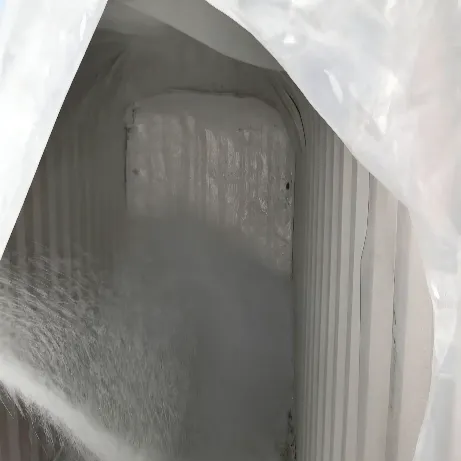
Why Moisture Control Defines Polycarbonate Resin Export Quality
Polycarbonate resin pellets are hygroscopic. A load that leaves the producer dry can arrive at a compounding facility with enough absorbed moisture to cause processing defects. Before melt processing, PC resin is typically dried to below 0.02% moisture. During a 30–45 day ocean voyage, unprotected pellets exposed to humid air and condensation can exceed that threshold. The result is not always visible at the port: hydrolysis during molding creates bubbles, silver streaks, surface defects, and reduced impact strength. A correctly specified container liner is the primary control point between the plant and the customer’s hopper.
Condensation and Container Sweating: The Hidden Damage Path
Steel shipping containers are not sealed climate chambers. When outside temperature changes, the container walls cool below the dew point of the air inside. Moisture condenses on the roof and walls, then drips onto the cargo. For polycarbonate resin, this “container rain” can wet the top layer, create clumps, and introduce dust or gel formation after processing.
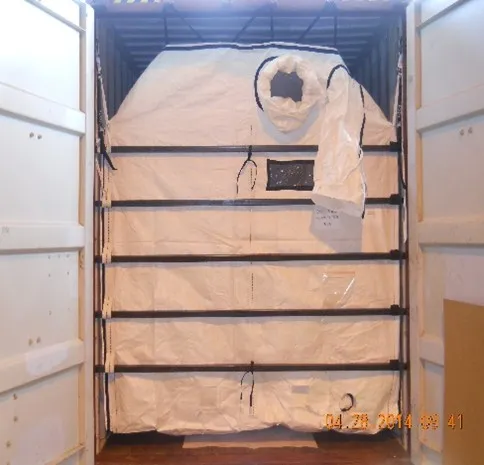
A continuous PE film liner acts as a physical barrier between the cargo and the container walls. Unlike uncoated woven fabric, an LDPE film liner does not allow water vapor to pass through at meaningful rates. The liner is installed across the floor, walls, and ceiling, and closed after loading, so condensation stays outside the cargo space.
Choosing the Right Container Liner for Polycarbonate Pellets
Polycarbonate resin is dry, free-flowing, and sensitive to both moisture and foreign particle contamination. Three liner types are commonly evaluated:
| Liner type | Material and construction | Moisture / dust performance | Best application for PC resin |
|---|---|---|---|
| PE film container liner | 140-micron LDPE film | 100% moisture and dust barrier; smooth surface for clean discharge | Standard pellet export; food-contact capable with FDA-grade film |
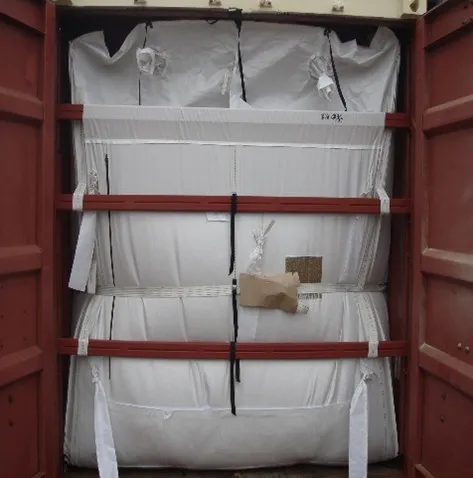
| Dry bulk container liner DBL-W01 | 140 gsm HDPE woven fabric | ≥98% moisture resistance; high tensile strength | High-tonnage or rough-handling routes; optional food-grade variant |
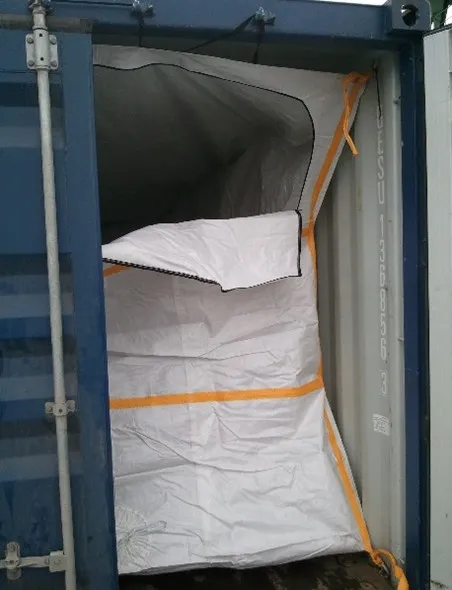
| Sift-proof woven container liner DBL-W06 | 140 gsm HDPE with double PE coating and taped seams | 100% sift-proof for particles ≥50 mesh | Resin with fines or powder content; contamination control |
For most polycarbonate resin shipments, a 140-micron PE film liner is the strongest starting point. It provides a complete moisture and dust barrier, leaves no fiber residue, and allows fast, clean discharge. If the logistics route involves multiple transshipments, high mechanical stress, or very fine resin powder, a woven laminated or sift-proof liner may be more appropriate.
Thermal insulation liners are not normally required for polycarbonate resin unless the route passes through extreme temperature swings that make internal condensation difficult to manage. The first requirement remains a continuous moisture barrier.
Key Quality Protection Practices During Loading
The liner only performs if it is installed and closed correctly.
- Inspect the container before liner installation. Rust holes, sharp protrusions, wet floors, and previous cargo residues will compromise any liner.
- Install the liner fully across the floor, walls, and roof. Secure it with the factory-fitted ropes or straps.
- Load only dry resin. Confirm the resin’s moisture content after drying and before filling; do not load in rain or heavy fog.
- Close and seal the filling spout immediately after loading. The top opening is a primary entry point for humid air and contamination.
- Keep the discharge spout closed and locked during transit.
- Minimize residual air volume inside the filled liner to reduce the air mass available for condensation.
- After loading, walk the container exterior and check for any liner protrusion, pinched material, or damage at door seals.
Certifications That Matter for Polycarbonate Resin Export
Polycarbonate resin is often destined for food-contact, medical, electronics, or automotive applications. The liner should not introduce contamination risk.
- FDA or LFGB compliance for food-contact capable PE film where downstream use requires it.
- REACH and RoHS compliance for European destinations.
- ISO9001 process control for consistent thickness, seam strength, and batch traceability.
- Third-party test reports covering tensile strength, elongation, water vapor transmission rate, and food-contact migration where relevant.
A supplier should be able to provide these documents before production. If the liner cannot be traced to a batch, it cannot be reliably specified for high-value polymer cargo.
Common Mistakes That Damage Polycarbonate Resin in Transit
- Using an uncoated woven liner without a film barrier, allowing moisture and fines to pass through.
- Reusing a liner that previously carried a different chemical or powder, creating cross-contamination.
- Leaving the filling or discharge spout open during transit.
- Ignoring the container floor: damp or dirty floors transfer moisture and particles directly to the liner.
- Specifying thicker film without checking seam strength. Leaks often occur at seams, not in the film body.
- Failing to verify residual moisture in the resin before loading.
FAQ
What type of container liner is best for polycarbonate resin?
For most shipments, a 140-micron LDPE PE film liner is the best balance of moisture barrier, cleanliness, and cost. If the route involves heavy handling or the resin contains fines, specify a woven HDPE liner with PE coating and sealed seams.
How does moisture damage polycarbonate resin during shipping?
PC resin is hygroscopic. Absorbed moisture can cause hydrolysis during melt processing, producing bubbles, silver streaks, surface defects, and reduced molecular weight. Condensation can also cause caking, dusting, and gel formation.
Do polycarbonate resin shipments need FDA-compliant liners?
If the resin is intended for food-contact or medical applications, yes. The liner should be FDA or LFGB compliant. For industrial and technical grades, REACH and RoHS compliance is usually the minimum requirement.
How are polycarbonate resin container liners installed and loaded?
The liner is installed inside a clean 20ft or 40ft container, fixed with ropes or straps, and connected to filling equipment through the top spout. After loading, the filling spout is closed and sealed, and the discharge spout remains closed until unloading.
Can a polycarbonate resin container liner be reused?
PE film liners are generally single-use because seal integrity and contamination control cannot be guaranteed after discharge. Woven liners may be reused only after cleaning, inspection, and confirmation that no product residue or damage remains. For food-grade resin, single-use liners are recommended.
Specification and Support for Polycarbonate Resin Export
Giant Flexpack (Taixing) Co., Ltd. manufactures PE film container liners and woven dry bulk container liners for polymer, resin, and specialty chemical exporters. Products are available with FDA, LFGB, REACH, RoHS, and ISO9001 certifications. For polycarbonate resin liner specifications, moisture-barrier test data, sample requests, or a compatibility check for your route, contact [email protected] or +86 523 87683880.
From insight to product selection
Related products
Explore these packaging options, then confirm suitability for your cargo, dimensions and shipping conditions.
Tell us about your shipment
Discuss your packaging requirements
Tell us what you ship and how you ship it. Add the container or pallet size, route and any moisture or temperature concerns so we can discuss an appropriate packaging option.