Packaging Insights
Resin and Polymer Manufacturers: Bulk Container Liner Solutions
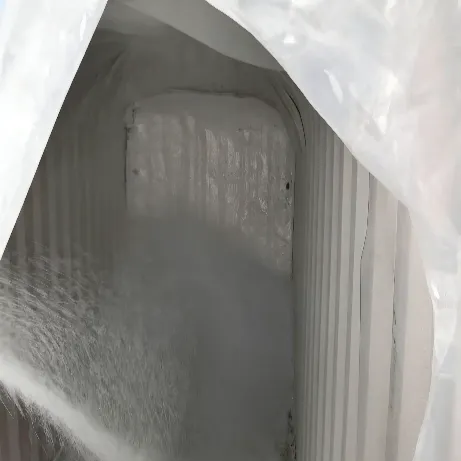
The cost of contamination in resin and polymer shipping is not a theoretical risk. A single wetted or contaminated lot can force a full container rejection at the destination, trigger off-spec claims, delay production for downstream converters, and erode your supplier rating. For PE, PP, PVC, polycarbonate, titanium dioxide, and crumb rubber producers, the container liner is not an afterthought. It is the primary barrier between your product and moisture, dust, cross-cargo residue, and condensation.
This article covers what resin and polymer manufacturers need to know when selecting, specifying, and sourcing bulk container liners, with technical criteria rather than brochure language.
What a Bulk Container Liner Actually Does for Polymer Shipments
A bulk container liner converts a standard 20ft or 40ft ISO dry container into a protected bulk loading system. It lines the container interior, creating a sealed or semi-sealed environment around the cargo. For resin and polymer manufacturers, this delivers four practical outcomes:
- Moisture isolation: Blocks container rain, condensation, and ambient humidity from contacting hygroscopic or moisture-sensitive resin powders and pellets.
- Contamination control: Prevents residue from previous cargo, dust, and external particulates from entering the product stream.
- Faster handling: Top loading spouts and bottom discharge ports allow pneumatic or auger loading in 30–60 minutes, compared to hours of manual bag handling.
- Reduced packaging waste: One liner replaces hundreds of bags, cutting labor and disposal costs.
Not every liner is suitable for every polymer. The right choice depends on particle form, moisture sensitivity, transport route, and end-use food-contact requirements.
Liner Types for Resin and Polymer Cargo
Resin and polymer manufacturers typically use three broad liner categories.
1. Woven Dry Bulk Container Liners
Woven HDPE or PP liners offer high tensile strength and are the standard workhorse for granular and pelletized polymers. They are available with optional PE coating for improved moisture resistance. The DBL-W01 Dry Bulk Container Liner is a universal solution with 140 gsm HDPE woven fabric, tensile strength above 1,800 N/5cm, and load capacity from 10 to 30 tons.
For fine powders such as PVC resin, calcium carbonate, or pigment powders, seam integrity is critical. A standard sewn seam can leak particles smaller than 50 mesh. The DBL-W06 Woven Sift-Proof Container Liner uses double-sided PE coating and PU-taped seams to achieve 100% sift-proof performance for particles ≥50 mesh.
2. PE Film Container Liners
PE blown film liners provide a continuous, non-porous barrier. They are the preferred choice for moisture-sensitive resins and food-contact polymer pellets because they eliminate pinholes and seam leakage risks. The PE film container liner category includes standard 140-micron LDPE liners for 20ft and 40ft containers.
For European plastic pellet transport, precision-fit matters. The DBL-F02 30FT PE Film Container Liner is engineered for 30FT containers, with four top filling spouts compatible with European filling equipment. This eliminates the common problem of specifying a 20ft liner for a 30ft European container.
3. Thermal Container Liners
Some polymers and resin compounds require temperature stability during transit even without active refrigeration. A thermal container liner slows heat transfer and reduces condensation by keeping the container interior temperature more consistent. The TL-01 Thermal Container Liner uses woven PE with double-sided aluminum foil lamination, reflecting 95–97% of radiant heat and holding temperature variance within ±5°C.
For lower-cost protection, the TL-04 MPET/PE composite film liner offers a lightweight option for routes where extreme temperature control is not required. Thermal liners are especially relevant for polymer shipments moving through equatorial sea routes, desert rail hubs, or cold-weather ports where temperature swings are severe.
Matching the Liner to the Polymer
The polymer category, particle size, and destination market determine the liner specification. The table below gives a practical reference.
| Polymer / Material | Recommended Liner Type | Key Specification to Verify |
|---|---|---|
| PE / PP pellets | PE film liner or woven HDPE liner | 100% moisture barrier; food-grade if required; correct filling spout size |
| PVC resin powder | Sift-proof woven liner | PU-taped seams; ≥50 mesh sift-proof; anti-static option for fine dust |
| Polycarbonate resin | PE film or thermal liner | Moisture vapor transmission ≤0.033 g/(m²·h·kPa); temperature stability |
| Titanium dioxide (TiO₂) | Sift-proof woven liner | Zero dust emission; contamination control; discharge port |
| Crumb rubber | Woven HDPE liner | High tear resistance; anti-slip base; heavy-duty seams |
| Engineering resins | Thermal liner or PE film with thermal option | Temperature swing control; no softening or agglomeration |
This is not a one-size-fits-all table. Ask for third-party test data rather than relying on nominal material claims.
Moisture and Condensation: The Risk You Cannot See
Condensation inside a shipping container occurs when warm, humid air contacts the colder container walls. The resulting “container rain” drops onto cargo, causing:
- Caking and clumping of hygroscopic resins
- Hydrolysis or surface defects in engineering polymers
- Mold growth on organic fillers
- Off-spec moisture content at destination
A PE film liner acts as a physical moisture barrier, preventing both liquid water and water vapor from reaching the cargo. Woven liners with PE coating provide high resistance but are not fully hermetic. Thermal liners reduce the temperature difference between air and wall surface, which directly reduces condensation formation.
For resin and polymer suppliers, the payload protection decision should start with two questions:
- What is the maximum acceptable moisture gain from factory to destination?
- Does the route include sea, rail, or storage legs with high humidity or large temperature swings?
If the answer is “zero moisture gain,” specify a PE film liner with sealed seams. If the product is a fine powder, require sift-proof seam taping and dust-tight discharge ports.
Custom OEM Liners for Polymer Producers
Standard liners often work. But many resin manufacturers need modifications:
- Custom filling spout diameter to match existing silo or pneumatic loading equipment
- Multiple top filling spouts for European or North American filling stations
- Anti-static treatment for flammable powders or where electrostatic discharge is a concern
- Printed sack labels, batch codes, or brand marking
- Custom dimensions for non-standard containers or rail wagons
- Food-contact certification documentation for polymer pellets destined for packaging or food-contact applications
When requesting a custom liner, always provide the container inner dimensions, filling method, discharge method, cargo bulk density, and target load weight. A manufacturer cannot specify a liner from particle type alone.
Certifications That Matter for Resin and Polymer Shipments
Compliance requirements vary by destination market. For polymer and resin manufacturers, the most commonly demanded certifications include:
| Certification | What It Confirms | Relevant For |
|---|---|---|
| FDA | Food-contact compliance for PE/PP and other polymers | Food packaging resin, food-contact pellets |
| LFGB | German food and consumer goods safety | EU food-contact polymer exports |
| ISO 9001 | Quality management system in manufacturing | Factory consistency and traceability |
| REACH | Chemical substance registration and restriction | EU chemical and polymer shipments |
| RoHS | Restricted hazardous substances | Electronic-grade or engineering resins |
Giant Flexpack holds FDA, LFGB, ISO9001, REACH, and RoHS certifications across its liner product lines. This matters because a liner supplier that cannot provide current certificates for the specific product lot creates a compliance gap in your own export documentation.
Selecting a Reliable Bulk Container Liner Manufacturer
The difference between a liner that works once and a liner that works every shipment lies in factory process control and technical support. When evaluating suppliers, look for:
- Production capacity that matches your order volume without outsourcing to unknown sub-factories
- Documented quality management under ISO 9001, not a wall certificate
- Third-party test reports for tensile strength, moisture barrier, and food-contact compliance
- Sample evaluation process before first bulk order
- Technical support for installation, loading, and discharge troubleshooting
- After-sales response for cargo incidents or liner claims
Giant Flexpack operates as a Sino-American joint venture with manufacturing in Jiangsu, China, and more than 20 years of bulk packaging production. The product range includes thermal container liners, woven dry bulk liners, PE film liners, and thermal pallet covers, with in-house R&D for custom solutions.
From Specification to Shipment: A Practical Process
For procurement and logistics teams, a clear specification process reduces risk and shortens lead time:
- Define cargo parameters: material, form (pellet/powder/granule), bulk density, moisture sensitivity, end use.
- Select liner type and required certifications.
- Submit container type, dimensions, and loading/unloading method.
- Request a pre-production sample and conduct a real loading test where possible.
- Confirm MOQ, production lead time, and shipping terms.
- Verify certificates and test reports before container loading.
- Conduct pre-shipment inspection of liner seams, spouts, and accessories.
- Confirm after-sales technical support and claim process.
Bulk liner orders for polymer shipments typically range from a few hundred units to multi-container programs. Lead times depend on customization, but standard liners are generally faster to produce than fully custom thermal liners.
Frequently Asked Questions
Can I use the same liner for PE resin and food-grade polypropylene pellets?
Yes, if the liner carries FDA or LFGB certification and is specified as food-grade. Verify the certificate matches the exact liner material and not just the manufacturer’s general facility registration.
Is a woven liner enough for PVC resin powder?
No. PVC powder is fine and prone to sifting. You need a woven liner with sealed, PU-taped seams or a PE film liner. Standard sewn woven seams will leak.
Do thermal liners replace reefer containers for polymer shipments?
Not always. Thermal liners slow heat transfer and stabilize temperature variability, but they are passive. If your polymer requires a strict temperature range below ambient or above 40°C, active refrigeration may still be necessary. Thermal liners are a cost-effective solution when the goal is to reduce temperature swings and condensation, not to deep-freeze cargo.
What is the minimum order quantity for custom resin container liners?
MOQ varies by liner type and customization level. Simple printed PE film liners often have lower MOQs than heavily customized thermal liners. Contact the manufacturer with your specifications for exact terms.
Request Technical Support
Giant Flexpack provides bulk container liner solutions for resin and polymer manufacturers worldwide. Contact our technical team for liner selection, material compatibility, sample evaluation, and compliance support.
Email: [email protected]
Phone: +86 523 87683880
From insight to product selection
Related products
Explore these packaging options, then confirm suitability for your cargo, dimensions and shipping conditions.
Tell us about your shipment
Discuss your packaging requirements
Tell us what you ship and how you ship it. Add the container or pallet size, route and any moisture or temperature concerns so we can discuss an appropriate packaging option.