
Packaging Insights
Passive Thermal Packaging Cuts Cold Chain Logistics Costs
Cold chain budgets usually carry two separate burdens: the cost of active temperature control, and the cost of cargo damage when temperature control fails. Passive thermal packaging attacks both sides of that equation. It replaces continuous mechanical cooling with reflective films, low-conductivity foam, and sealed air spaces that slow heat transfer and block moisture vapor before it reaches the cargo.

Why Cold Chain Logistics Costs Escalate
Active cold chain costs are rarely limited to the reefer booking itself. Shippers also pay for pre-trip inspection, temperature setpoint management, genset positioning, power or fuel, monitoring hardware, and the operational time needed to coordinate all of it. On high-humidity or long-haul routes, the cost exposure increases again: condensation, temperature excursions, and spoilage can convert an already expensive shipment into a claim.
Passive thermal packaging addresses this by changing the thermal strategy. Instead of pumping cooled air into the container, it reduces the rate at which outside heat enters and internal heat escapes. That reduces both energy dependence and the failure points that create urgent exceptions.
How Passive Thermal Packaging Works
Passive thermal packaging slows heat transfer through three main physical mechanisms.
First, reflective outer layers—usually aluminum foil or metallized PET film—reflect a high proportion of radiant heat. On a hot tarmac or ocean crossing, this is often the largest heat load. Second, low-density foam or trapped air layers lower conductive and convective heat transfer. Third, the liner or pallet cover acts as a moisture barrier, limiting the warm, humid air that reaches the cargo and condenses when temperatures fluctuate.
The combination creates a more stable microclimate around the product without requiring power. Published performance data for the GewenChamp TL-series thermal container liners illustrate the expected range: aluminum foil surfaces reflect 95–98% of radiant heat, while the TL-02 EPE foam construction carries a thermal conductivity rating at or below 0.038 W/(m·K) and a moisture vapor transmission rate at or below 0.033 g/(m²·h·kPa). These are product-level specifications, not substitutes for route-specific testing, but they show the engineering direction: reflect more, conduct less, and keep moisture out.

Where Passive Thermal Packaging Cuts Costs
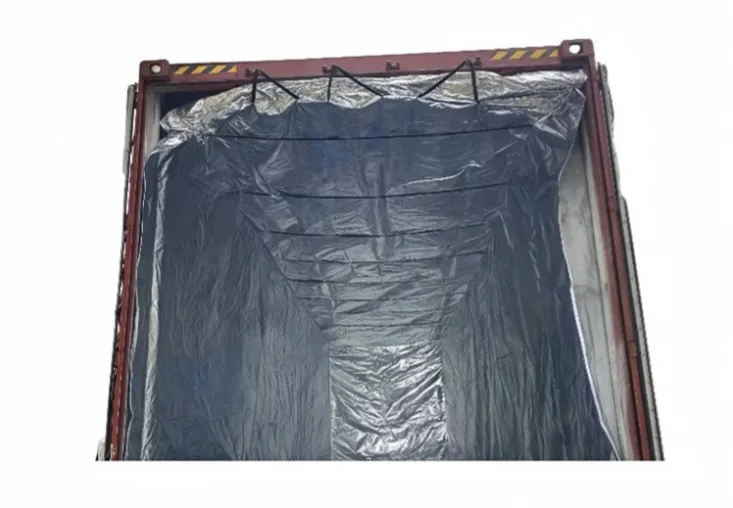
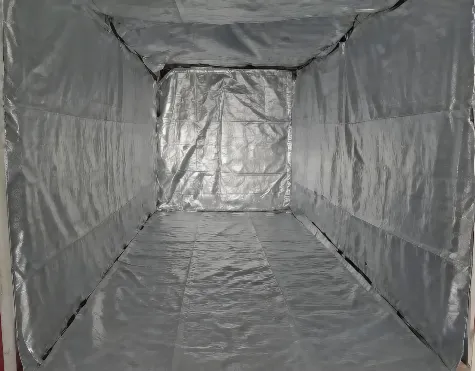
The first and most direct saving is the ability to move temperature-sensitive cargo in a dry container instead of a reefer. Reefer equipment commands a higher freight rate and consumes power. Passive liners and pallet covers create a protected thermal zone inside standard ISO equipment, so shippers often avoid the reefer premium, genset charges, and fuel or electricity fees on routes where passive protection is sufficient.
The second saving comes from reduced spoilage and claims. Temperature swings and condensation are two common causes of cargo degradation. By slowing heat transfer and blocking moisture vapor, passive packaging reduces caking, mold, corrosion, discoloration, and other damage mechanisms that show up long after loading. Fewer claims and less rework directly improve total logistics cost.
The third saving is reuse. A quality thermal container liner may be reused several times before replacement, and a well-handled thermal pallet cover can survive even more cycles. That shifts the economics from a one-time consumable expense to an amortized packaging asset. When reuse is combined with a dry-container freight strategy, the cost per pallet or per container load falls quickly.

There is also an operational saving. Passive thermal packaging needs no power supply, no genset approval, and no continuous monitoring alarm chain. It is installed once, remains in place for the route, and does not create the same level of equipment coordination as active cooling. For many medium-duration lanes, that simplification is worth as much as the freight difference.
Need help mapping these material options to your route? Contact [email protected] and include your origin, destination, season, and cargo sensitivity. That information is enough to start a practical thermal packaging recommendation.
Matching Passive Thermal Packaging to the Route
Passive thermal packaging is not one product. The right construction depends on route length, seasonal temperature range, humidity, cargo sensitivity, and whether the shipment is a full container load or palletized freight.
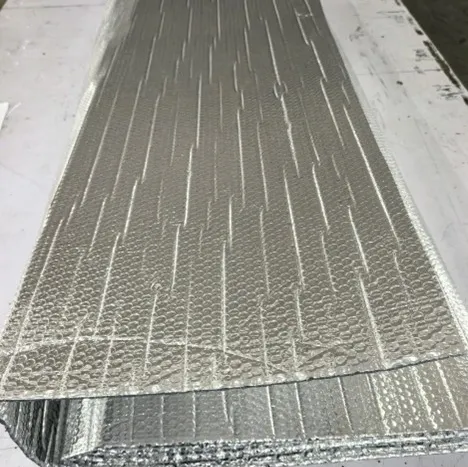
For shorter routes or moderate temperature differences, a lightweight MPET/PE composite liner may be sufficient. For long ocean transits, summer conditions, humidity, or temperature-sensitive goods, a woven thermal fabric or EPE foam liner provides stronger protection. Double-bubble MPET constructions add static air cavities and shock absorption, which is useful for mixed packaging and handling-heavy routes.
The table below summarizes typical uses.
| Passive packaging type | Main thermal mechanism | Practical route fit | Typical reuse potential |
|---|---|---|---|
| Woven thermal fabric liner | Aluminum foil reflection plus woven strength | Dry container loads with moderate temperature control needs | 3–5 times |
| EPE foam liner | Reflective face plus 3 mm foam core | Long-haul, high-heat, high-humidity, temperature-sensitive cargo | 3–5 times |
| MPET/double-bubble/MPET liner | Reflective surface plus trapped air layer | Frozen, fresh, pharmaceutical, and electronics cargo requiring stronger insulation | 3–5 times |
| MPET/PE composite film liner | Lightweight radiant barrier with moisture protection | Short to medium hauls with moderate ambient conditions | Project-dependent |
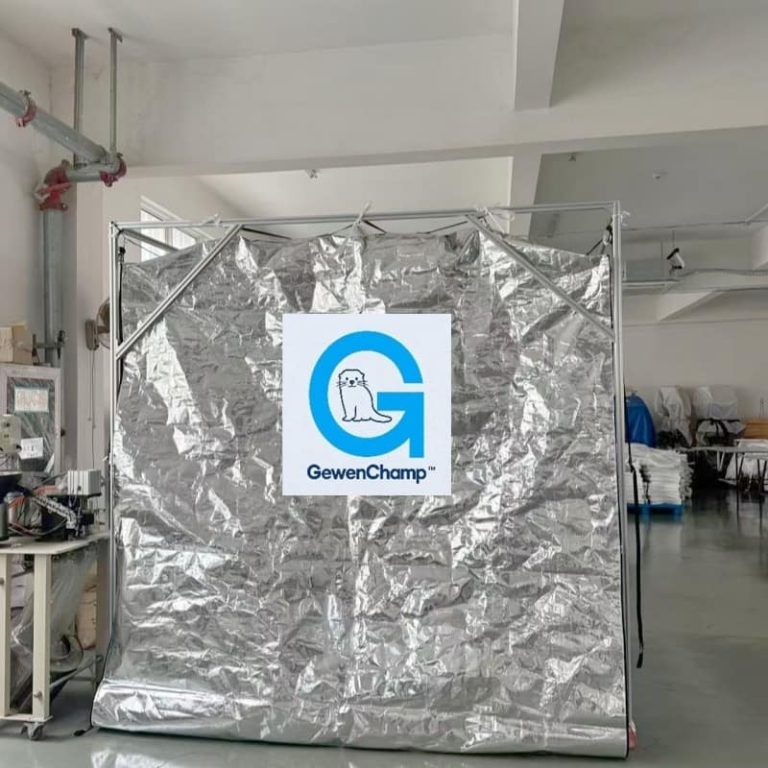
| Thermal pallet cover | Reflective cover with insulation, closure, and handling features | Palletized cargo, less-than-container loads, warehouse staging | 5–8 times or more |
The selection logic should not be based on price per unit alone. A higher-specification liner that survives the route and protects the cargo will almost always cost less than a failed shipment, a spoiled batch, or a buyer rejection. Compare the packaging cost against the risk value of the goods before choosing the lightest or cheapest option. You can compare available material structures in the thermal insulation container liner category.

Certification and Compliance Checklist
Passive thermal packaging used for food, pharmaceutical, or regulated cargo must satisfy the same compliance logic as any other food-contact or industrial packaging. Shippers should ask for documentation that matches the destination market.
In the European Union, food-contact materials must meet the general safety requirements of Regulation (EC) No 1935/2004 [1]. In the United States, polymer-based food-contact materials are evaluated under 21 CFR Part 177 [2]. A manufacturer operating under a certified quality system should maintain process control through ISO 9001:2015 [3].
For chemical safety, EU REACH Regulation (EC) No 1907/2006 [4] and RoHS Directive 2011/65/EU [5] are common reference points for restricted substances. Food safety management may also be supported by ISO 22000:2018 [6].
Compliance is not a single certificate. It is a chain of evidence: material composition, migration testing where applicable, quality-system control, and performance testing under realistic route conditions. A credible supplier will provide the documentation that matches the commercial claim.
When Passive Thermal Packaging Is Not Enough
Passive thermal packaging reduces heat transfer, but it does not create cold. It is not a one-to-one replacement for active refrigeration when cargo must be maintained at a tight temperature band for an extended period in extreme ambient conditions.
For sensitive biologics, deep-frozen products, or shipments where the outside temperature remains above 40°C for many days, a reefer is still the correct tool. Ice packs and phase-change materials can extend passive performance, but they add weight, pre-conditioning time, and handling steps. The right decision is usually route-specific: evaluate the worst-case ambient temperature, the allowed temperature excursion range, the transit time, and the product’s thermal mass before moving from reefer to passive.
The benefit of passive thermal packaging is not that it replaces every reefer load. The benefit is that many shipments currently paying reefer rates do not need active cooling at all—and those shipments can be moved more profitably with a properly chosen thermal liner or pallet cover.

Request a Thermal Packaging Recommendation
If you are evaluating whether a shipment can move safely without a reefer, provide the route, season, cargo type, acceptable temperature range, and transit time. Giant Flexpack can help with material selection, liner sizing, moisture control, and compliance documentation.
Contact the technical sales team at [email protected] or call +86 523 87683880 for a route-specific packaging recommendation.
Frequently Asked Questions
What is passive thermal packaging?
Passive thermal packaging includes insulated container liners and thermal pallet covers that protect cargo from heat, cold, and condensation without an external power source. It works by reflecting radiant heat, slowing conductive and convective heat transfer, and blocking moisture vapor.
How much can passive thermal packaging reduce cold chain logistics costs?
The savings depend on route, cargo, seasonal conditions, and whether the shipment can move in a dry container instead of a reefer. Typical savings come from lower freight class, no genset or power fees, reduced spoilage, fewer claims, and reusable packaging that spreads the purchase cost over multiple trips.
When should I keep using a reefer instead of passive packaging?
Use a reefer when the cargo requires a tight temperature band, when the route has prolonged extreme heat or cold, or when the product has very limited tolerance for temperature fluctuation. Passive packaging is best for moderate to moderately challenging routes and for products that can tolerate a controlled temperature swing without quality loss.
How long can passive thermal container liners maintain temperature?
Performance varies by material structure and outside conditions. A lightweight MPET/PE composite liner may provide protection for 24–48 hours under moderate ambient temperatures, and this can be extended with ice packs or phase-change material. Stronger EPE foam or double-bubble constructions provide greater thermal resistance for long-haul and high-heat conditions.
Are passive thermal container liners food-contact compliant?
Many thermal container liners are available in food-grade versions. Shippers should confirm the exact material structure and request evidence such as FDA or LFGB testing, EU Regulation (EC) No 1935/2004 compliance, and ISO 9001 or ISO 22000 documentation as appropriate for the destination market.
How many times can a passive thermal liner be reused?
Reuse potential depends on the construction and handling conditions. Thermal container liners are commonly reusable around 3–5 times, while thermal pallet covers may reach 5–8 cycles or more with careful handling. Damaged seams, punctures, or heavy contamination reduce useful life.
References
[1] European Union. Regulation (EC) No 1935/2004 on materials and articles intended to come into contact with food.
[2] U.S. Food and Drug Administration. 21 CFR Part 177 — Indirect Food Additives: Polymers.
[3] International Organization for Standardization. ISO 9001:2015 Quality management systems — Requirements.
[4] European Union. Regulation (EC) No 1907/2006 concerning the Registration, Evaluation, Authorisation and Restriction of Chemicals (REACH).
[5] European Union. Directive 2011/65/EU on the restriction of the use of certain hazardous substances in electrical and electronic equipment (RoHS).
[6] International Organization for Standardization. ISO 22000:2018 Food safety management systems — Requirements for any organization in the food chain.
From insight to product selection
Related products
Explore these packaging options, then confirm suitability for your cargo, dimensions and shipping conditions.
Tell us about your shipment
Discuss your packaging requirements
Tell us what you ship and how you ship it. Add the container or pallet size, route and any moisture or temperature concerns so we can discuss an appropriate packaging option.