
Packaging Insights
Non-Refrigerated Cold Chain: Passive Cooling, Limits and Best Uses
What Is a Non-Refrigerated Cold Chain?
A non-refrigerated cold chain uses insulation, radiant barriers, thermal mass, and moisture control instead of powered refrigeration to keep cargo within an acceptable temperature range for a defined period. Unlike an active reefer, passive packaging does not lower the product temperature; it reduces the rate at which external heat enters or internal heat leaves. The approach is used when the route is short or moderate, the cargo has a tolerable temperature window, and the cost of a reefer cannot be justified.

Passive systems are built around the three heat-transfer mechanisms: radiation, conduction, and convection. A metalized or aluminum foil layer reflects radiant heat; a closed-cell foam or woven insulating core slows conductive heat gain or loss; and a sealed liner reduces convective air exchange. The result is a temperature curve that flattens—not a refrigerator in a box.
Core Passive Cold Chain Technologies
Reflective Thermal Container Liners
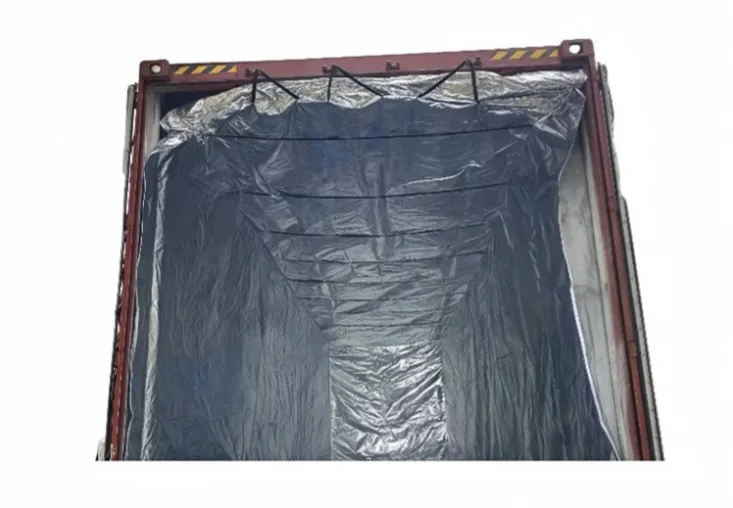
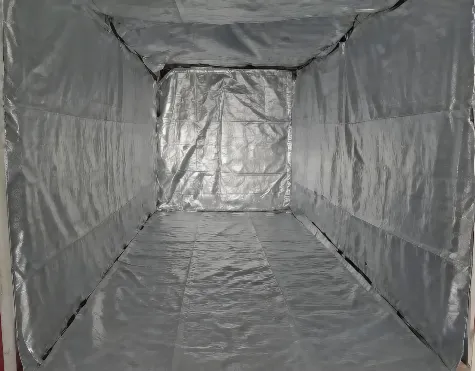
Reflective liners combine outward-facing aluminum foil or metalized PET with an internal reinforcing layer such as woven PE. The foil layer reflects 95–97% of radiant heat, while the woven layer adds tensile strength and tear resistance. A six-wall liner covers all interior container surfaces and installs in 10–15 minutes without tools.

These liners suit food, beverage, pharmaceutical, chemical, and electronics loads moving on routes where ambient temperature stays moderate and the cargo can tolerate a ±5°C band.
Reflective six-wall liners reduce temperature swings by blocking radiant heat before it reaches the load. <TL-01 Thermal Container Liner> covers the foil-laminated construction, fitting dimensions, and reusable installation sequence.
Foam-Core Insulated Liners
When conductive and convective heat transfer matter as much as radiation, a four-layer structure adds an EPE foam core. Outer PET aluminum foil reflects radiant heat; a 3 mm closed-cell foam core with thermal conductivity ≤0.038 W/(m·K) slows conduction; a woven PE middle layer supplies strength; and an inner barrier film controls moisture. The construction is useful for longer sea freight and extreme temperature differentials.

A four-layer foam liner also reduces moisture vapor transmission to ≤0.033 g/(m²·h·kPa), which helps prevent “container rain” when a chilled or dry load crosses humid air.
For routes with a wider temperature gap or higher condensation risk, a foam-core liner is typically more protective than a pure reflective liner. <TL-02 Thermal Container Liner> covers the four-layer structure, operating range, and moisture vapor barrier performance.
MPET/Double-Bubble Structures
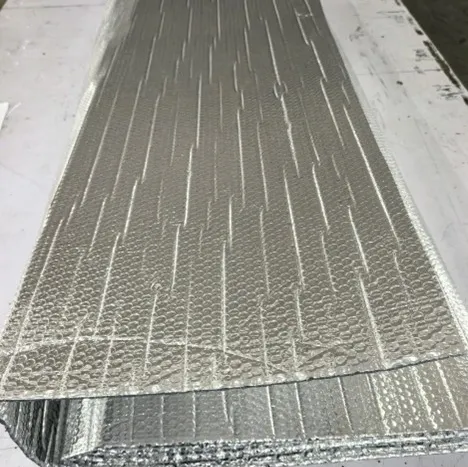
Metalized PET combined with a double-bubble air cavity provides a lightweight barrier with both shock absorption and thermal resistance. The MPET layers reflect up to 98% of radiant heat, while the trapped air in the double-bubble layer acts as a secondary insulation barrier. Because the structure is thin and flexible, it is a practical choice for pallet-level protection and moderate durations.
Thermal Pallet Covers
Passive protection does not have to be container-scale. Thermal pallet covers shield individual pallets during airport ramps, warehouse staging, cross-docking, or last-mile moves. They use MPET films, bubble cavities, foam, or foil/woven layers to hold palletized cargo within a narrower temperature range for 12–72 hours depending on configuration and whether ice packs are added.

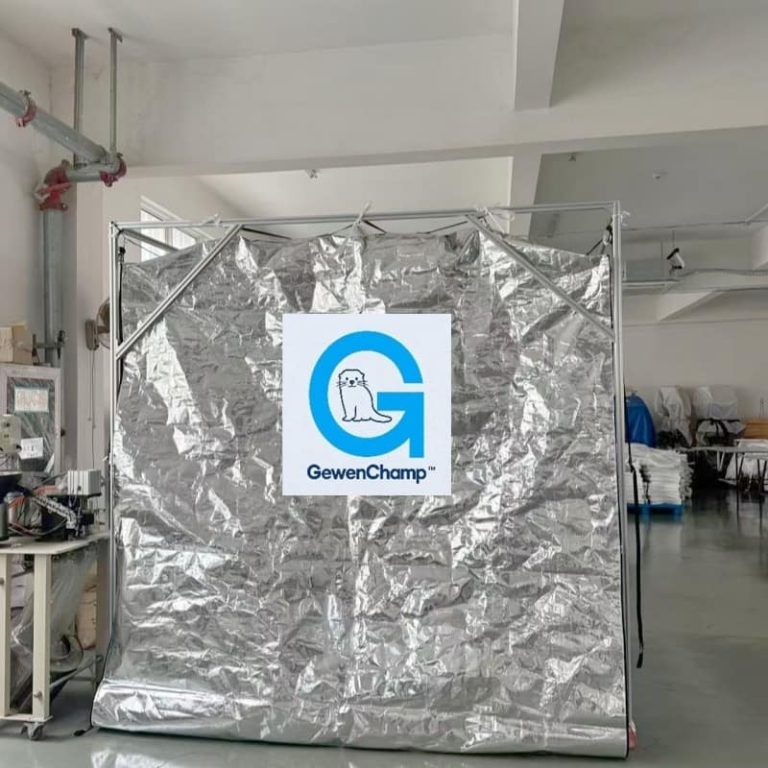
Pallet-level covers are often the most practical passive solution when the cold chain breaks at the loading dock rather than during the ocean leg. <Thermal Insulation Pallet Cover> covers material options, size customization, and reusable pallet cover designs.
Trade-offs and Limits
The main trade-off is duration. Passive packaging slows heat transfer but cannot remove heat already inside the container. If a load starts at the wrong temperature, the liner will preserve the wrong temperature. This means shippers must pre-cool or pre-warm the cargo and container where possible.
The second trade-off is ambient dependency. In sustained high heat, a reflective liner can delay but not eliminate temperature rise. The protective window depends on route length, outside temperature, solar load, product mass, and packaging volume.
A third trade-off is validation. Passive solutions require route-specific testing because the result is not linear; a liner that worked on a 5-day northern route may not perform the same in a tropical crossing. Temperature loggers or multi-use data loggers are needed to confirm real performance rather than relying only on material R-value [5].
Best Uses for Non-Refrigerated Cold Chain
Moderate-Route Food and Beverage Exports
Chocolate, confectionery, wine, juice, dairy powders, and fresh produce with short transit windows can benefit. A passive liner can maintain temperatures between -20°C and +60°C depending on material, but the most successful applications are those where the expected ambient range is narrow [2].
Pharmaceutical and Vaccine Distribution
For time- and temperature-sensitive pharmaceutical products that do not require deep-frozen storage, passive packaging is often used in combination with validated cool packs and calibrated data loggers. WHO guidance requires evidence that the packaging system maintains an acceptable temperature profile across the full distribution route [3].
Electronics and Chemical Shipments
For precision electronics, passive liners reduce thermal shock and condensation damage. For chemicals, foil and foam layers help keep temperature-sensitive formulations stable during ocean freight.
Multi-Stop or Intermodal Shipments
Passive solutions are especially valuable when cargo must move from a temperature-controlled warehouse to a non-temperature-controlled truck, port, or airport. A pallet cover or liner extends the safe exposure window without requiring every touchpoint to be cold-chain capable.
Selection Criteria and Performance Checks
Buyers should specify four items: insulation value, moisture barrier performance, dimensional fit, and regulatory status.
| Criterion | What to Evaluate | Why It Matters |
|---|---|---|
| Thermal resistance | R-value or thermal conductivity; foil reflectivity | Determines how much heat transfer is slowed |
| Moisture barrier | Moisture vapor transmission rate | Prevents condensation damage and caking |
| Fit and installation | Six-wall or pallet dimensions; installation time | Air gaps and poor sealing undermine performance |
| Compliance | FDA, LFGB, ISO 22000, REACH, RoHS | Evidence of food-grade and environmental safety |
For food-contact applications, verify that the film or liner complies with FDA 21 CFR 177 or EU Regulation (EC) No 1935/2004 [1][2]. For food safety management, ask whether the manufacturer operates under ISO 22000 [4]. Third-party test reports are more meaningful than a certificate alone.

Technical comparisons should always be tied to route data. If you are preparing a shipment and need help defining the temperature boundary conditions, contact [email protected] with the origin, destination, cargo type, and target temperature range; the team can recommend a passive configuration and the validation steps that fit.
Implementation and Route Planning
Implementation is as important as material choice. Start by mapping the route, ambient weather band, handling points, and dwell times. Pre-cool or pre-warm the cargo, not just the packaging. Install the liner with full wall contact to avoid air pockets. Add desiccants only when a genuine humidity risk is confirmed; they do not replace a moisture barrier. Finally, use data loggers to measure the actual temperature profile. The best passive program is one that learns from each shipment and adjusts packaging or routing accordingly.
Get Technical Support for Your Non-Refrigerated Cold Chain
Giant Flexpack is a thermal packaging technology specialist and bulk logistics solution consultant. The packaging engineers can help you:
- Match reflective, foam-core, or MPET/bubble liners to your cargo and route.
- Compare container liner and thermal pallet cover options.
- Review FDA, LFGB, ISO 9001, REACH, and RoHS documentation for food-grade projects.
- Develop a validation plan using temperature loggers.
- Calculate the cost/benefit of passive packaging against reefer alternatives.
Contact [email protected] or +86 523 87683880 with your cargo type, route, and temperature target. Include “Non-Refrigerated Cold Chain” in the subject line so the right engineering team reviews the inquiry.
FAQ
What is the difference between a passive and an active cold chain?
An active cold chain uses powered refrigeration to remove heat. A passive cold chain uses insulation, reflective surfaces, thermal mass, and sealed cavities to slow heat transfer. Passive systems extend the time a properly pre-conditioned load stays within an acceptable range; they do not actively cool or heat.
How long can a non-refrigerated cold chain maintain temperature?
It depends on the material, ambient conditions, cargo mass, and route duration. A simple MPET/PE liner may hold a stable window for 24–48 hours, while a foam-core liner or liner with ice packs can extend the window further. Route testing with a data logger is the only reliable way to establish duration for a specific lane.
Is a thermal liner a full replacement for a reefer container?
Not always. A thermal liner is a strong alternative when the cargo has a tolerant temperature range, the route is moderate, and the business case favors passive cost and flexibility. For long routes, extreme outside temperatures, or temperature-critical pharmaceutical products, a reefer may still be required. The decision should be made on route data, not material claims.
What certifications matter for food-grade passive cold chain packaging?
Look for compliance with FDA 21 CFR 177 for U.S. food contact and EU Regulation (EC) No 1935/2004 for the European market [1][2]. LFGB documentation supports German-market food contact. ISO 22000 indicates a structured food safety management system [4]. REACH and RoHS confirm chemical and environmental compliance for material components.
How do I choose between a thermal liner and a thermal pallet cover?
Use a container liner when the load fills a substantial portion of a 20 ft or 40 ft ISO container and needs six-wall protection during ocean or long-haul transport. Use a pallet cover when cargo is palletized, moves through multiple handlers, or leaves the controlled chain during airport or warehouse staging. Some programs use container liners for the main leg and pallet covers for last-mile exposure.
References
[1] U.S. Food and Drug Administration, “Indirect food additives: polymers,” Code of Federal Regulations, 21 CFR 177, Apr. 2024.
[2] European Commission, “Regulation (EC) No 1935/2004 on materials and articles intended to come into contact with food,” Official Journal of the European Union, Oct. 2004.
[3] World Health Organization, “Temperature-controlled transport operations: technical supplement to Model guidance for storage and transport of time- and temperature-sensitive pharmaceutical products,” WHO Technical Report Series, 2019.
[4] International Organization for Standardization, “ISO 22000:2018 — Food safety management systems — Requirements for any organization in the food chain,” 2018.
[5] ASTM International, “ASTM C518-21 — Standard test method for steady-state thermal transmission properties by means of the heat flow meter apparatus,” 2021.
From insight to product selection
Related products
Explore these packaging options, then confirm suitability for your cargo, dimensions and shipping conditions.
Tell us about your shipment
Discuss your packaging requirements
Tell us what you ship and how you ship it. Add the container or pallet size, route and any moisture or temperature concerns so we can discuss an appropriate packaging option.