
Packaging Insights
Cold Chain Packaging for Pharmaceutical Exports: Passive Solutions
By Daniel Wu, Thermal Packaging and Industrial Logistics Solutions Specialist
Pharmaceutical exports are sensitive to temperature excursions, moisture ingress, and condensation inside standard dry containers. Not every pharmaceutical shipment justifies active refrigeration, but every pharmaceutical load requires documented thermal stability from origin warehouse to destination. Passive cold chain packaging solves this by using reflective foil, closed-cell foam, bubble insulation, and moisture-barrier films to slow heat transfer and block condensation in standard ISO containers. When matched to product stability data, transport lane, and seasonal risk, passive thermal liners and pallet covers provide a validated, lower-cost alternative to reefer or an additional protective layer around temperature-sensitive cargo.
When Passive Cold Chain Packaging Is the Right Choice for Pharma
Passive cold chain means controlling temperature without mechanical refrigeration. The packaging itself manages heat exchange. For pharmaceutical exporters, this approach is practical in several situations:
- Products with a labeled range of 15–25°C or “store below 30°C”
- Shipments moving through moderate climates or short-to-medium sea freight legs
- APIs, excipients, nutraceuticals, medical devices, and non-sterile pharmaceutical products
- Full-container loads where active reefer is too costly or operationally unavailable
- Temperature excursions caused by solar radiation, terminal delays, and day-night temperature swing
Strict 2–8°C biologics, vaccines, and certain sterile products may still require active refrigeration or qualified passive systems with phase change materials. The decision is not a universal “passive vs active” choice. It is a risk-based decision built on product stability data, lane temperature mapping, and documented validation.
Regulatory and Validation Expectations for Pharma Passive Packaging
Pharmaceutical exporters must demonstrate temperature control under Good Distribution Practice. Regulators expect that temperature-sensitive products are transported under conditions that maintain quality, with records to prove it. Passive packaging must be qualified through real-world or chamber testing on the intended route.
Key documentation to plan for includes:
- Temperature mapping across representative lanes in summer and winter
- Multi-point data logger placement inside the liner or pallet cover
- Pre-conditioning procedures for gel packs or phase change materials when used
- Acceptance criteria for excursion duration and maximum/minimum temperature
- Supplier certificates: FDA food-contact compliance, LFGB for EU food-contact, ISO 9001 quality management, SGS test reports, REACH and RoHS material compliance
Packaging for pharmaceutical shipments should also avoid component leaching and contamination. Thermal materials with FDA and LFGB certificates provide documented food-grade contact safety, which many pharmaceutical buyers require for primary or secondary contact packaging.
Passive Thermal Container Liners for Bulk Pharmaceutical Cargo
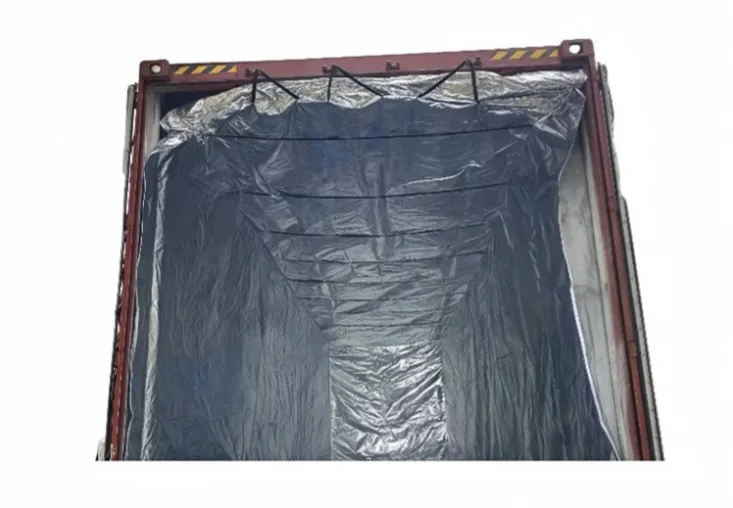
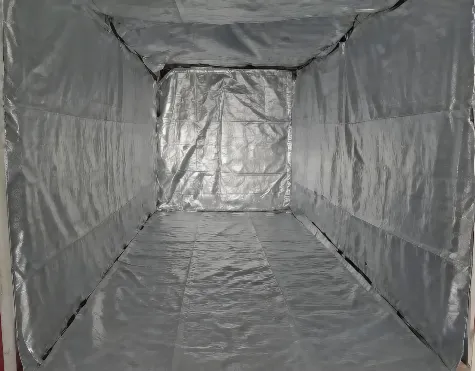
A thermal insulation container liner is installed across all six internal walls of a standard 20ft, 40ft, or 40HQ container. It converts a standard dry box into an insulated environment. The liner reflects up to 95–98% of radiant heat, reduces conductive and convective heat transfer, and creates a moisture barrier against condensation. These liners are particularly suitable for bulk pharmaceutical ingredients, excipients, and packaged products shipped as full container loads.

Giant Flexpack’s GewenChamp™ thermal liner series includes four engineered options:
| Model | Structure | Key Performance | Pharma Relevance |
|---|---|---|---|
| TL-01 Thermal Container Liner | Woven PE + double-sided PE aluminum foil lamination | Reflects 95–97% radiant heat; internal range -20°C to +60°C; temperature variance within ±5°C; reusable 3–5 times | Cost-effective full-container thermal protection for 15–25°C pharmaceuticals and nutraceuticals |
| TL-02 Thermal Container Liner | PET aluminum foil / woven PE / 3mm EPE foam / PET aluminum foil | Thermal conductivity ≤0.038 W/(m·K); operating range -50°C to 80°C; MVTR ≤0.033 g/(m²·h·kPa) prevents container rain | Stronger insulation and condensation control for longer sea freight and high-humidity routes |
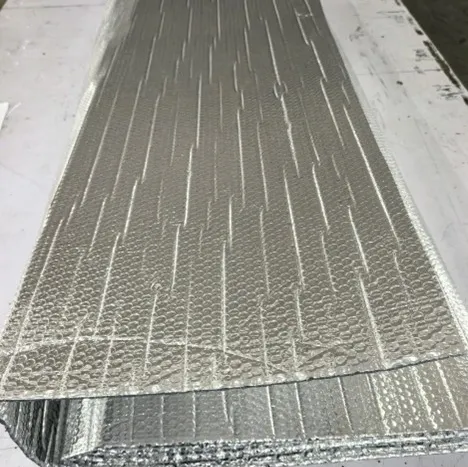
| TL-03 Thermal Container Liner | MPET / double bubble / PET MPET | Reflects up to 98% radiant heat; double bubble traps static air; shock absorption for fragile loads | Best for high-value, temperature-sensitive drugs, biologics, and precision medical devices in international shipping |
| TL-04 Thermal Container Liner | MPET + PE composite film | Lightest and most cost-efficient; maintains -10°C to 30°C for 24–48 hours at ambient 25°C; extendable with ice packs | Suitable for standard pharmaceuticals, cosmetics, and electronics where ultra-low temperature control is not required |
Each model is certified to FDA, LFGB, ISO 9001, and SGS standards, with REACH and RoHS compliance for regulated markets. For bulk pharmaceutical powders and packaged products, TL-02 and TL-03 are the most frequently specified because of their stronger condensation control and lower thermal conductivity.
Thermal Pallet Covers for Palletized Pharmaceutical Exports
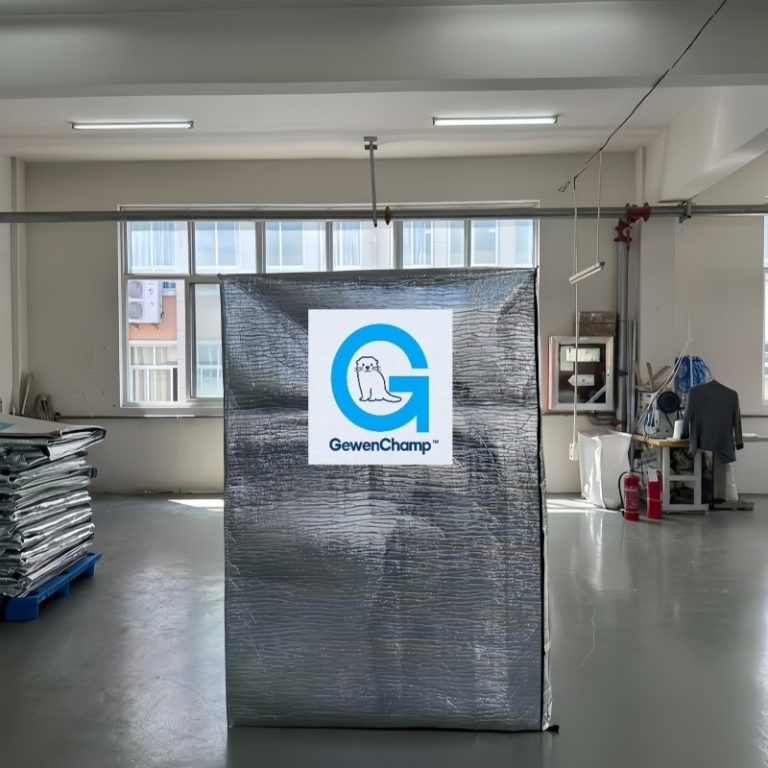
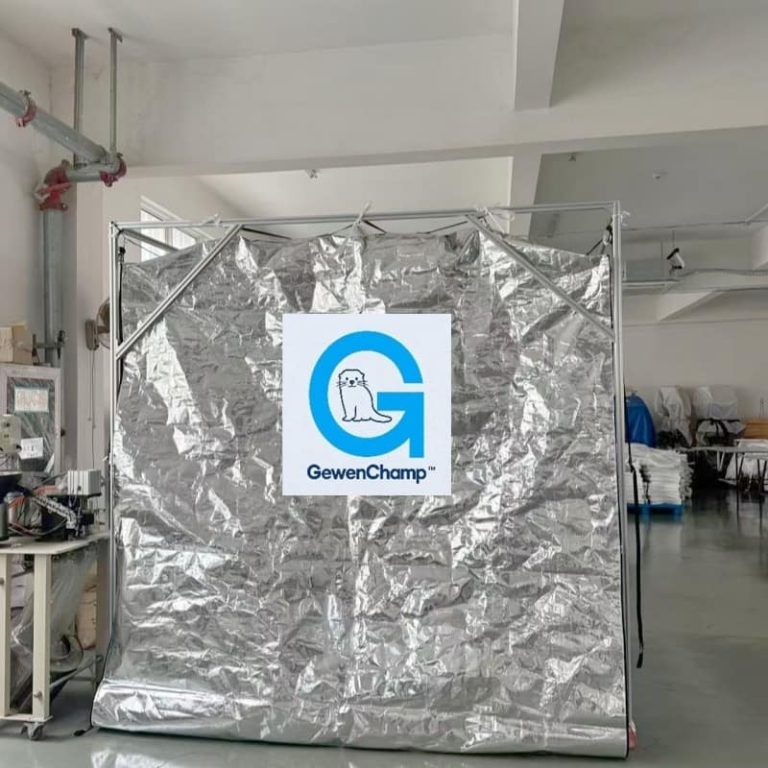
When pharmaceutical goods move on pallets—particularly in LCL shipments, air freight, or temperature-sensitive warehouse staging—a thermal insulation pallet cover provides a lightweight and flexible passive solution. It reduces heat absorption, blocks moisture, and protects cargo during handling and short-term temperature exposure.

The GewenChamp™ thermal pallet cover range includes:
| Model | Structure | Key Performance | Best Use |
|---|---|---|---|
| TP-01 Thermal Pallet Cover | MPET / LDPE / woven PE / LDPE / MPET | Tensile strength ≥25 N/15mm; reflects ≥95% radiant heat; reusable 5–8 times | Heavy-duty pharmaceutical pallets, international air and sea freight |
| TP-02 Thermal Pallet Cover | MPET / woven PE / 3mm EPE foam / MPET | Tensile strength ≥1,500 N/5cm; insulation, shock absorption, moisture resistance | Palletized vaccines, biologics, and high-value pharma products |
| TP-03 Thermal Pallet Cover | MPET / double bubble / MPET | Reflects ≥95% radiant heat; maintains -20°C to 30°C for 24–48 hours; up to 72 hours with ice packs | Lightweight, economical option for pharma distribution and last-mile protection |
| TP-04 Thermal Pallet Cover | Aluminum foil / woven PE / aluminum foil | Genuine aluminum foil reflects ≥95% heat; 100% waterproof; unit weight 200–500g | Short-duration pharma shipments where lightness matters |
Pallet covers are especially useful when only part of a container is pharmaceutical cargo. They isolate temperature-sensitive pallets from the rest of the load, reduce solar radiation absorption near doors and side walls, and provide an additional moisture barrier during terminal transfers.
Combining Passive Liners, Phase Change Materials, and Monitoring
Passive packaging performs best as part of a complete cold chain system. For many pharmaceutical routes, thermal liners or pallet covers are combined with pre-conditioned gel packs, ice packs, or phase change materials. The insulation slows external heat gain while the phase change material absorbs heat and stabilizes internal temperature for longer than insulation alone.

Best practice includes:
- Pre-condition phase change materials to the correct phase-change temperature before packing
- Place phase change materials around the load without direct product contact
- Use a thermal liner for full-container loads and pallet covers for mixed loads
- Install calibrated data loggers at multiple locations: center, door, floor, and top of the cargo stack
- Verify temperature data after delivery and review excursions against product stability data
- Map each lane in both summer and winter before routine commercial use
For pharmaceutical products requiring 2–8°C, insulation alone is generally not sufficient. The passive system must be qualified with phase change materials, validated against worst-case ambient conditions, and supported by documented monitoring. For products rated 15–25°C or “store below 30°C,” well-designed passive liners often keep the container within range without phase change materials, depending on lane and voyage duration.
How to Specify and Qualify a Passive Cold Chain System
A reliable passive cold chain program starts with a clear specification. Before ordering thermal liners or pallet covers, pharmaceutical exporters should define:
- Product temperature range and allowable excursion limits
- Origin, destination, and all intermediate transfer points
- Voyage duration and seasonal maximum/minimum ambient temperatures
- Container type: 20ft, 40ft, 40HQ, or air freight pallet
- Whether the shipment is full container load or LCL
- Documentation required for GDP audit and client acceptance
Then select the appropriate liner or pallet cover structure, request samples, and run qualification tests under worst-case conditions. It is safer to over-specify insulation on the first shipment and then optimize than to risk a temperature excursion that damages a high-value pharmaceutical order and triggers a rejected batch.
Giant Flexpack supports this process with technical datasheets, material certificates, sample liners, and custom sizing for both 20ft/40ft ISO containers and non-standard pallet dimensions.
Frequently Asked Questions
Can passive cold chain packaging replace reefer containers for pharmaceutical exports?
It depends on the product temperature range and route risk. For 15–25°C products and moderate lanes, yes—passive thermal liners often replace reefer at a fraction of the cost. For strict 2–8°C products, passive packaging can sometimes replace reefer only when qualified with phase change materials and validated for the specific route and duration.
What temperature ranges can GewenChamp thermal container liners maintain?
Different models support different ranges. TL-01 maintains -20°C to +60°C with variance within ±5°C. TL-02 operates from -50°C to 80°C. TL-03 is designed for frozen and fresh cargo, vaccines, and biologics. The actual maintained range depends on ambient conditions, voyage duration, and whether phase change materials or ice packs are used.
Are these thermal liners FDA compliant for pharmaceutical use?
Yes. GewenChamp thermal container liners and pallet covers are certified to FDA and LFGB food-grade standards, ISO 9001 quality management, and SGS test reports. REACH and RoHS compliance is also documented for regulated export markets. These certifications support pharmaceutical buyers that require food-contact or low-leaching packaging materials.
How long can passive packaging hold temperature without refrigeration?
For TL-04 at ambient 25°C, the liner maintains -10°C to 30°C for 24–48 hours, extendable to 72 hours with ice packs. TL-02 and TL-03 provide stronger insulation for longer sea freight. The exact duration depends on starting product temperature, route, season, loading conditions, and whether phase change materials are used.
What information should I request from a passive cold chain packaging supplier?
Request material structure and thickness, thermal conductivity or R-value, moisture vapor transmission rate for condensation control, FDA/LFGB/ISO certificates, SGS test reports, REACH/RoHS statements, container size compatibility, installation time, reusability, and a sample for lane qualification. A technical supplier will also recommend monitoring requirements and discuss phase change material integration.
Get Technical Support for Your Pharmaceutical Cold Chain Program
Giant Flexpack (Taixing) Co., Ltd. has supplied temperature-controlled packaging systems to global shippers since 2004. The GewenChamp™ series is manufactured under ISO 9001 quality management and certified to FDA, LFGB, SGS, REACH, and RoHS standards. For pharmaceutical export projects, our team provides liner selection guidance, product datasheets, sample qualification, and OEM/ODM customization for specific container or pallet sizes.
Contact our thermal packaging specialists at [email protected] or call +86 523 87683880 to request a technical consultation and sample for your next pharmaceutical export lane.
From insight to product selection
Related products
Explore these packaging options, then confirm suitability for your cargo, dimensions and shipping conditions.
Tell us about your shipment
Discuss your packaging requirements
Tell us what you ship and how you ship it. Add the container or pallet size, route and any moisture or temperature concerns so we can discuss an appropriate packaging option.