
Packaging Insights
How to Choose Food-Safe Liners for Bulk Pet Food Export
Bulk pet food shipments place a container liner in direct contact with the product for weeks at a time. The liner must be safe for food contact, compatible with animal feed rules, and strong enough to survive loading, sea transit, and discharge without contaminating the cargo or attracting moisture. A liner that is only waterproof falls short, because pet food is regulated as food and feed and the packaging layer is treated as a food contact material under frameworks such as Regulation (EC) No 1935/2004 [1].
This guide sets out a practical selection sequence: certification first, material second, migration and compliance third, and load-specific matching fourth. It also covers the documentation to request from a supplier before committing a container.
Why Food-Safe Certification Is the First Selection Filter
Food-safe certification should work as a binary gate rather than a supporting detail. In the United States, olefin polymers such as HDPE, LDPE, and PP that are intended for food contact must be authorized under conditions of use described in the Code of Federal Regulations; FDA 21 CFR 177.1520 is the most commonly referenced entry point for these resins [2]. In Germany, LFGB compliance is the practical reference for food and feed contact materials [3]. Across the European Union, plastic food contact materials must meet the requirements of Commission Regulation (EU) No 10/2011, which governs authorized monomers, additives, and migration limits [4].
A general ISO 9001 certificate is valuable for quality management, but it does not by itself confirm food-contact safety. Look for a resin-specific authorization, a Declaration of Compliance, and a recognized hygiene system such as ISO 22000:2018 [5] or HACCP-based controls aligned with Codex guidance [6]. In parallel, restricted-substance screening should address REACH obligations for substances of very high concern [7].

Material Selection: Woven PP vs PE Film for Pet Food
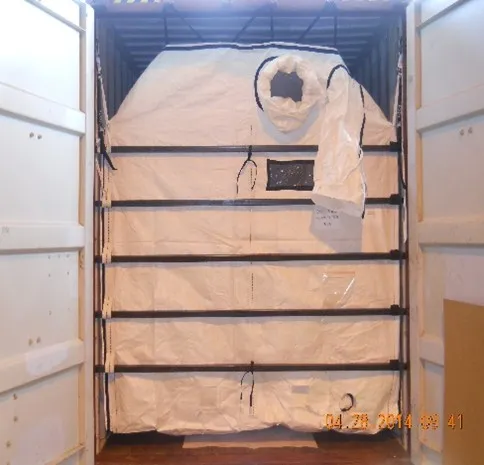
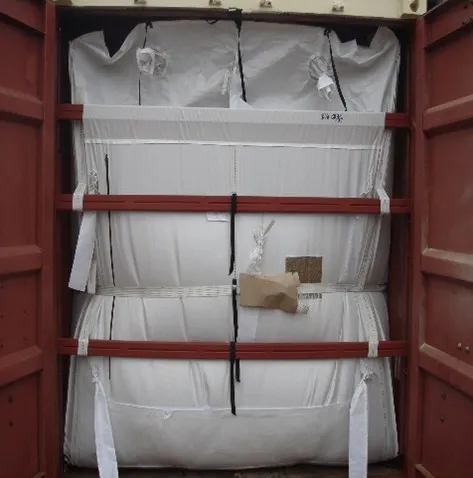
For dry extruded kibble, pellets, and granular pet food, two liner classes dominate. A woven polypropylene liner offers high tensile strength and stable load support. A barless woven design removes internal reinforcement bars, helping small granules flow without jamming or tearing the fabric. The woven barless container liner at Giant Flexpack uses an uncoated 110 gsm polypropylene structure with heat-welded seams, a load capacity of 15–35 tons, and FDA and REACH certifications. These figures are manufacturer-supplied product specifications.
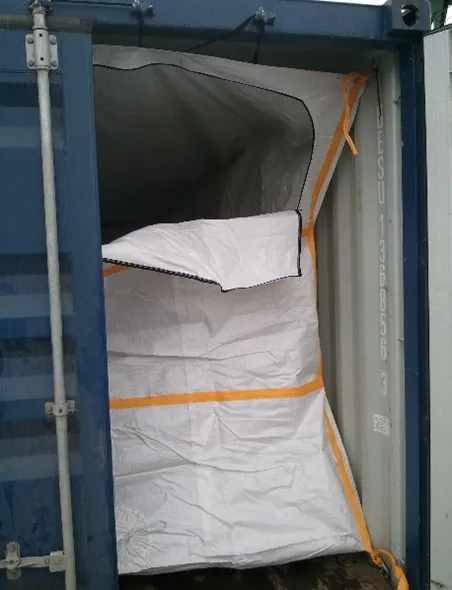
A PE film liner uses LDPE film to form a moisture and dust barrier with a smooth surface that releases fines cleanly at discharge. The PE film container liner is a 140-micron LDPE option with a 15–35 ton load range and optional FDA food-grade certification. For pet food formulas with oil coatings or added fats, the more complete barrier of an LDPE film or a laminated woven liner is generally preferable because fats can penetrate an uncoated fabric, carrying taste compounds into the liner or allowing oxygen into the product.
| Selection criterion | Woven PP barless liner | PE film liner |
|---|---|---|
| Moisture barrier | Limited when uncoated; supports breathability | Moisture and dust barrier per manufacturer specification |
| Granule flow | Smooth barless interior resists jamming | Smooth film releases fines |
| Tensile strength | High warp/weft strength for 15–35 ton loads | Moderate flexibility for 15–35 ton loads |
| Fat and oil resistance | Lower unless laminated | Higher; suits oil-coated formulas |
| Typical certification path | FDA, REACH, ISO 9001 | FDA optional, REACH, RoHS |

Compliance and Migration Testing: The Core Requirements
Migration testing measures how much of a packaging material transfers into food under expected contact conditions. For plastic liners in the EU, the overall migration limit is 10 milligrams of constituents per square decimetre of surface area, or 60 milligrams per kilogram of food for packaging in the 500 g to 10 L range [4]. High-fat pet food is tested with fatty food simulants because oils extract additives more aggressively than water-based products.
Request a Declaration of Compliance that references EU Regulation 10/2011 by test report number, a third-party overall migration certificate, and specific migration test results for any monomers or additives identified in the resin formulation. For the U.S. import channel, confirm that the resin grade falls within an applicable authorization such as 21 CFR 177.1520 and that the supplier retains documentation linking the liner batch to that resin grade [2].
Packaging is also subject to heavy metal limits. Directive 94/62/EC limits the combined concentration of lead, cadmium, mercury, and hexavalent chromium in packaging to 100 parts per million by weight [8]. A REACH statement adds a further layer for substances of very high concern under Regulation (EC) No 1907/2006 [7].

Matching the Liner to the Pet Food Form
The right liner depends on the product form more than on the container size alone. Dry extruded kibble can run well in a dry bulk container liner when strength and fine-dust control matter, while a smooth-film design supports cleaner discharge for softer or higher-fat formulas. Semi-moist products need a reinforced moisture barrier to prevent drying out or mold growth. Freeze-dried pieces are fragile and low-density, so a smooth, non-adherent surface minimizes breakage during pneumatic or gravity discharge.
- Dry kibble and pellets: woven barless or PE film; priority is granule flow and dust control.
- Semi-moist treats: laminated woven or PE film; priority is moisture retention.
- Oil-coated or high-fat formulas: barrier film; priority is fat resistance and migration control.
- Freeze-dried or fragile pieces: smooth PE film; priority is clean release.
Technical check before sampling: send the formulation type, target moisture, fat content, container size, and destination route to [email protected]. A technical engineer can confirm whether a woven, film, or laminated structure fits the application and which certification set should accompany the documents.
Thermal Protection and Pre-Shipment Verification
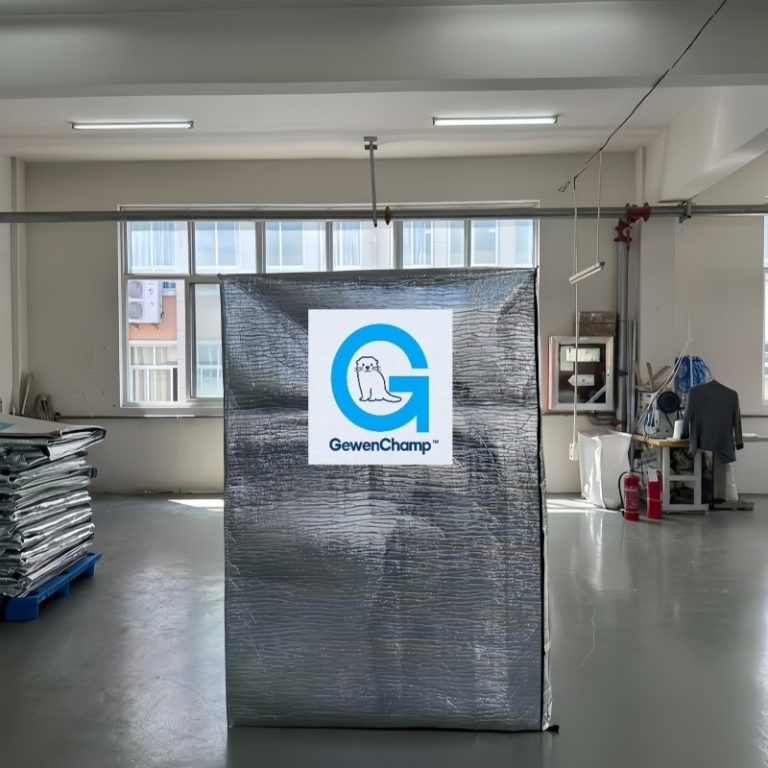
Not every pet food bulk load needs insulation, but temperature-sensitive formulations such as oil-coated kibble, semi-moist products, and any recipe with probiotics or vitamin blends can benefit from thermal insulation container liners. A reflective liner slows heat gain and reduces the condensation that otherwise forms when warm, humid air meets cooler container walls. That matters for pet food because condensation can make dry kibble sticky, create clumps, and support mold where moisture pools.
Manufacturer-supplied data for the TL-02 thermal container liner specifies a four-layer composite with a 3 mm EPE foam core, an operating range of -50°C to 80°C, and a moisture vapor transmission rate of ≤0.033 g/(m²·h·kPa), with FDA, LFGB, ISO 9001, and SGS certifications. These values are product performance data, not universal industry claims.
Before loading, verify the following:
- The liner batch certificate matches the shipment and includes food-contact documentation.
- Seams and spout welds show no tears or pinholes.
- Cargo temperature and moisture content are recorded at loading.
- The liner has no solvent or plasticizer odor.
- Coated or laminated liners show no visible delamination at folds.
- Filling and discharge ports match the terminal equipment.

Work With a Food-Safe Container Liner Supplier
Selecting a food-safe liner is faster when the supplier can respond with the specific resin, lamination, seam, and certification set suited to the pet food form. Send the following details to receive a focused recommendation:
- Product form and bulk density
- Target moisture and fat content
- Container size and loading tonnage
- Origin, destination, and expected transit time
- Required certifications
- Discharge method
Email [email protected] or call +86 523 87683880 to discuss a liner sample before the next loading window.
Frequently Asked Questions
Does FDA certification automatically make a liner pet-food safe?
FDA authorization for the resin under 21 CFR 177.1520 covers the base polymer under specified conditions of use; the finished liner also has to meet hygiene, migration, and good manufacturing practice requirements [2][5]. A buyer should still request a batch-linked certificate from the liner converter.
What is the difference between LFGB and EU Regulation 10/2011?
LFGB is the German food and feed code and is often used as a stricter national reference. EU Regulation 10/2011 sets binding requirements for plastic food contact materials across the EU market, including authorized substances and migration limits [3][4].
Can one liner be used for both dry kibble and oil-coated pet food?
It depends on the barrier. An uncoated woven liner may work for dry kibble, but high-fat formulas require a coated or film barrier to limit fat penetration and taste carryover. Confirm the formulation with the supplier before using the same structure across product types.
What documents should the supplier provide before loading?
At minimum, a Declaration of Compliance, a third-party migration test report, a food-contact statement matching the resin authorization, a REACH SVHC statement, and a batch certificate. For export to Europe, also confirm compliance with packaging heavy metal limits [8].
Are thermal container liners necessary for pet food?
Not for every load. Thermal liners are worth considering for high-fat, semi-moist, or long-haul summer routes where radiant heat and condensation can affect product stability. For ordinary dry kibble on stable routes, a certified dry bulk liner may be sufficient.
References
[1] European Parliament and Council, “Regulation (EC) No 1935/2004 on materials and articles intended to come into contact with food,” Official Journal of the European Union, 2004. https://eur-lex.europa.eu/legal-content/EN/TXT/?uri=CELEX:32004R1935
[2] U.S. Food and Drug Administration, “21 CFR 177.1520 — Olefin polymers,” Code of Federal Regulations, current as of 2024. https://www.ecfr.gov/current/title-21/chapter-I/subchapter-B/part-177/subpart-B/section-177.1520
[3] Bundesministerium der Justiz, “Lebensmittel-, Bedarfsgegenstände- und Futtermittelgesetzbuch (LFGB),” 2021. https://www.gesetze-im-internet.de/lfgb/
[4] European Commission, “Commission Regulation (EU) No 10/2011 on plastic materials and articles intended to come into contact with food,” Official Journal of the European Union, 2011. https://eur-lex.europa.eu/legal-content/EN/TXT/?uri=CELEX:32011R0010
[5] International Organization for Standardization, “ISO 22000:2018 Food safety management systems — Requirements for any organization in the food chain,” 2018. https://www.iso.org/standard/65464.html
[6] Codex Alimentarius, “CXC 1-1969 General Principles of Food Hygiene,” FAO/WHO, 2020. https://www.fao.org/fao-who-codexalimentarius/sh-proxy/en/?lnk=1&url=https%253A%252F%252Fworkspace.fao.org%252Fsites%252Fcodex%252FStandards%252FCXC%2B1-1969%252FCXC_001e.pdf
[7] European Parliament and Council, “Regulation (EC) No 1907/2006 concerning the Registration, Evaluation, Authorisation and Restriction of Chemicals (REACH),” Official Journal of the European Union, 2006. https://eur-lex.europa.eu/legal-content/EN/TXT/?uri=CELEX:32006R1907
[8] European Parliament and Council, “Directive 94/62/EC on packaging and packaging waste,” Official Journal of the European Union, 1994. https://eur-lex.europa.eu/legal-content/EN/TXT/?uri=CELEX:31994L0062
From insight to product selection
Related products
Explore these packaging options, then confirm suitability for your cargo, dimensions and shipping conditions.
Tell us about your shipment
Discuss your packaging requirements
Tell us what you ship and how you ship it. Add the container or pallet size, route and any moisture or temperature concerns so we can discuss an appropriate packaging option.