
Packaging Insights
Pigment and Paint Raw Material Bulk Shipping: A Container Liner Guide
Pigment and paint raw materials — titanium dioxide, iron oxide pigments, calcium carbonate, talc, resin powders, fillers, and dry additives — move through global supply chains as fine powders with two costly vulnerabilities: contamination and moisture uptake. A load that arrives caked, discolored, or cross-contaminated can be rejected before it reaches the mixer. In bulk container shipping, the liner is the primary line of defense between the cargo and the steel container wall.
This guide covers liner selection, sift-proof construction, regulatory documentation, and practical loading checks for pigment and paint raw material shipments in 20ft, 40ft, and 40HQ ISO containers.

Why Pigment and Paint Powders Require a Different Bulk Liner Approach
Fine pigment powders behave differently from coarse granules. They sift through needle holes, absorb moisture quickly, and can leave residues that contaminate the next load. Titanium dioxide, iron oxide pigments, calcium carbonate, talc, and similar materials vary in particle size, bulk density, abrasive behavior, and sensitivity to humidity.
Three failure modes matter most:
- Sift loss through seams and fabric pores — fine pigments escape through stitching holes and unsealed seams.
- Moisture absorption and caking — hygroscopic fillers and pigments harden when exposed to condensation.
- Cross-contamination — residue from previous cargo, dust ingress, or liner additives can change color, purity, and batch consistency.
A properly specified dry bulk liner addresses all three through material selection, seam design, and loading/discharge configuration.
Container Liner Options for Pigment and Paint Raw Materials
The most common liner categories for these cargoes are woven dry bulk liners and polyethylene film liners.
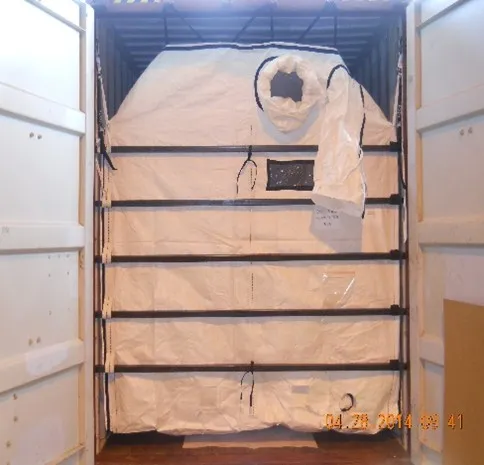
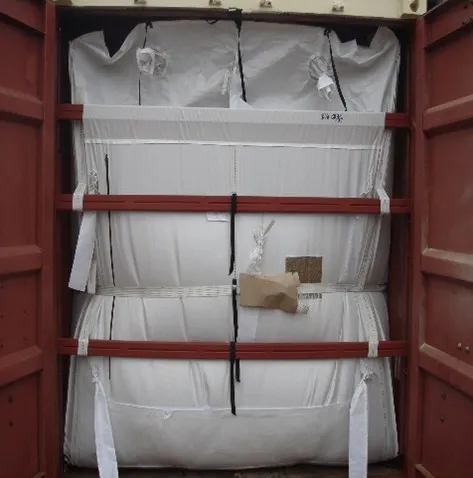
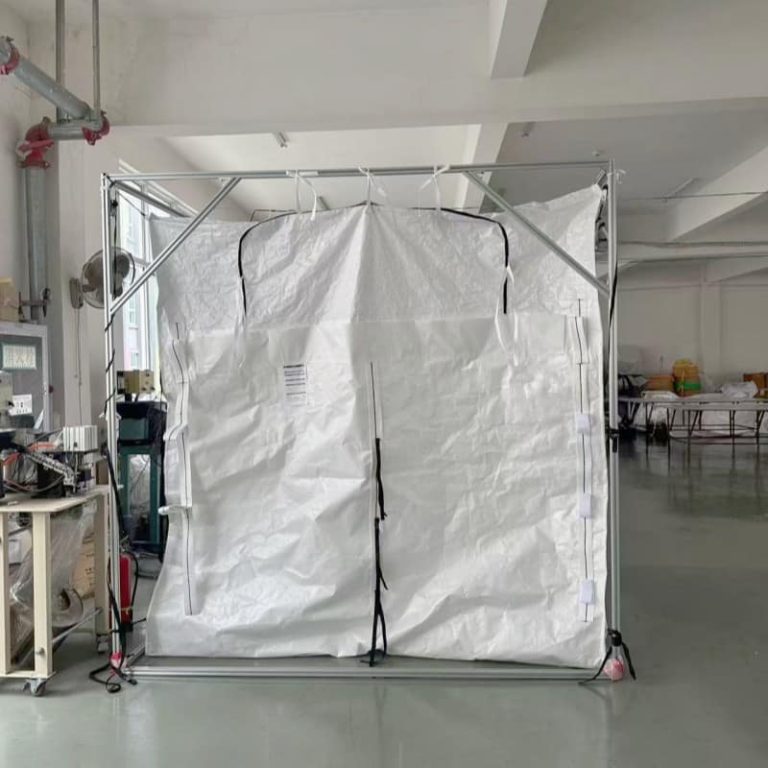
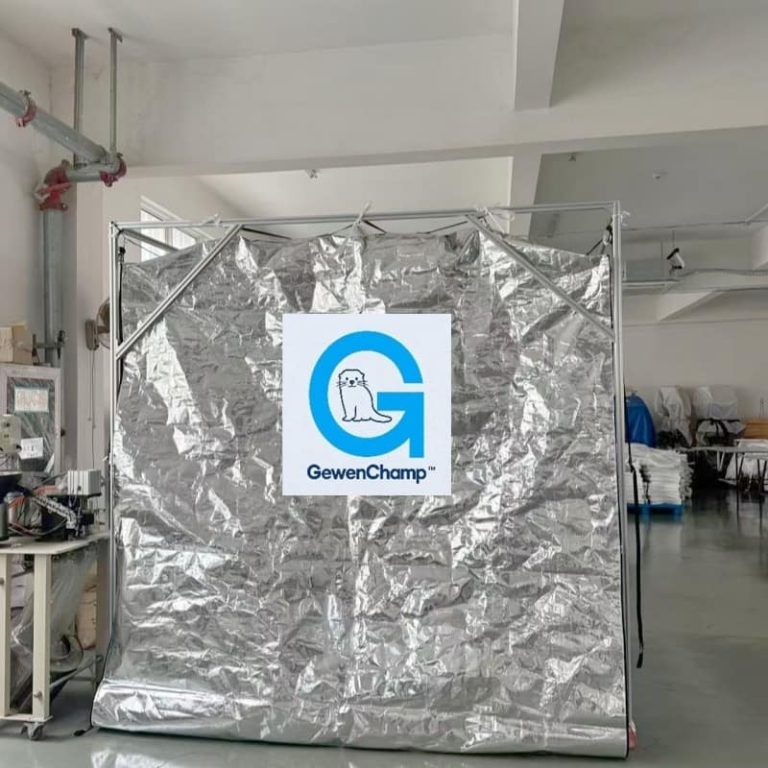
For fine, light, and high-value pigment powders, a sift-proof woven liner is usually the starting point. Giant Flexpack’s DBL-W06 Woven Sift-Proof Container Liner uses 140 gsm HDPE woven fabric with double-sided PE coating and PU tape-sealed seams. The construction is rated sift-proof for particle sizes ≥50 mesh, which helps prevent leakage and dust emission during loading, transit, and discharge.
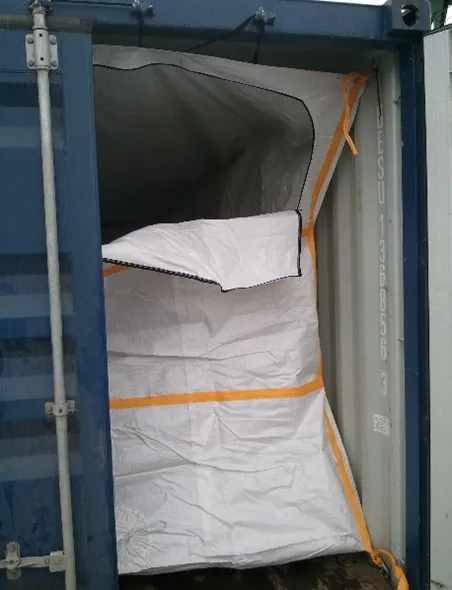
For less demanding non-corrosive bulk goods, a DBL-F01 PE Film Container Liner made from 140-micron LDPE provides a moisture and dust barrier with a smooth surface for clean discharge. The PE film option is lighter and lower cost, but the cargo particle distribution and handling method must be confirmed first.
For coarser pigments and fillers that do not require sift-proof sealing, a standard DBL-W01 Dry Bulk Container Liner may be sufficient.
The table below compares typical specifications used for pigment-related powders.
| Parameter | Sift-proof woven liner (DBL-W06) | PE film liner (DBL-F01) |
|---|---|---|
| Base material | 140 gsm HDPE woven fabric | 140-micron LDPE film |
| Seam treatment | Double-sided PE coating + PU tape-sealed seams | Heat-sealed film construction |
| Sift-proof rating | ≥50 mesh | Fine bulk goods |
| Tensile strength | warp ≥1,800 N/5cm; weft ≥1,600 N/5cm | warp ≥1,500 N/5cm; weft ≥1,300 N/5cm |
| Typical load capacity | 20–40 tons | 15–35 tons |
| Key barrier function | Sift-proof, moisture-resistant | Moisture and dust barrier |
These figures are product-specific and should be confirmed against the actual cargo density, particle size distribution, and container filling equipment.

How to Match Liner Construction to Cargo Characteristics
Particle size and sift potential
Pigments with median particle sizes below 325 mesh can penetrate conventional stitched seams. The PU tape-sealed seam is a critical specification. If the liner has unsealed sewn seams, shift to a sift-proof design or specify heat-sealed construction.
Moisture sensitivity
Titanium dioxide, precipitated silica, organic pigments, and many fillers are hygroscopic to varying degrees. The liner should block both liquid water and water vapor. For moisture-sensitive cargo, combine the liner with pre-loading moisture checks, desiccant planning where appropriate, and closed loading spouts.
Flow behavior and discharge
Pigment powders may bridge or adhere to rough surfaces. A smooth inner surface, sufficient spout diameter, and proper discharge angle reduce manual intervention and residue. Bottom discharge with a sealed port is common for paint-grade powders, while pneumatic unloading may require reinforced spout zones.
Contamination risk
Keep liner materials free of slip additives or coatings that can transfer to food-contact or color-critical cargo. Specify food-grade or low-transfer materials when the pigment enters indirect food contact applications. A short email to [email protected] with the cargo’s particle size, density, and container size is often enough to narrow the liner choice.
Specifying the Load: What Goes into an RFQ
A clear RFQ prevents liners that are technically compliant but operationally wrong. The following checklist converts cargo characteristics into verifiable liner parameters.
| RFQ item | What to specify |
|---|---|
| Cargo identity | Pigment type, chemical name, CAS number, bulk density |
| Particle size | D10/D50/D90 or mesh range |
| Moisture sensitivity | Hygroscopic, caking tendency, target moisture limit |
| Container sizes | 20ft, 40ft, 40HQ |
| Liner type | Sift-proof woven or PE film |
| Fabric/coating | gsm, coating type, seam sealing method |
| Spouts/ports | Top loading spout diameter, bottom discharge port, dust cap |
| Tensile strength | Warp/weft in N/5cm |
| Accessories | Lifting loops, anti-slip base, antistatic treatment |
| Certifications | ISO9001, REACH, RoHS, FDA or LFGB as applicable |

Loading, Discharge, and Container Preparation
The liner is only part of the system. Container preparation and loading discipline determine whether the liner performs.
Before loading, inspect the container for sharp edges, protruding nails, residue, odor, and previous cargo traces. Pay special attention to door seals and floor condition, because paint pigments are sensitive to both moisture and dark particle contamination.
During loading, keep the liner filling spout sealed around the loading equipment. Avoid overfilling beyond the rated capacity; excessive pressure can stress seams and make discharge more difficult. Secure lifting loops according to the liner manufacturer’s instructions.
For discharge, choose the method that matches the material’s flow properties. Gravity discharge suits free-flowing powders in hopper-equipped facilities. Pneumatic discharge is common for pigment processing plants, but the liner discharge port and spout zone must be reinforced accordingly. Manual entry into a container is usually not necessary when a properly designed discharge spout is used.
The International Maritime Organization’s CTU Code [1] provides general packing guidance on load distribution, securing, and inspection before a cargo transport unit moves. Use it as the baseline and apply liner-specific instructions on top.
Regulatory and Certification Requirements
A reliable liner supplier should document the standards that support material safety and quality consistency.
ISO 9001:2015 [2] provides the quality management framework for controlled production, batch traceability, and inspection. REACH Regulation (EC) No 1907/2006 [3] addresses chemical registration, evaluation, authorization, and restriction in the European market. RoHS Directive 2011/65/EU [4] restricts specific hazardous substances in electrical and electronic equipment and is often requested as supporting documentation for packaging components. FDA 21 CFR 177.1520 [5] covers olefin polymers for food-contact use, relevant when pigments may serve indirect food-contact applications.
For paint and pigment raw materials, the required certificate mix depends on destination market and end use. Verify whether the liner needs only REACH and RoHS documentation, or full food-contact evidence such as FDA or LFGB. In China-sourced liner programs, ISO9001 remains the most common manufacturing quality baseline, but it does not by itself prove food-contact or chemical migration compliance.
Preventing Cross-Contamination and Moisture Damage in Transit
Cross-contamination in pigment shipping is frequently invisible until quality control detects a color shift or purity deviation. Practical controls include:
- Use a new liner for each load unless a reusable liner has been explicitly cleaned and approved for the same pigment family.
- Verify that antistatic properties are specified for combustible dust environments.
- Close all spouts and dust caps after loading.
- Confirm the container door seals are intact to limit condensation airflow.
- Pre-dry the container interior when the route includes high-humidity legs.
Moisture damage often appears as caked pigment along the floor or walls. A liner with a sealed moisture barrier reduces direct contact with container condensation, but it cannot compensate for wet cargo loaded at origin. Measure cargo moisture before loading and align the liner strategy with the most humid segment of the route.

Mid-Shipment Quality Checks and Supplier Support
After the first production load, use the results to refine the liner specification. Record any dust at the container doors, residue after discharge, discharge time, and moisture readings. A supplier with in-house technical support should help interpret these results and adjust the seam configuration, spout position, or coating type.
For pigment programs, request a sample liner or specification sheet before committing to a full order. The sample should include the actual seam type, coating system, and spout configuration proposed for production. Evaluate it in your own loading and discharge procedure rather than only reviewing a data sheet.
Get a Specification-Backed Liner Recommendation
If you are unsure whether your pigment requires a sift-proof woven liner or a film liner, send the particle size distribution, bulk density, moisture sensitivity, and container size to [email protected] or call +86 523 87683880. A technical sales specialist can match the liner construction, seam treatment, and certificate package to the route and cargo.

Talk to a Container Liner Specialist
A pigment-specific liner recommendation should include more than a generic data sheet. Share the following details to receive a comparable, audit-ready proposal:
- Cargo name, CAS number, and particle size distribution
- Target loading weight per container
- Loading method and discharge equipment
- Destination market and required certificates
- Previous damage or contamination issues
Contact [email protected] or call +86 523 87683880 to discuss technical specifications, samples, lead times, and compliance documentation.
Frequently Asked Questions
Do pigment powders always need a sift-proof container liner?
Not always, but fine pigments with median particle sizes below 50 mesh generally benefit from a sift-proof liner with sealed seams. Coarser granules may perform acceptably in a standard dry bulk liner, provided the fabric weight and seam type are verified.
Can a PE film liner handle heavy pigment fillers?
It depends on the bulk density and loading method. A 140-micron LDPE liner may be suitable for moderate loads, but very dense fillers or abrasive pigments usually require a woven liner with higher tensile strength. Confirm the warp and weft values against the expected load.
What certificates should a pigment liner have?
The minimum set commonly includes ISO9001 for manufacturing quality, plus REACH and RoHS documentation for EU compliance. Indirect food-contact programs may also require FDA or LFGB evidence. Request the actual certificate numbers and scope before order confirmation.
How do you prevent moisture caking with a container liner?
Specify a liner with a sealed moisture barrier, inspect the container for condensation, load cargo within the target moisture limit, and close all spouts and dust caps. In high-humidity routes, verify whether the liner manufacturer recommends additional desiccant use or venting controls.
What is the difference between sift-proof and moisture-proof?
Sift-proof addresses fine particle leakage through seams and fabric pores. Moisture-proof addresses liquid water and water vapor transfer. A pigment liner may need both properties; confirm the exact barrier claim and seam sealing method.
References
[1] International Maritime Organization. MSC.1/Circ.1497: Code of Practice for Packing of Cargo Transport Units (CTU Code). IMO; 2014.
[2] International Organization for Standardization. ISO 9001:2015, Quality management systems — Requirements. Geneva: ISO; 2015.
[3] European Union. Regulation (EC) No 1907/2006 concerning the Registration, Evaluation, Authorisation and Restriction of Chemicals (REACH). Official Journal of the European Union; 2006.
[4] European Union. Directive 2011/65/EU on the restriction of the use of certain hazardous substances in electrical and electronic equipment (RoHS). Official Journal of the European Union; 2011.
[5] U.S. Food and Drug Administration. 21 CFR 177.1520, Olefin polymers. Code of Federal Regulations.
From insight to product selection
Related products
Explore these packaging options, then confirm suitability for your cargo, dimensions and shipping conditions.
Continue your research
Related articles
Tell us about your shipment
Discuss your packaging requirements
Tell us what you ship and how you ship it. Add the container or pallet size, route and any moisture or temperature concerns so we can discuss an appropriate packaging option.