
Packaging Insights
Thermal Packaging for Cold Chain: A Practical Guide
Cold chain shipping no longer has to mean booking a reefer container on every lane. Thermal packaging for cold chain uses passive insulation, reflective barriers and moisture-tight films to keep temperature-sensitive cargo inside an acceptable operating band during long-haul ocean freight, cross-dock handling and warehouse staging. For importers, exporters and logistics teams moving food, pharmaceuticals, chemicals or electronics, a properly specified thermal packaging system can reduce temperature excursions, cut cost per pallet and protect cargo without active refrigeration.
This guide explains how passive thermal packaging works, where it performs best, and how to evaluate materials, R-value claims, certifications and supplier documentation before placing an order.

How Thermal Packaging Protects Cold Chain Shipments
Temperature-sensitive cargo usually fails through two mechanisms: heat gain raises product temperature above the acceptable limit, and day-night temperature cycles create condensation inside the container. When warm, humid air contacts a colder container wall, the air cools below its dew point and releases moisture, producing the condition commonly called container rain. That moisture can wet paper packaging, corrode metal components, promote mold growth and trigger caking in powders.
Thermal packaging reduces both risks by surrounding cargo with a low-emissivity reflective surface facing the heat source and a low-conductivity core that slows heat movement into the load. The system is not a refrigerator. It is a thermal buffer that extends the time cargo remains within the defined temperature range. In pharmaceutical distribution, regulators expect the selected packaging solution to be qualified against the route profile and product stability data [1].
Passive Cold Chain Mechanics: Radiation, Conduction and Convection
Heat reaches cargo through three paths. Radiant heat travels as electromagnetic energy and is best controlled by reflective aluminum or metallized surfaces. Conductive heat moves through solid materials and is controlled by insulation thickness and low thermal conductivity. Convective heat moves through air gaps and is controlled by sealed air pockets or closed-cell foam.
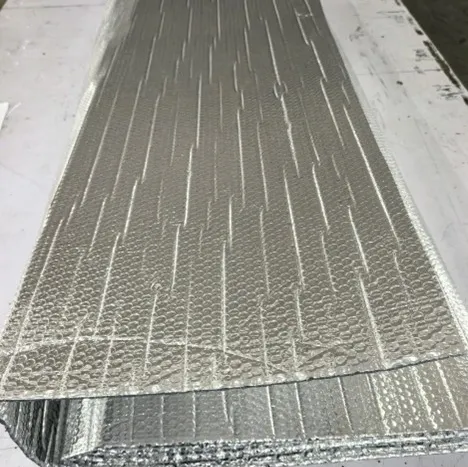
Effective cold chain packaging combines all three controls. For example, an EPE foam liner places a 3 mm closed-cell foam core with low thermal conductivity between reflective outer layers, slowing conduction while the metalized surfaces reduce radiant gain. A double-bubble MPET structure traps static air inside multiple sealed cells, adding convective resistance and shock absorption to the reflective barrier. The best material choice depends on whether the dominant risk is radiant heat, long-duration conduction, physical handling, or a combination of all three.
Core Thermal Packaging Formats for Container Loads
Thermal packaging for containerized cargo generally falls into two groups: full six-wall container liners and pallet-level covers.
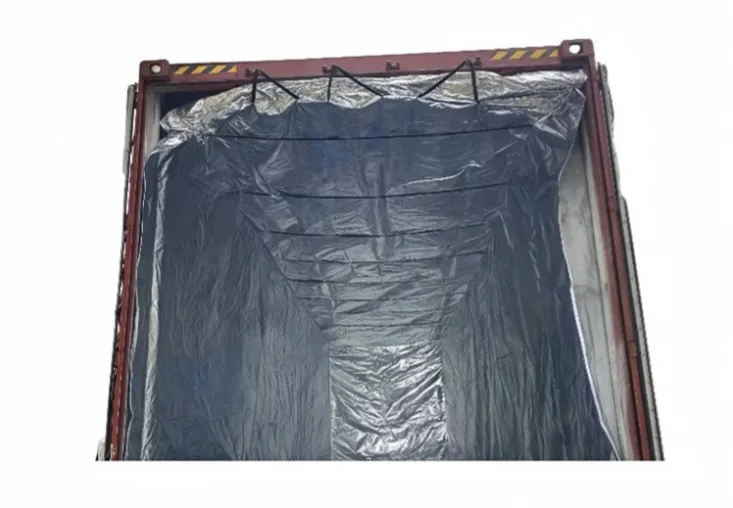
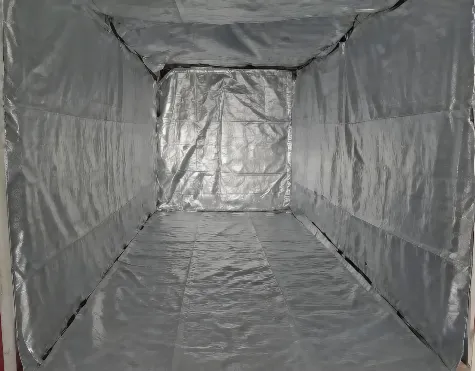
Thermal container liners cover the floor, walls and ceiling inside a 20 ft or 40 ft ISO container. They are suited to full-load protection when the entire container must stay within a controlled temperature band.
- TL-01 Thermal Container Liner uses woven PE with double-sided aluminum foil lamination for strength and radiant heat reflection.
- TL-02 Thermal Container Liner adds a 3 mm EPE foam core for lower conductive heat gain and condensation control.
- TL-03 Thermal Container Liner uses MPET, double bubble and PET MPET layers for reflective insulation plus shock absorption.
- TL-04 Thermal Container Liner is a lighter MPET/PE composite option for moderate temperature ranges and cost-sensitive shipments.
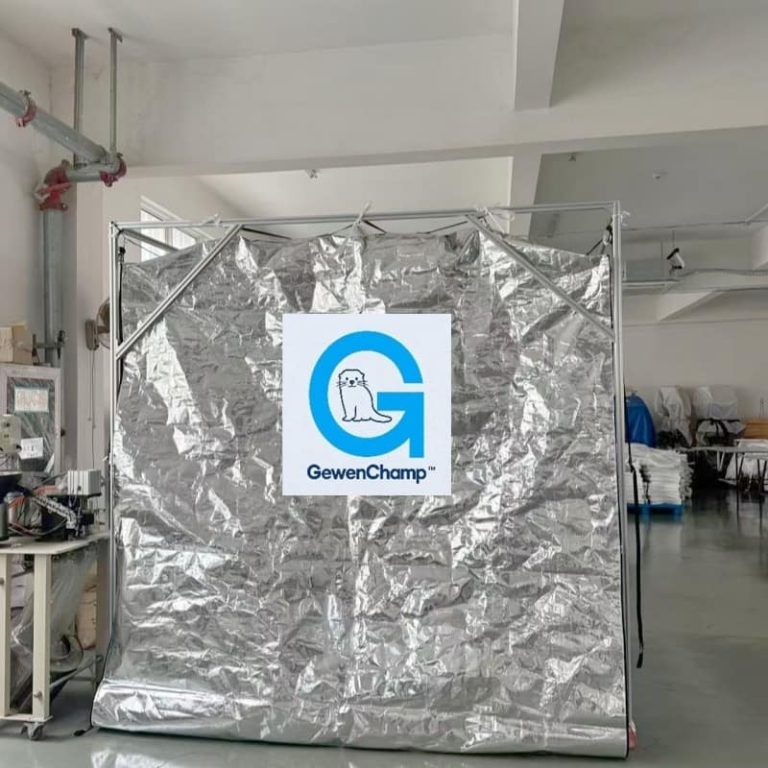
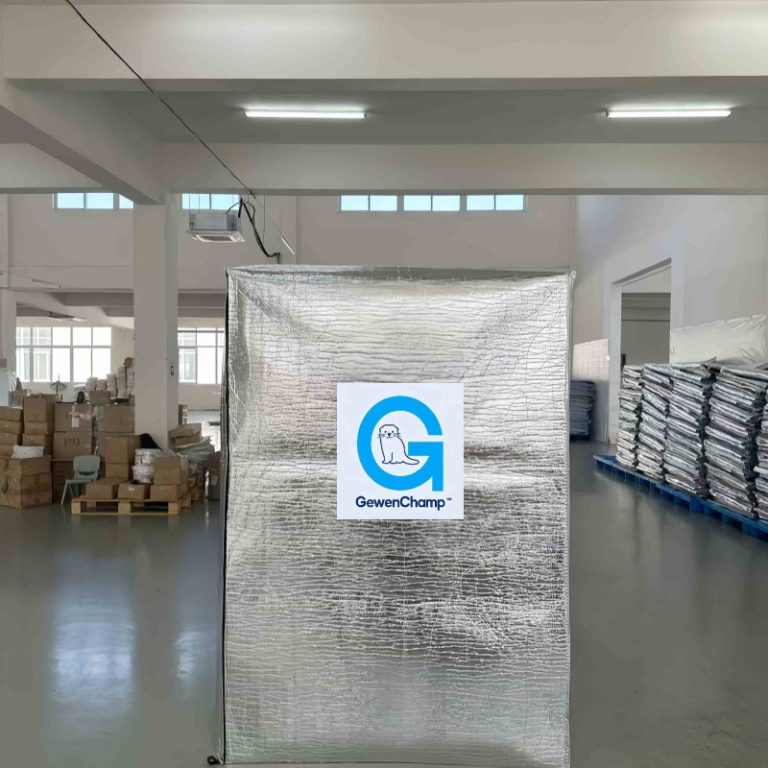
Thermal pallet covers enclose individual pallets or grouped loads. They are practical for partial-container shipments, multi-stop distribution, or loads that leave the container and continue by truck.
- TP-01 Thermal Pallet Cover combines woven strength with dual MPET reflective layers.
- TP-02 Thermal Pallet Cover adds EPE foam for insulation and cushioning.
- TP-03 Thermal Pallet Cover uses MPET and double bubble for light, lower-cost protection.
- TP-04 Thermal Pallet Cover uses genuine aluminum foil bonded to woven PE for maximum reflective performance at minimal weight.

Matching Thermal Liners to Temperature-Sensitive Cargo
The right packaging begins with the cargo temperature limit, not the ambient headline number. A product with a 2 °C to 8 °C requirement is much more demanding than a product that must simply avoid freezing or stay below 30 °C. For strict pharmaceutical ranges, passive insulation alone may not be sufficient on long or high-ambient routes unless it is paired with phase change materials or active cooling. EU Good Distribution Practice requires that medicinal products be transported under conditions that maintain their quality and that temperature data be recorded for qualified routes [2].
For less stringent loads, passive systems are often the most practical option. Fresh produce, chocolate, cosmetics, specialty chemicals and electronics can tolerate moderate temperature windows if the packaging slows heat gain enough to cover the longest transport leg. In these applications, the decision should be driven by the route profile, product stability data, container type and handling sequence.

Reading R-Value and Thermal Performance Claims
R-value is useful, but it should not be the only number on a comparison sheet. R-value mainly describes resistance to conductive heat flow. Thin reflective packaging can deliver strong radiant protection without having a thick insulation profile, so two products with very different R-values may perform similarly in certain field conditions. Conversely, a high R-value alone does not guarantee that seams, closure points and floor coverage are adequate.
When reviewing supplier data, request the method behind the number. Look for:
- Reflectivity or emittance of the outer and inner layers
- Core material type, thickness and density
- Thermal conductivity or apparent R-value
- Moisture vapor transmission rate for condensation control
- Tensile strength and seam construction
- Test report or simulation conditions, not just a product claim
A documented sample such as an EPE foam liner with a thermal conductivity of 0.038 W/(m·K) or lower gives a clearer basis for comparison than a generic “thermal insulation” label. If you are comparing liners across materials, ask for material data sheets and route-specific performance support before making a sourcing decision.
For a technical comparison sheet covering multiple thermal liner structures, contact Giant Flexpack at [email protected].
Regulatory and Quality Benchmarks That Matter
Thermal packaging claims should be supported by recognized quality and compliance frameworks.
- Food contact: FDA-compliant materials are commonly required in the United States, while LFGB and EU food-contact regulations apply in key European markets [6].
- Pharmaceutical distribution: EU Good Distribution Practice requires risk-based qualification, temperature mapping and documented control for medicinal products [2]. USP <1079> provides storage and distribution guidance for drug products [3].
- Quality management: ISO 9001:2015 establishes a quality management system that supports consistent production, traceability and corrective action [4].
- Thermal performance testing: ISTA protocols such as ISTA 7D for insulated shipping containers provide a measurable basis for temperature performance qualification [5].
- Chemical compliance: REACH and RoHS requirements address restricted substances and environmental compliance for packaging materials placed on the EU market.
Suppliers should be able to match claims to the specific material layer, not just to a finished product family. If a liner is described as food-grade, the contact layer, testing report and certification should name the finished structure.
Design and Pre-Shipment Validation
A thermal packaging program should be validated against the actual lane and season before full rollout. Start with the product temperature range, route duration, expected ambient conditions, handling points, container type and pallet configuration. Then test the packaged system under representative profiles.
Effective validation steps include:
- Build a prototype with the selected liner or pallet cover and the real load configuration
- Place calibrated temperature loggers at product level, wall level and headspace
- Simulate the hottest and coldest expected ambient profiles
- Record peak temperature, time above limit and condensation points
- Compare results against product stability limits and customer acceptance criteria
- Repeat the test after any material, supplier or lane change
This approach aligns with risk-based distribution practices and reduces the chance of discovering packaging failure during a live shipment [1][2][5].
For help building a lane-specific validation program or sourcing a trial liner, contact Giant Flexpack at [email protected].

Procurement Checklist for Thermal Packaging
Use this short checklist when comparing cold chain packaging suppliers:
- Confirm the packaging format: six-wall container liner, pallet cover, or both
- Match material structure to the dominant heat transfer risk
- Request reflectivity, insulation core, moisture barrier and tensile data
- Verify food-contact status for regulated cargo
- Confirm quality system certification and test documentation
- Clarify reusable life, cleaning conditions and disposal guidance
- Ask for sample material and a trial unit before bulk production
- Define lead time, MOQ, container size and customization options
- Confirm the supplier can support technical questions after delivery

Plan Your Cold Chain Packaging Upgrade
Giant Flexpack (Taixing) Co., Ltd. supplies thermal insulation container liners and pallet covers for food, pharmaceutical, chemical and electronics logistics. Our engineering team supports material selection, lane-specific thermal packaging design and pre-shipment validation.
To discuss temperature range, container size, certifications or sampling, contact us at [email protected] or call +86 523 87683880.
Frequently Asked Questions
What is the difference between passive and active cold chain packaging?
Active cold chain packaging uses powered refrigeration or heating to remove or add heat continuously. Passive cold chain packaging uses insulation, reflective barriers, sealed air pockets and sometimes phase change materials to slow heat movement without an external power source. Passive systems are generally lighter, easier to handle and lower cost for many full-load and palletized shipments, but they have defined duration and temperature limits.
Can thermal container liners replace reefer containers?
Thermal container liners can replace reefers for many moderate temperature ranges, particularly when the lane is well characterized and the product is stable within the protected band. They are less appropriate for strict 2 °C to 8 °C pharmaceutical loads on long or extreme-ambient routes unless qualified with additional controls. The decision should come from route simulation, product stability data and customer requirements.
How many times can thermal liners and pallet covers be reused?
Reusable life depends on material structure and handling. Woven thermal fabric liners and pallet covers typically support multiple trips when cleaned and stored correctly. Foam and bubble alternatives may have a shorter service life. The supplier should provide reuse guidance, inspection criteria and a cleaning procedure for food-contact applications.
What certifications should thermal packaging have for food or pharmaceutical cargo?
For food contact, look for FDA or equivalent EU compliance such as LFGB and EU food-contact requirements [6]. For pharmaceutical distribution, the packaging should be selected and qualified within a documented quality system aligned with EU GDP and USP <1079> [2][3]. A certified quality management system such as ISO 9001:2015 supports consistent production and traceability [4].
How do I compare R-value claims from different suppliers?
Use R-value as one data point, not the complete comparison. Request the test method, core material structure, reflectivity, moisture vapor transmission rate, tensile strength and seam details. Where possible, compare samples under identical simulated conditions using a recognized protocol such as ISTA 7D [5].
References
[1] World Health Organization. Model Guidance for the Storage and Transport of Time- and Temperature-Sensitive Pharmaceutical Products. WHO Technical Report Series, No. 961, Annex 9. https://www.who.int/publications/i/item/9789241209618
[2] European Commission. Guidelines of 5 November 2013 on Good Distribution Practice of Medicinal Products for Human Use. 2013/C 343/01. https://eur-lex.europa.eu/legal-content/EN/TXT/?uri=CELEX%3A52013XC1123%2801%29
[3] United States Pharmacopeia. General Chapter <1079> Good Storage and Distribution Practices for Drug Products. USP-NF. https://www.usp.org/
[4] International Organization for Standardization. ISO 9001:2015 Quality management systems — Requirements. https://www.iso.org/standard/62085.html
[5] International Safe Transit Association. ISTA 7D Temperature Test for Transport Packaging. https://ista.org/test-procedures/
[6] U.S. Food and Drug Administration. Code of Federal Regulations Title 21 Part 177: Indirect Food Additives: Polymers. https://www.ecfr.gov/current/title-21/chapter-I/subchapter-B/part-177
From insight to product selection
Related products
Explore these packaging options, then confirm suitability for your cargo, dimensions and shipping conditions.
Tell us about your shipment
Discuss your packaging requirements
Tell us what you ship and how you ship it. Add the container or pallet size, route and any moisture or temperature concerns so we can discuss an appropriate packaging option.