
Packaging Insights
Cold Chain Shipping Without Refrigeration: Passive Solutions That Work
Reefer containers solve many temperature problems, but they also add cost, booking complexity, energy consumption, and failure risk to international shipments. For cargo that does not require a tightly controlled 2–8°C band, passive cold chain packaging — engineered thermal container liners, insulated pallet covers, and moisture-control barriers — can hold product inside much safer temperature and condensation limits during ordinary sea freight. The key is to understand exactly what passive protection can deliver over a multi-week voyage, and where it should not replace active cooling.
How Passive Thermal Protection Actually Works
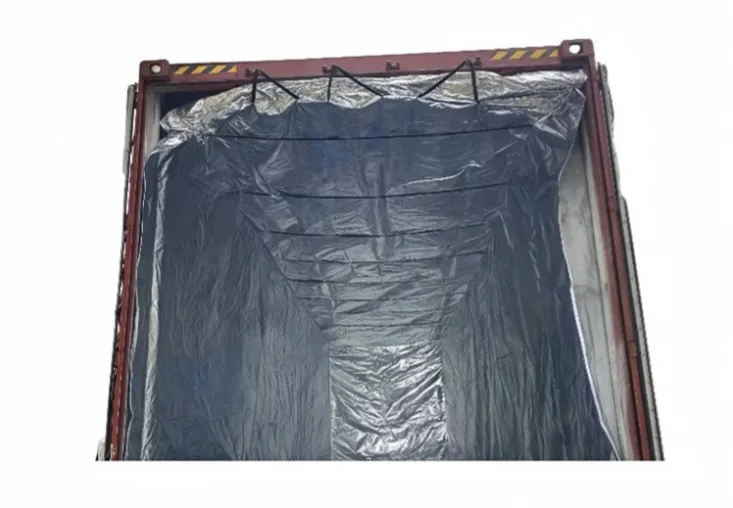
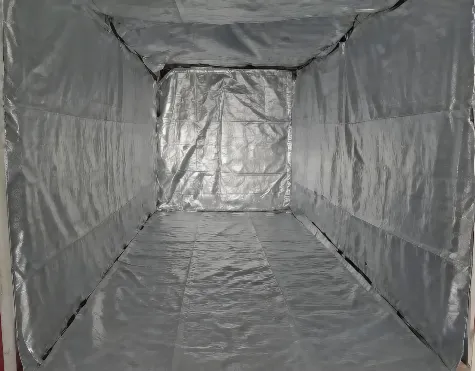
A passive thermal liner does not cool cargo. It slows and blocks the three heat paths that normally destabilize temperature-sensitive freight: radiant heat from sun-heated container walls, conductive heat through the steel box, and convective air movement that transfers heat to the load. A well-built insulated container liner combines a reflective surface, a low-conductivity core, and a vapor barrier, turning the ISO container itself into a more stable thermal environment.
Reflective aluminum foil or metallized PET film rejects most incoming radiant energy before it reaches the cargo. Conductive transfer is then reduced by an air-trapping layer or foam core, because stationary air is a poor conductor relative to steel. The result is thermal buffering: the liner slows the rate of temperature change inside the container, reducing both daytime heat spikes and nighttime cooling shocks. This principle follows standard thermal barrier behavior in building and packaging applications: high surface reflectivity plus low thermal conductivity plus sealed air spaces equals reduced interior temperature swing [1].
During overnight cooling, the same system also reduces condensation damage. Warm, moisture-laden air inside a closed container condenses on cold steel surfaces and can drip back onto cargo as “container rain.” A liner with strong vapor resistance keeps humid air away from the cold boundary and keeps condensate away from product contact faces [4]. For goods that fail through moisture exposure as often as through heat exposure, this is the less visible but equally important part of passive cold chain.
Manufacturer-specified performance gives a practical reference for how much damping is possible. A woven thermal liner with double-sided foil lamination can maintain a cargo temperature range of -20°C to 60°C, with temperature variance controlled within approximately ±5°C, when installed in a standard ISO container. Higher-insulation designs widen or extend that protection: an EPE foam core construction has a thermal conductivity of 0.038 W/(m·K) or lower and operates across a -50°C to 80°C range, while a lighter metallized composite film liner can maintain -10°C to 30°C for 24–48 hours at 25°C ambient temperatures, extendable to roughly 72 hours with ice packs. These figures are product-specific, not universal; they assume a properly installed, six-wall liner or pallet cover rather than a partial wrap.
For example, a food exporter shipping bulk cocoa, sugar, or chocolate in a 40-foot container can install a multi-layer thermal liner instead of paying reefer charges for the full route, provided the product has a tolerable temperature envelope and the transit season is understood. The liner buffers the daily thermal cycle, while the vapor barrier stops sweat-related bloom, caking, and mold development. For readers comparing liner classes, Dry Bulk Container Liner vs Thermal Liner: How to Choose explains where standard bulk containment ends and active thermal design begins.
Managing Condensation Without Active Dehumidification
Container sweating is driven by temperature difference, not by the cargo itself. When a ship crosses cool water at night, container walls drop below the dew point of the enclosed air, and condensation forms. Over a long voyage, this repeated cycle can leave standing moisture on bulk goods even when temperatures stay within an acceptable range.
Anti-condensation behavior is therefore a mandatory requirement for non-refrigerated cold chain protection, not an option. The strongest passive approach is an engineered vapor barrier close to the cargo surface. A 3mm EPE foam composite records moisture vapor transmission of 0.033 g/(m²·h·kPa) or lower, which is low enough to prevent most container rain from reaching the load. Because the barrier is continuous across all six internal faces, it does not rely on desiccants alone to absorb the damage after it happens.

Shippers should also control the cargo itself. Warm goods loaded into a closed container carry sensible heat and residual moisture into the voyage. Pre-cooling bulk product, loading during the coolest practical window, and sealing doors immediately reduce the amount of water vapor available to condense later.
Thermal Liner Types Compared
Material choice determines the thermal resistance, moisture control, reusability, and cost of a passive solution. Four common architectures are shown below; all figures come from the manufacturer’s published specifications [6].
| Liner Type | Structure | Typical Performance | Moisture / Condensation Control | Reusability | Certifications |
|---|---|---|---|---|---|
| TL-01 Woven Thermal Fabric | Woven PE + double-sided PE aluminum foil lamination | Maintains -20°C to 60°C; variance within ±5°C | Foil + PE layers block radiant heat and surface moisture entry | 3–5 times | FDA, LFGB |
| TL-02 EPE Foam | PET aluminum foil / woven PE / 3mm EPE foam / PET aluminum foil | Operating range -50°C to 80°C | Thermal conductivity ≤0.038 W/(m·K); MVTR ≤0.033 g/(m²·h·kPa) | 3–5 times | FDA, LFGB |
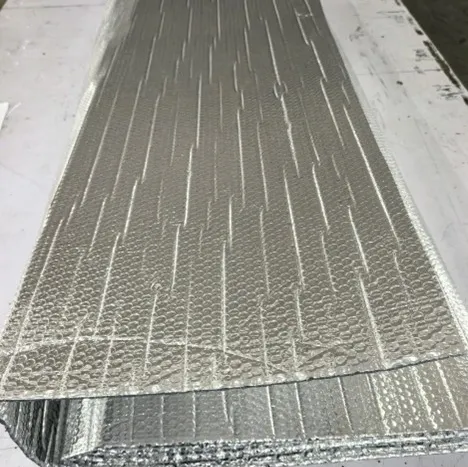
| TL-03 MPET / Double Bubble / MPET | MPET / double bubble cushion / PET MPET | Reflects up to 98% radiant heat; bubble layer adds thermal buffering and shock absorption | Tear-resistant inner layer provides dust and moisture barrier | 3–5 times | FDA, LFGB, ISO9001, SGS |
| TL-04 MPET / PE Composite Film | Metallized PET film + polyethylene film | Maintains -10°C to 30°C for 24–48 h at 25°C; extendable to 72 h with ice packs | Waterproof (IPX6) | Lighter, cost-efficient | FDA, LFGB, ISO9001, SGS |
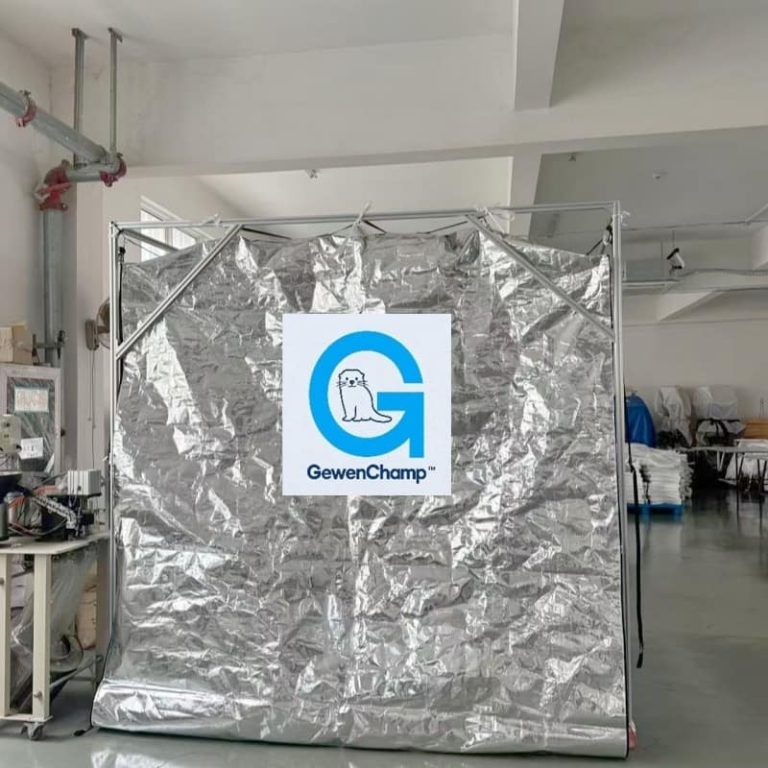
For palletized loads traveling in ambient containers, warehouses, or intermodal transfers, insulated pallet covers apply the same physics — MPET film or aluminum foil reflecting radiant heat, a woven or foam or bubble core reducing conductive transfer, and a close-fitting envelope limiting moisture entry. Thermal pallet covers suit partial loads and mixed cargo far better than forcing a full container liner into a shipment that does not need one.
When Passive Cold Chain Is Sufficient
Passive solutions are strongest for three situations: products with a moderately stable shelf life, routes with manageable seasonal extremes, and shipments where the cost or availability of reefer capacity is disproportionate to the actual risk.

Practical fallback logic works well in cold chain planning. If the cargo remains acceptable within a broad temperature window — many confectionery, bulk food, resin, chemical, and electronics shipments do — use a passive liner plus route data. If the product is frozen, strictly regulated in the 2–8°C range, or highly sensitive to even short excursions, a reefer remains the safer choice. The World Health Organization’s temperature-controlled transport guidance and Pharmaceutical Cold Chain guidance emphasize consistent qualification rather than a single packaging magic number [2][3]. For packaging-level testing, shippers should also require performance evidence aligned with thermal packaging stability test principles, since marketing claims without test context can overstate passive performance [5].
Cost logic follows the same pattern. Reefer freight typically carries both a higher base rate and operational risk: a reefer failure during transit can expose the entire load to a sustained temperature excursion. A passive liner has no mechanical system to fail. It cannot re-cool warm cargo after loading, but it preserves the thermal condition the shipper established at origin — which is precisely why pre-conditioning is the first step in any passive cold chain protocol.
A simpler qualification step is a controlled lane test. Ship the same product on the same route in the same season using the proposed liner, log temperature and humidity at cargo face, and compare against recorded performance from a previous ambient or reefer shipment. If the liner keeps the product inside its tolerance band over repeated voyages without intervention, passive protection is doing its job.
Limits, Qualification, and Pre-Departure Control
Passive thermal containment has clear limits. It does not remove heat from a load that is already warm. It does not correct poor stuffing or ventilation practices. It also performs inconsistently when a container sits exposed on a quay for days under extreme sun rather than moving through the usual ocean cycle.
Shippers should therefore enforce a short pre-departure checklist:
- Verify cargo temperature before loading.
- Install the liner with full six-wall coverage and minimal gaps.
- Seal doors fully and check for torn film or broken seals.
- Place data loggers at floor, wall, and bulk cargo face.
- Confirm packaging and stability protocols match routing conditions.
Temperature monitoring completes the system. A liner plus data logger gives the shipper evidence; the liner alone gives only a physical margin. That evidence matters for cargo claims, customer confidence, and cold chain compliance records.

Selecting the Right Passive Liner for Your Route
Not every route needs maximum insulation. A woven thermal liner delivers strength and a broad temperature range at moderate weight. An EPE foam liner suits long exposure to extreme heat or cold and high condensation risk. A double-bubble MPET liner adds cushioning for products that are both temperature- and impact-sensitive. A composite film liner fits short, less severe lanes where cost per trip and light weight matter more than extreme insulation.

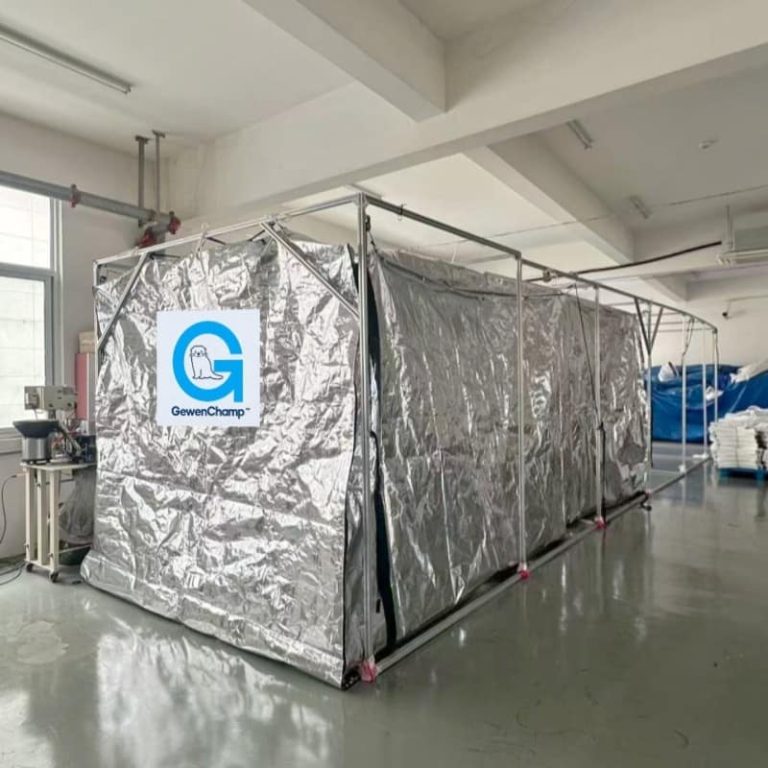
For teams uncertain which liner class fits a given bulk export, Giant Flexpack can provide a technical comparison across the GewenChamp liner series, including temperature claims, moisture vapor resistance, and cost-weight trade-offs. Contact the technical team to discuss the route, season, cargo class, and current packaging method; a qualified decision can then be based on engineered numbers rather than generic assumptions.
FAQ
Can passive thermal liners replace reefer containers for shipping food or pharmaceuticals?
They can replace reefers for products with moderate temperature tolerance, provided the route and season are known. A reefer is still required for frozen cargo, strict 2–8°C pharmaceutical cold chain, and goods where an excursion creates an immediate safety or regulatory failure. Passive liners protect against thermal swing and condensation; they do not re-cool an already warm load.
How much can a passive liner reduce temperature swings?
Manufacturer specifications for engineered liner systems show variance control around ±5°C in appropriate use, with specific high-insulation models supporting far wider operating windows. Actual performance depends on installation quality, route exposure, cargo mass, and pre-conditioning, so on-lane testing should confirm the number for a given shipment.
Where should temperature monitoring devices be placed?
Place loggers at three points: near the container floor, against the side wall, and at the bulk cargo face. This captures the worst radiant and conduction exposure plus the cargo’s actual condition, giving a realistic record rather than a single container-center reading.
Is passive cold chain only suitable for short journeys?
No. The same liner type is used on multi-week sea freight, but protective duration must match route length and seasonal exposure. Longer journeys shift the decision toward higher-insulation foam designs, stronger vapor barriers, and more conservative temperature limits.
Protect Temperature-Sensitive Cargo Without Reefer Costs
Passive thermal liners and pallet covers close the gap between expensive active refrigeration and unprotected ambient shipping. For bulk food, resins, chemicals, and electronics that need stable temperatures and dry conditions across ocean, rail, or intermodal routes, the right liner is a repeatable, non-mechanical layer of protection.
Contact Giant Flexpack to review temperature claims, liner materials, installation requirements, certification scope, and route-specific recommendations. Send cargo details and current shipping conditions to [email protected] or call +86 523 87683880 for a technical comparison across the GewenChamp thermal liner series and insulated pallet covers.

References
[1] R. T. Rue, Thermal Insulation Building Guide: Principles of Reflective and Conductive Insulation, 2nd ed. 2016. [Online]. Available: https://www.academia.edu/26068691/Thermal_Insulation_Building_Guide
[2] Parenteral Drug Association, “PDA Technical Report No. 39: Guidance for Temperature-Controlled Medicinal Products,” 2021.
[3] World Health Organization, “Model Guidance for the Storage and Transport of Time- and Temperature-Sensitive Pharmaceutical Products,” WHO Technical Report Series, No. 961, Annex 9, 2011.
[4] Codex Alimentarius Commission, General Principles of Food Hygiene, CXC 1-1969, Rev. 2020.
[5] International Safe Transit Association, “ISTA Standard 20: Temperature Testing for Insulated Shipping Containers.”
[6] Giant Flexpack (Taixing) Co., Ltd., “GewenChamp Thermal Container Liner Technical Specifications,” 2024.
From insight to product selection
Related products
Explore these packaging options, then confirm suitability for your cargo, dimensions and shipping conditions.
Tell us about your shipment
Discuss your packaging requirements
Tell us what you ship and how you ship it. Add the container or pallet size, route and any moisture or temperature concerns so we can discuss an appropriate packaging option.