
Packaging Insights
Beverage Industry Bulk Shipping: Container Liner Best Practices
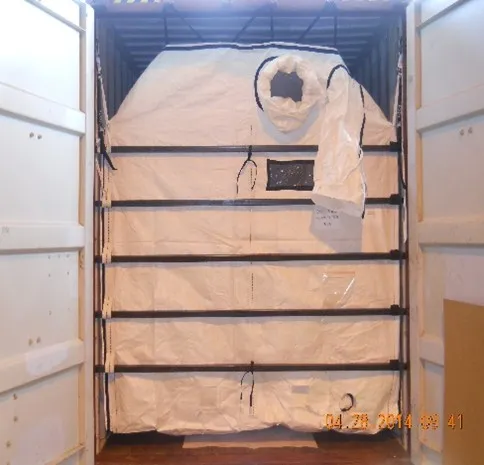
Shipping beverage ingredients in bulk creates specific risks: moisture uptake, condensation, contamination, temperature damage, and caking. For dry, free-flowing inputs such as sugar, malt, coffee beans, cocoa powder, and powdered drink mixes, a properly selected and installed container liner is one of the most cost-effective tools to protect cargo quality between origin and destination. This guide covers the decisions that matter for beverage producers, exporters, trading companies, and logistics teams, based on current food-grade packaging requirements and field-tested container loading practice.
What Counts as Beverage Bulk Cargo?
A dry bulk container liner is suitable for free-flowing solid ingredients, not liquid beverages. For juice concentrates, wine, edible oils, or other liquids, use a flexitank or ISO tank container. Container liners protect dry cargo that is loaded directly into a 20ft, 40ft, or 40HQ container through a filling spout and discharged by gravity, pneumatic, or manual means.
Common beverage industry dry bulk materials include:
- Sugar and sweeteners (cane, beet, dextrose, glucose syrup powder)
- Malt and barley
- Coffee beans and green coffee
- Cocoa beans, cocoa powder, and cocoa mass
- Tea leaves and tea powders
- Powdered beverage mixes, fruit powders, milk powder, and whey powder
- Stabilizers, gums, and functional ingredients
Each material has different sensitivity to moisture, temperature, particle size, and abrasion. The liner choice must match the material, not the container size alone.
Choosing the Right Container Liner for Beverage Ingredients
| Cargo | Recommended Liner Type | Key Reason |
|---|---|---|
| Sugar, dextrose, glucose powder | PE film container liner, food-grade LDPE, 140 micron | 100% moisture and dust barrier; smooth surface aids clean discharge; prevents caking |
| Barley malt, wheat malt | DBL-W02 malt grade liner with double-sided LDPE lamination | Blocks moisture and off-odors; protects flavor; reduces bagging labor |
| Coffee beans, green coffee | Breathable woven barless liner or PE film liner | Prevents mold and caking; smooth internal surface avoids bean damage |
| Cocoa beans, cocoa powder | PE film or thermal liner depending route | Prevents moisture bloom; temperature control reduces spoilage |
| Powdered beverage mixes, milk powder, whey | Sift-proof woven liner with PU-sealed seams or PE film | Zero dust leakage for fine powders; food-grade certification |
| Heat-sensitive ingredients (chocolate crumb, coated powders, cultures) | Thermal container liner, e.g. TL-02 EPE foam | Passive temperature control; MVTR ≤0.033 g/(m²·h·kPa) blocks condensation |
For general granular ingredients, the DBL-W01 Dry Bulk Container Liner (140 gsm HDPE woven) is a proven baseline. For temperature-sensitive cargo, the TL-02 Thermal Container Liner combines aluminum foil reflection with a 3mm EPE foam core to reduce conductive and convective heat transfer. For fine powders, a sift-proof woven liner with PU-taped seams eliminates leakage for particles above 50 mesh.
Food Safety and Regulatory Compliance
Beverage ingredients demand food-contact packaging. Always ask the supplier for:
- FDA food-contact declaration or 21 CFR compliance
- EU Regulation 1935/2004 and LFGB certificates
- Migration testing reports for the specific food simulant
- ISO 9001 certificate for manufacturing quality
- REACH and RoHS declarations for non-food safety compliance
Do not accept a general “food grade” claim without documentation. A reliable manufacturer will supply test reports from accredited third-party laboratories, not just internal statements.
At Giant Flexpack, container liners for beverage applications are available with FDA and LFGB certifications as well as ISO 9001 quality system management. Products such as the food-grade LDPE film liners and dry bulk woven liners are supported by documentation that importers can use for EU, US, and other market entry.
Installation and Loading Best Practices
Most container liner failures are preventable at loading. Follow these checks before and during filling:
- Inspect the liner for tears, loose seams, or damaged spouts before installation. A small pinhole in a PE film liner can create a contamination path.
- Clean and dry the container. Remove nails, splinters, or debris that could puncture the liner during loading.
- Install according to the manufacturer’s drawing. Secure lifting loops and straps evenly; never drag the liner across rough surfaces.
- Use the correct filling spout. For top loading, ensure the spout is properly clamped to the filling line to reduce dust and spillage.
- Fill gradually and evenly. Avoid sudden surges that stress the seams. Monitor weight so the cargo does not exceed the liner’s rated load capacity or the container’s payload limit.
- Seal spouts tightly after loading. For moisture-sensitive cargo, add desiccant bags inside the liner and close container doors promptly.
For beverage powders, pneumatic loading is usually fastest and cleanest. For granular ingredients like malt or sugar, auger or belt loading can work if dust control is in place. Always coordinate with the filler to prevent sharp edges from contacting the liner.
Moisture and Temperature Control
Condensation is the biggest invisible risk in beverage bulk shipping. When a container moves through temperature changes—especially from warm port to cool ocean or vice versa—moisture in the air can condense on the liner and cargo. This causes sugar to cake, malt to develop off-flavors, cocoa to bloom, and powders to clump or mold.
Best practices:
- Use a liner with a verified moisture vapor barrier. Woven liners with LDPE lamination or PE film liners provide near-total moisture protection.
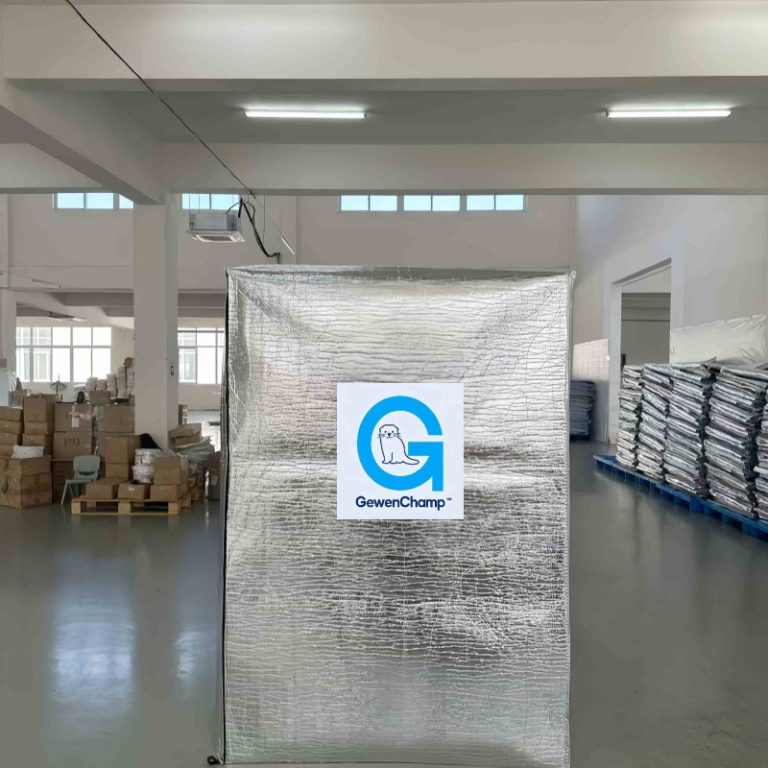
- For heat-sensitive cargo, choose a thermal container liner to reduce temperature swings. The GewenChamp TL-01 thermal liner reflects 95–97% of radiant heat with its aluminum foil outer layer, while the TL-02 EPE foam version has a thermal conductivity of ≤0.038 W/(m·K) and a moisture vapor transmission rate ≤0.033 g/(m²·h·kPa).
- Place desiccants inside the liner according to the voyage length and cargo sensitivity.
- Use ventilation only when the cargo and trade lane support it. Some beverage ingredients benefit from controlled airflow, while others need a fully sealed environment.
- Monitor temperature and humidity with data loggers. This provides records for quality claims if cargo is damaged.
When Thermal Liners Make Sense
Thermal liners cannot replace mechanical refrigeration for products that require strict temperature control, but they can maintain stable internal temperatures for many beverage ingredients during ocean freight. For example, the TL-01 operates in an internal temperature range of -20°C to +60°C with variance controlled within ±5°C. The TL-02 has an operating range of -50°C to 80°C. For medium-length routes or seasonal temperature swings, these passive systems are significantly lower cost than reefer containers and require no power source.
Supplier Evaluation: What to Ask a Container Liner Manufacturer
When sourcing liners for beverage bulk shipping, evaluate the supplier as carefully as the liner material.
Checklist:
- Production capacity: Can the factory handle your volume and seasonal peaks? Ask for monthly output and MOQ.
- Certification: Request copies of FDA, LFGB, ISO 9001, REACH, RoHS certificates. Verify the certificate holder matches the factory.
- Food-contact documentation: Ask for migration test reports and food-grade resin declarations.
- Sample policy: A serious supplier will send physical samples for trial fitting and cargo compatibility testing before bulk orders.
- Quality warranty: Clarify what happens if a liner fails during transit. Does the supplier provide after-sales technical support?
- R&D and customization: Can they modify spout position, thickness, size, or add anti-static or anti-UV properties?
- Lead time and export compliance: Confirm production lead times and that the manufacturer can handle export documentation.
Giant Flexpack is a Sino-American joint venture with over 20 years of bulk packaging and thermal protection expertise, manufacturing in Jiangsu, China. The company holds FDA, LFGB, ISO 9001, REACH, and RoHS certifications and supplies food-grade container liners for global beverage ingredient shipments. For sourcing teams, this combination of technical depth and export experience is often the difference between a speculative order and a repeatable supply chain.
Common Mistakes to Avoid
- Using an industrial liner for food cargo because it looks cheaper. Non-food liners may contain recycled resin or additives that migrate into food.
- Ignoring particle size. Fine powders require sealed seams, not standard stitched woven bags.
- Overloading the liner beyond its rated capacity. Always check warp/weft tensile strength and load limits.
- Skipping the pre-shipment inspection. A visual check and trial filling catch defects before the cargo is at sea.
- Underestimating condensation. Even a small temperature drop can create enough moisture to damage a whole load.
- Choosing a liner only by price. The real cost is a rejected shipment, not the liner purchase price.
Frequently Asked Questions
Can I use a container liner for liquid beverages like juice or wine?
No. Container liners in this context are for dry, free-flowing beverage ingredients. Liquids require a flexitank or ISO tank container with appropriate food-contact certification.
Are PE film container liners automatically food-safe?
No. Food safety depends on the resin grade, manufacturing conditions, and certification. Always require FDA or LFGB documentation and preferably migration test reports from the supplier.
How can I prevent sugar from caking during long sea freight?
Use a PE film liner with a high moisture barrier, keep the container sealed, add desiccants, and avoid large temperature fluctuations by choosing a thermal liner if the route includes extreme heat or cold.
What is the best liner for malt used in brewing?
A laminated woven liner such as the DBL-W02 malt-grade liner is purpose-built for barley malt and wheat malt. It provides a 100% moisture and odor barrier, protects flavor, and supports bulk loading of 20–26 metric tons per 40ft container.
Do thermal container liners eliminate the need for reefer containers?
Not always. For temperature-sensitive beverage ingredients that require strict, continuous temperature control, active refrigeration may still be required. Thermal liners are a passive solution that reduces temperature swings and protects against condensation at a much lower operating cost. Evaluate the trade lane, season, and product tolerance with your packaging supplier.
Get Specification Support for Your Beverage Cargo
Choosing the right container liner for beverage bulk shipping goes beyond size and price. It requires matching the liner material, food-contact certification, and thermal performance to the specific cargo and route. If you are sourcing liners for sugar, malt, coffee, cocoa, powders, or other beverage ingredients, contact Giant Flexpack at [email protected] or call +86 523 87683880 to discuss food-grade options and request samples before your next shipment.
From insight to product selection
Related products
Explore these packaging options, then confirm suitability for your cargo, dimensions and shipping conditions.
Tell us about your shipment
Discuss your packaging requirements
Tell us what you ship and how you ship it. Add the container or pallet size, route and any moisture or temperature concerns so we can discuss an appropriate packaging option.